Groom Wedding Day Checklist: Outfit to Accessories
The wedding morning is the wrong time to discover a missing brooch or a tight sherwani. Here is the groom's complete checklist, from outfit to accessories.
The morning that decides the day
The wedding morning is busy, emotional and full of people, and it is the worst time to discover a problem. A missing brooch, a sherwani that pulls, shoes that have not been broken in, a safa that nobody knows how to tie. Every one of these has happened to a groom, and every one of them is preventable with a checklist done the night before.
This checklist covers the groom from outfit to accessories, in the order to check them. Work through it the night before the wedding, lay everything out in one place, and the morning becomes a pleasure instead of a scramble.
The outfit: checked the night before
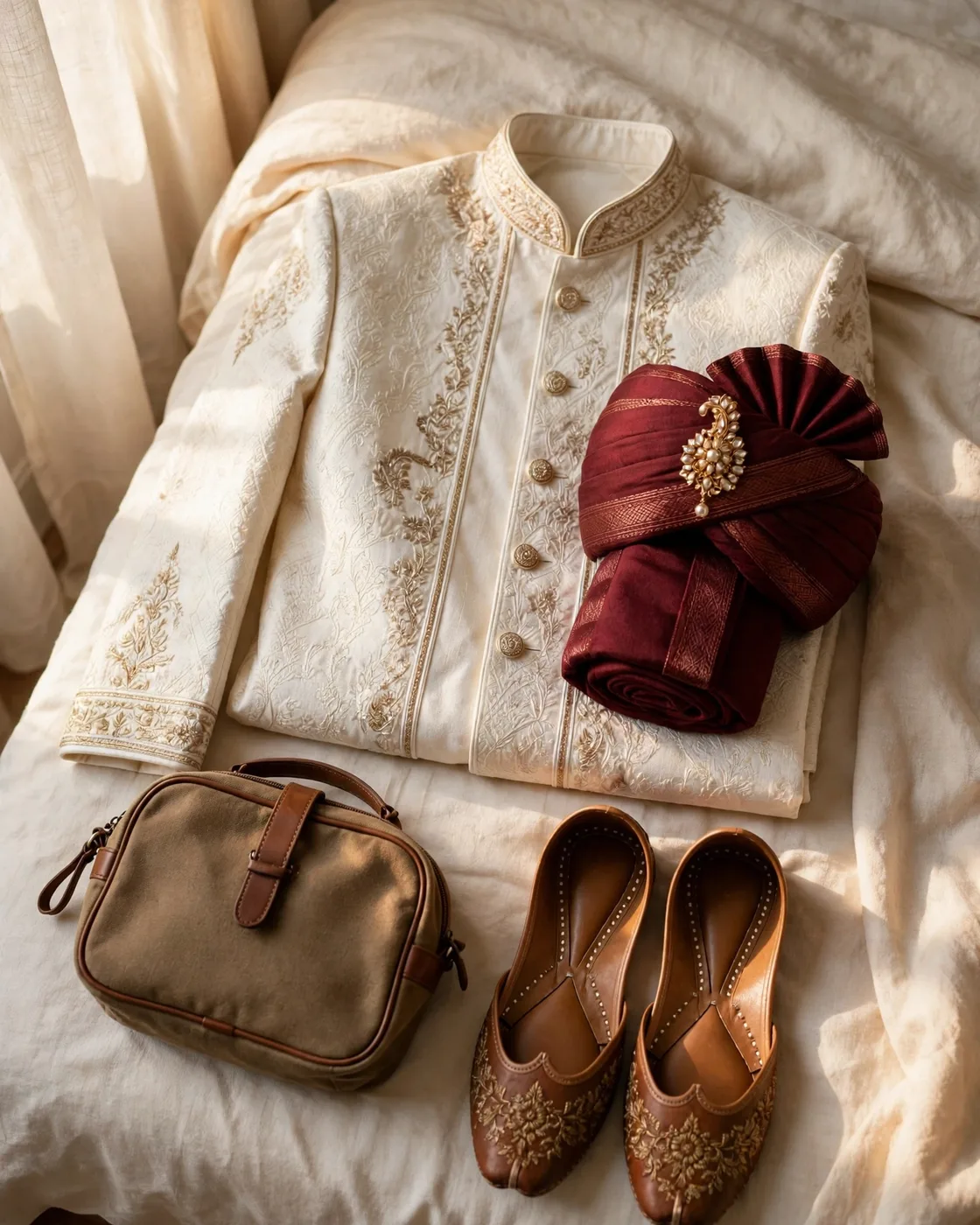
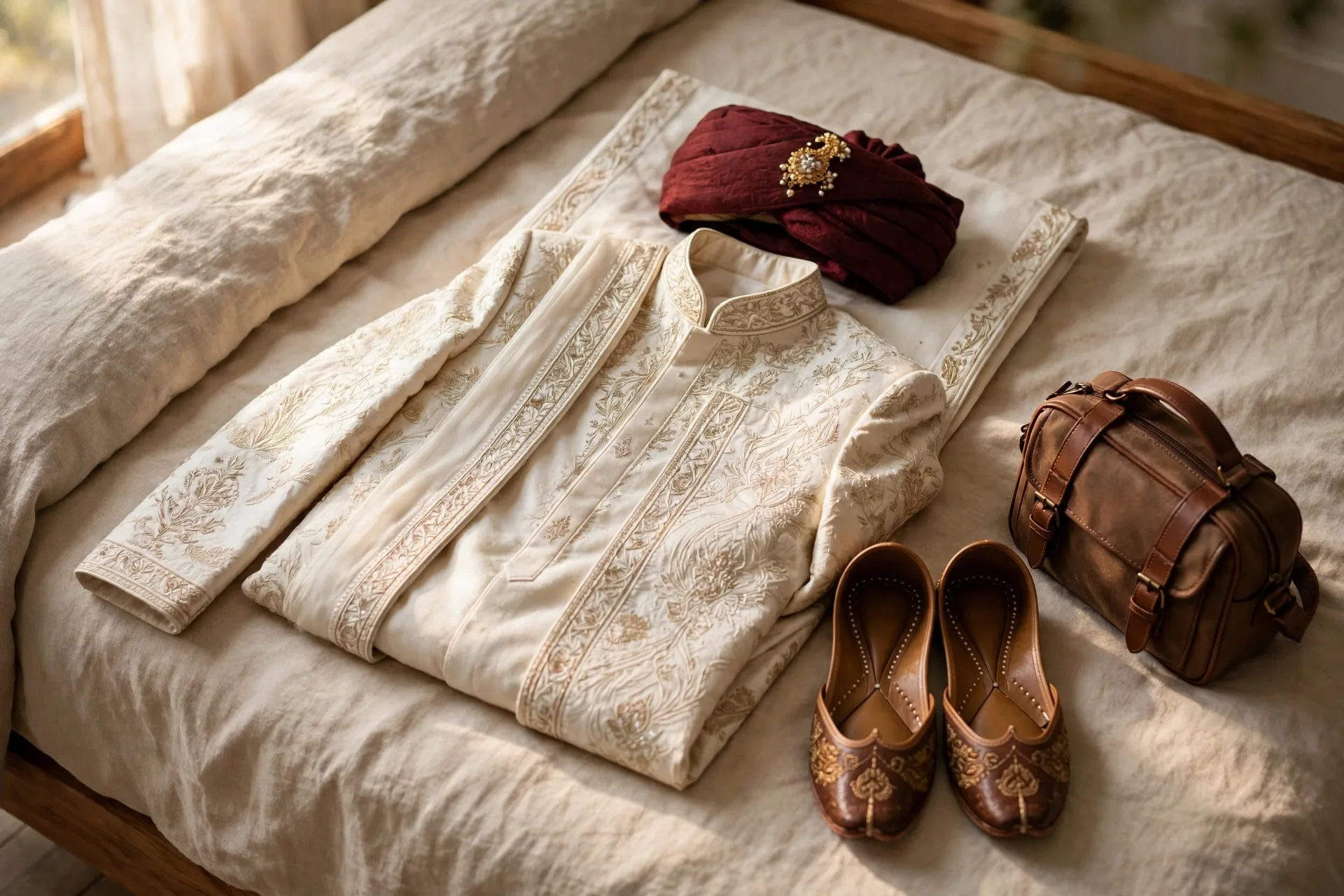
Lay out the full outfit the night before and check each piece. The sherwani or Jodhpuri, tried on at the final fitting, with no loose threads or missing buttons. The churidar or trousers, pressed and ready. The stole, if you wear one, folded neatly beside the sherwani. The inner wear, the socks, and a spare set of both, because sweat and spills happen.
Try the whole outfit on together, with the shoes, at the final fitting a week before the wedding. Sit in it, walk in it, and raise your arms in it. If anything pulls, pinches or slips, the tailor has a week to fix it. A fitting done the day before the wedding leaves no time to fix anything.
The safa and the brooch
The safa cloth, the brooch or sarpech, and the kalgi should be together in one box, ready for the tier. Check the brooch pin and add a safety pin behind it, so it cannot slip during the baraat. Check the plume, if you wear one, and keep it in its box until the morning, so it stays fresh.
Confirm the tier's arrival time the night before. He should arrive at least an hour before the baraat leaves, and he should know the style you chose at the trial. If the family elder ties the safa instead, confirm that too, and make sure he has the cloth and the brooch ready.
Shoes and the groom's kit
The shoes should be polished, broken in, and laid out beside the outfit. Mojaris for the ceremony, loafers for the reception, and a comfortable spare pair in the car. Check the soles for grip, and keep a soft cloth in the kit for a quick polish before the photographs.
The groom's kit is a small bag that one trusted person carries all day. It should hold safety pins, a needle and thread in the sherwani's colour, fashion tape, a lint roller, a comb and a small hair product, breath mints, a handkerchief, phone charger, cash for the jutta chupai negotiation, and any medicines the groom needs. A groom with a kit is a groom who can fix any small problem in thirty seconds.
Grooming: the morning routine
The morning routine is simple and should not be rushed. Shower, wash and oil the beard if you keep one, moisturise, apply sunscreen, and style the hair the way you did at the trial. Do not try a new product on the wedding morning, and do not get a last minute haircut or beard trim. The grooming was finished two days ago. The morning is for repeating it, not reinventing it.
Eat breakfast. Many grooms skip it in the nerves of the morning, and then feel faint by the afternoon. A proper breakfast, water through the day, and small snacks between functions will keep your energy steady until the reception ends.
The timeline: who does what, and when
Write a short timeline for the groom's morning and share it with the best man and the tier. Wake up, breakfast, shower and grooming, outfit on, safa tied, family photographs, baraat leaves. Each step needs a time, and one person, usually the best man, should own the clock. The groom should not be checking his phone for the time. He should be enjoying the morning.
Keep the phone charged and the venue address and the priest's number saved. The best man should have the same information, so the groom is never the only person who knows where to go.
The final check before you leave
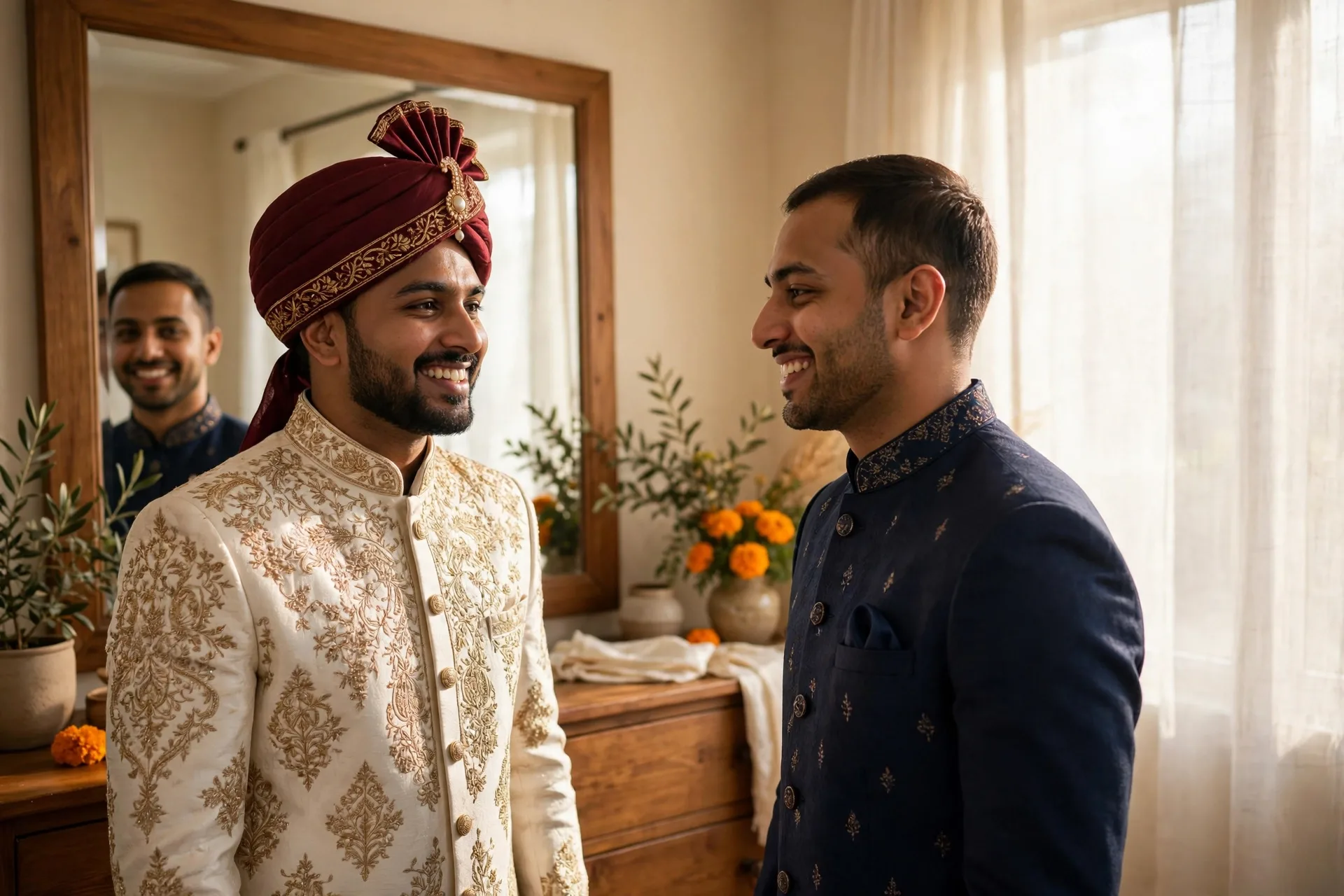
Before the baraat leaves, do a thirty second check in a full length mirror with the best man. Sherwani buttons done up, stole draped evenly, safa straight, brooch secure, pocket square showing, shoes polished, hair in place. Take a photograph, look at it on the phone, and fix anything the mirror missed. The camera sees what the mirror hides, so the photograph check is the real check.
Then stop checking. The outfit is done, the morning is done, and the wedding is about to begin. A groom who keeps adjusting his outfit all day looks nervous in every photograph. A groom who checks once and then forgets about it looks confident.
The full checklist
- Sherwani or Jodhpuri, fitted, pressed, buttons checked
- Churidar or trousers, pressed, with spare inner wear and socks
- Stole, folded and ready
- Safa cloth, brooch, kalgi and plume, in one box
- Tier confirmed, arrival time set, style agreed at trial
- Mojaris polished and broken in, loafers for the reception, spare pair in the car
- Groom's kit packed: safety pins, needle and thread, fashion tape, lint roller, comb, mints, charger, cash
- Beard trimmed two days before, hair cut two weeks before
- Breakfast eaten, water bottle ready
- Timeline shared with the best man, venue and priest numbers saved
- Final mirror check with a photograph, then stop adjusting
Frequently asked questions
What is the most commonly forgotten groom's item?
The spare pair of shoes, and the cash for jutta chupai. Both are small, both are easy to forget, and both cause stress on the day. Pack them the night before, in the groom's kit.
Who should carry the groom's kit?
The best man or a brother, not the groom. The groom has enough to think about. One trusted person owns the kit all day, and the groom knows who that is.
When should the groom get dressed on the wedding day?
After breakfast and grooming, with enough time for the safa and the photographs before the baraat leaves. Rushing the outfit is how buttons get missed and safas get tied badly, so build in an extra thirty minutes.
What if something goes wrong with the outfit on the day?
Fix it fast and move on. A safety pin, a needle and thread, and a calm best man solve almost every outfit problem in minutes. The photographs will not show a fixed button, but they will show a stressed groom, so fix it and forget it.
MyIndiAura theme showcase
These Cinematic Invites from MyIndiAura fit this wedding. Each one is ₹499.
- Atelier Seal: a tailored classic for a groom who checked everything twice.
- Mandap Yatra: a walk through the venue to the mandap, made for the ceremony.
- Wedding Post: a classic warm opening for a traditional wedding.
Related reading
- Indian Wedding Planning Checklist: 12 Months to the Wedding Day
- Indian Wedding Planning Timeline: From Engagement to Wedding Day
- Baraat Planning: Music, Timing and Keeping the Energy Up
Check everything the night before, lay it out in one place, and let the morning be a pleasure instead of a scramble.
Explore invitation designs
Choose a design and preview it free with your own names.


Found this useful? Share it with someone planning a celebration.
Share