Groom Sherwani Guide: How to Choose
A sherwani is the groom's most regal outfit. Here is how to pick the fabric, colour, fit and accessories that suit your ceremony and your bride.
How to choose a groom sherwani
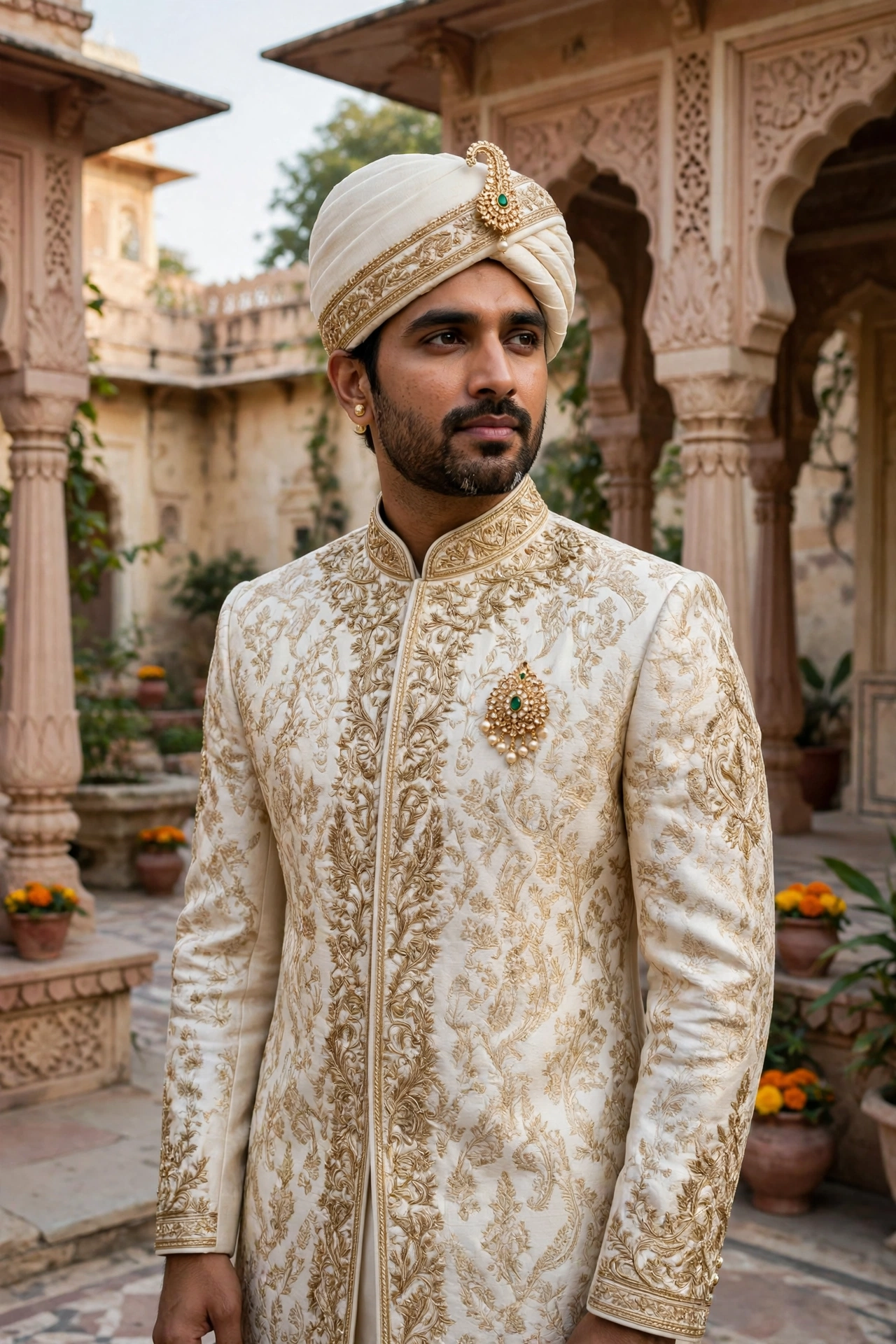
A sherwani is the groom's most regal outfit. It is the long, structured coat that turns a groom into the centre of the baraat, the pheras, and every family photograph. Choosing one feels simpler than choosing a bridal lehenga, because there are fewer options, but the details still matter: the fabric, the colour, the fit, and the accessories. Get those right, and the sherwani will look sharp all day.
Fabrics that suit a groom
Fabric decides how the sherwani looks, how it moves, and how comfortable it is after hours of rituals. Raw silk is the classic sherwani fabric: it has a rich texture, it holds a structured shape, and it photographs beautifully. Brocade is the most regal choice, with woven patterns that catch the light, and it suits a grand evening wedding. Velvet is the warmest and heaviest choice, best for winter evening weddings, and it makes deep colours look deeper.
The fit: trials and tailoring
A sherwani is only as good as its fit, and fit is decided in the trials, not on the hanger. Book at least two trials. The first trial checks the shoulders, the chest, the waist, and the length. The second trial, closer to the wedding, checks the final fit after any changes, with the exact kurta, the churidar or pants, the stole, and the shoes you plan to wear. Bring your wedding shoes to the trial, because the sherwani length depends on the shoe height.
The shoulders are the most important fit point: they should sit exactly on your shoulders, neither drooping nor pulling. The waist should be shaped but not tight, so you can sit cross legged for the pheras without the buttons straining. The length should fall just below the knee for a classic sherwani, or to the ankle for a longer, regal style. The sleeves should show a little of the kurta cuff, about half an inch, which is the classic tailored look. Ask the tailor to add a hidden loop or button inside if the sherwani is heavy, so it stays closed while you move.
Accessories that complete the sherwani
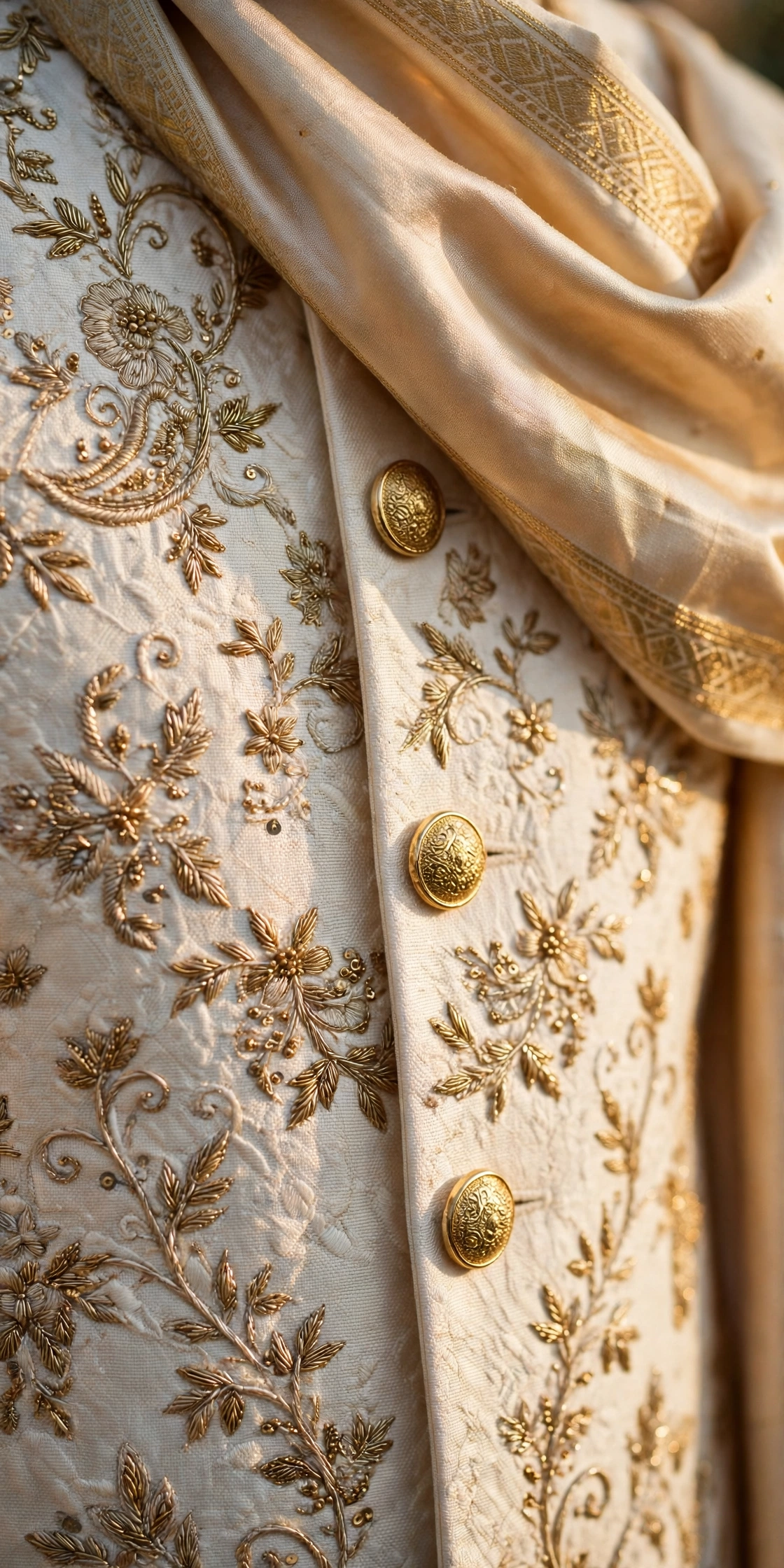
A sherwani is finished by its accessories, and each one has a job. The safa or turban is the most visible accessory, and it should match the sherwani colour or the bride's outfit, with a kalgi brooch at the front. The stole or dupatta adds colour and drape, and it should be pinned where it will stay. The brooch, usually a pearl or kundan piece, sits on the chest and ties the outfit together.
The shoes matter more than most grooms expect. Mojari or juttis are the classic sherwani shoes, and they should match the sherwani colour and be broken in before the day. A new pair will hurt after an hour of standing and walking in the baraat. The mala or necklace, if your family wears one, should be light and secure. And a pocket square in a colour that matches the bride's outfit is a small, elegant touch that photographs beautifully.
Where to shop for a groom sherwani
Start shopping three to four months before the wedding, because a good sherwani needs time for trials and alterations. In Delhi, Karol Bagh and Chandni Chowk have shops at every price, from budget to designer, and the big menswear houses in South Delhi suit grooms who want a designer label. In Mumbai, Juhu, Bandra, and Dadar cover the same range, and in Jaipur and Lucknow the old city markets are strong for traditional work. Most cities also have reliable online options, but order a swatch first, because colours on a screen are never exact.
What it costs
A groom sherwani in India can cost anywhere from about ₹10,000 in a local market to several lakhs for a designer piece, and the price depends on fabric, work, and the label. A good mid range sherwani with neat embroidery usually sits between ₹25,000 and ₹75,000. Set your budget before you shop, and keep a small part aside for the kurta, the churidar, the stole, the safa, and the mojari, because those extras add up fast.
The invitation is the smaller cost, and it is fixed. On MyIndiAura, a Cinematic Invite is ₹499, an Invite App is ₹399, and an Invitation Suite is ₹99. Your sherwani photographs will look beautiful inside any of them. See the pricing page for the current prices.
How to create your sherwani invitation
- Pick a design that matches your sherwani colours from the designs page at myindiaura.com/designs.
- Add your names, the ceremony dates and times, and the venue for each function.
- Add photographs of the couple, including one that shows the sherwani.
- Preview the invitation on your own phone, then share the link on WhatsApp. See myindiaura.com/create to start, and myindiaura.com/pricing for the full price list.
Details to check before you send
- The names of the bride and groom, spelt exactly as the families use them
- The date and time of each function, with the venue and the dress code
- A photograph that shows the sherwani colours, so guests can plan their outfits
- The RSVP contact for guests who need directions or timings
- The sherwani trial dates, the alteration plan, and the delivery date from the shop
- The safa, the stole, the brooch, and the mojari, all tried together once
Frequently asked questions
When should I start shopping for my sherwani?
Three to four months before the wedding is ideal. It leaves time for two trials, alterations, and a calm final fitting, without the panic of a last minute shop.
What colour sherwani suits a groom best?
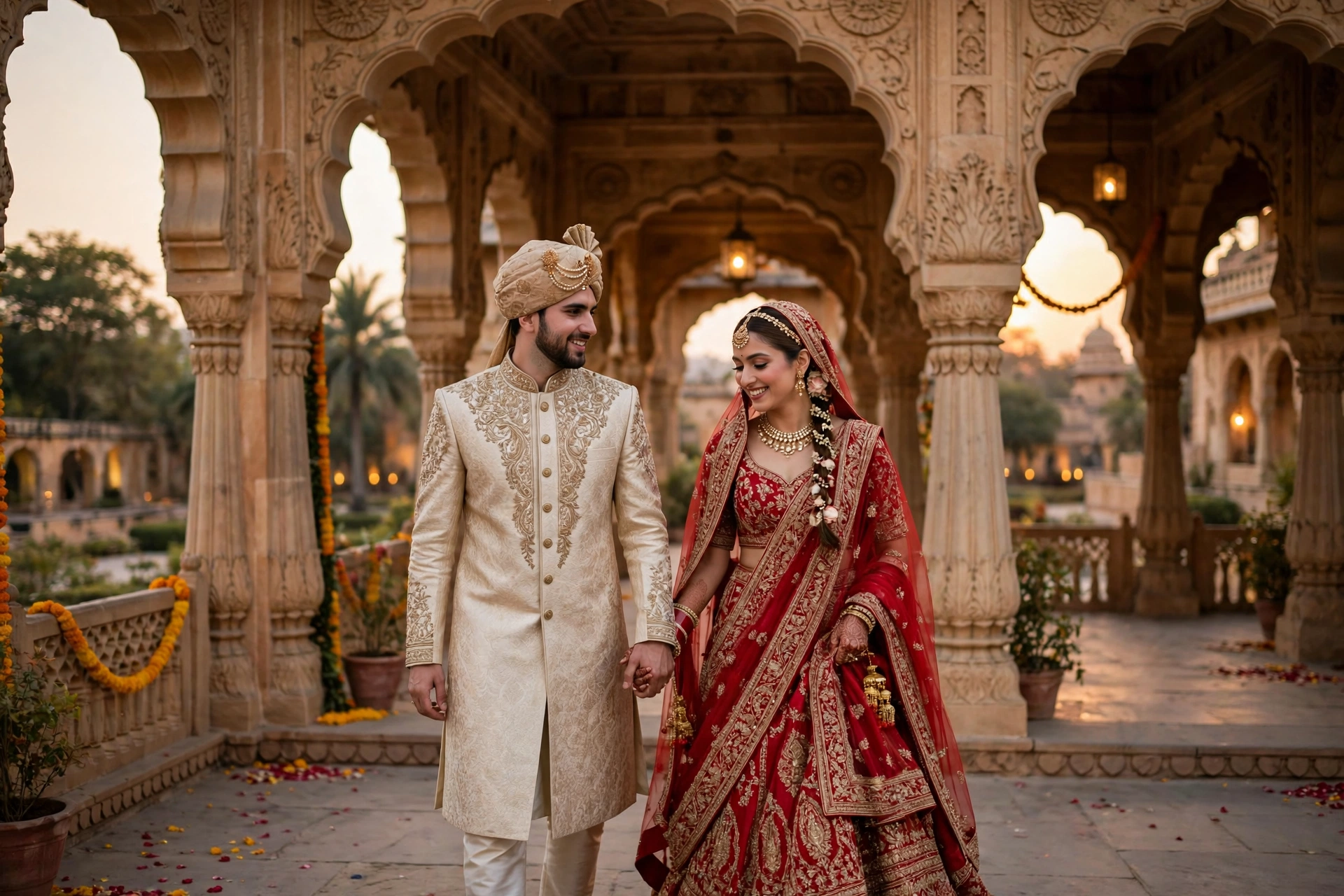
Ivory and gold is the classic choice, and it suits most grooms and photographs beautifully. Maroon, royal blue, emerald, and pastels are all accepted now, so pick the colour that suits your skin and matches the bride.
Should the groom match the bride's outfit?
A shared colour story looks lovely in the couple photographs, but an exact match is not needed. If she wears red, your ivory or maroon sherwani will stand out beautifully, and a pocket square in her colour ties the pair together.
MyIndiAura theme showcase
These Cinematic Invites from MyIndiAura fit this wedding. Each one is ₹499.
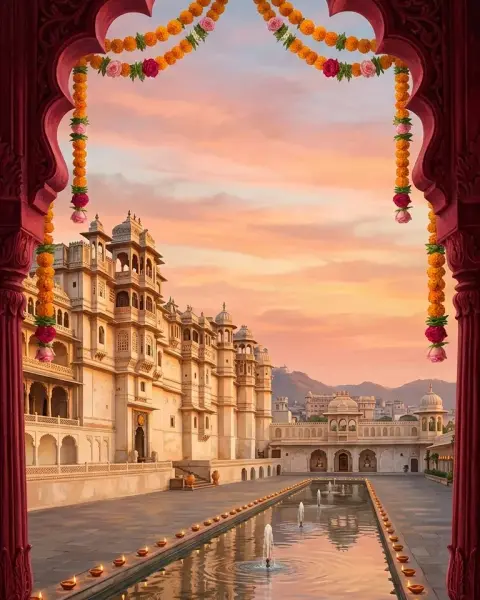
- Arched Doors: grand arches for a royal sherwani.
- Charbagh Dastaan: garden and heritage tones for a classic sherwani.
- Sangmarmar Shaam: marble and dusk tones for an evening sherwani.
Related reading
- Bachelor Party Invitation Ideas for the Groom
- Indian Wedding Planning Checklist
- Hindu Wedding Invitation Wording and Traditions
Create your sherwani invitation on MyIndiAura, and let the invitation carry the colours of the day to every guest.
Explore invitation designs
Choose a design and preview it free with your own names.
Found this useful? Share it with someone planning a celebration.
Share