Groom Safa and Turban Guide: Styles and Tying
The safa is the crown of the groom's outfit, and a well tied one changes the whole look. Here are the styles, the colours and how to get it tied right.
Why the safa matters
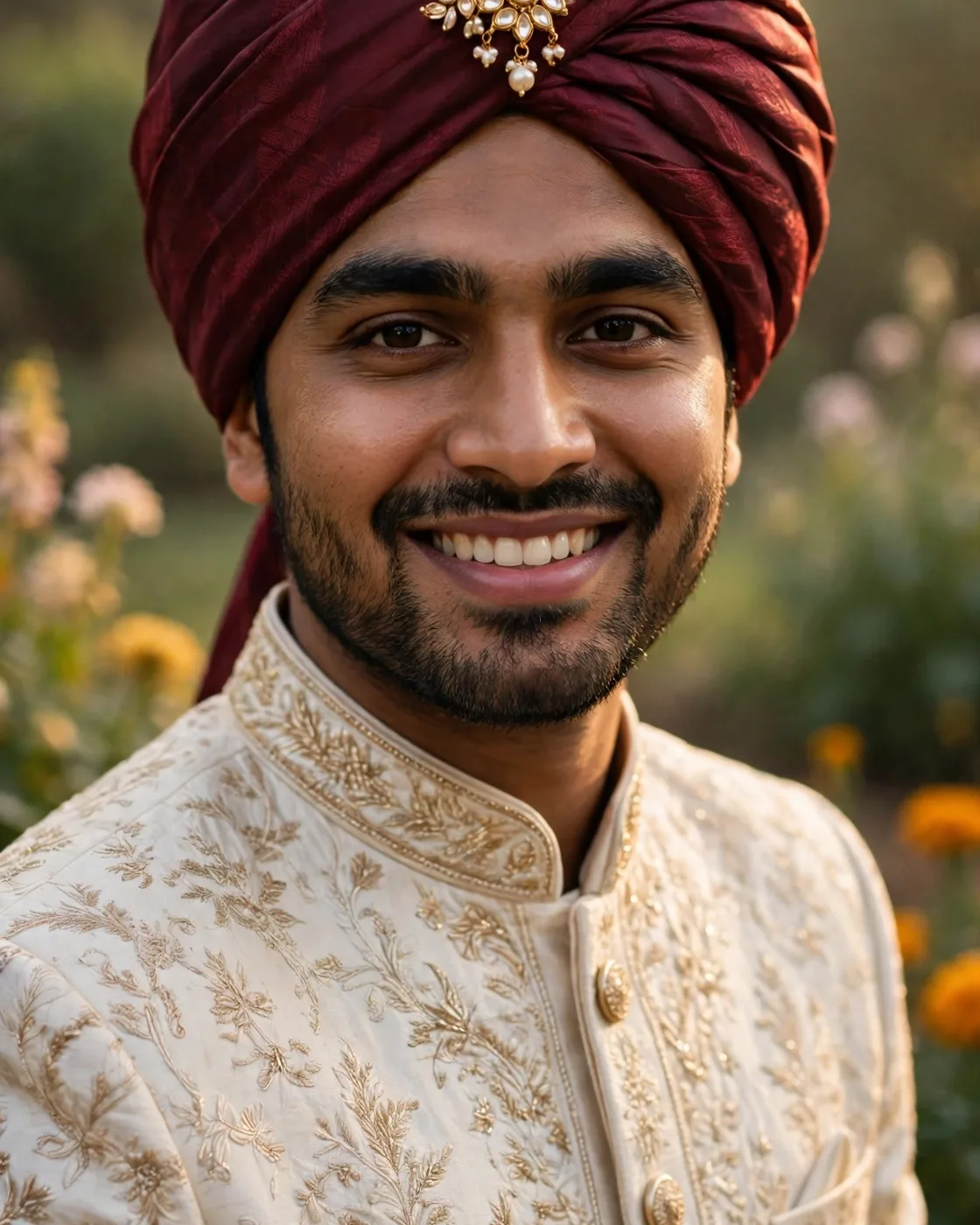
The safa, or turban, is the finishing piece of the groom's outfit. It frames the face, it carries the brooch, and it is the first thing guests notice in the baraat photographs. A well tied safa makes an ordinary sherwani look royal. A badly tied one makes a beautiful sherwani look careless.
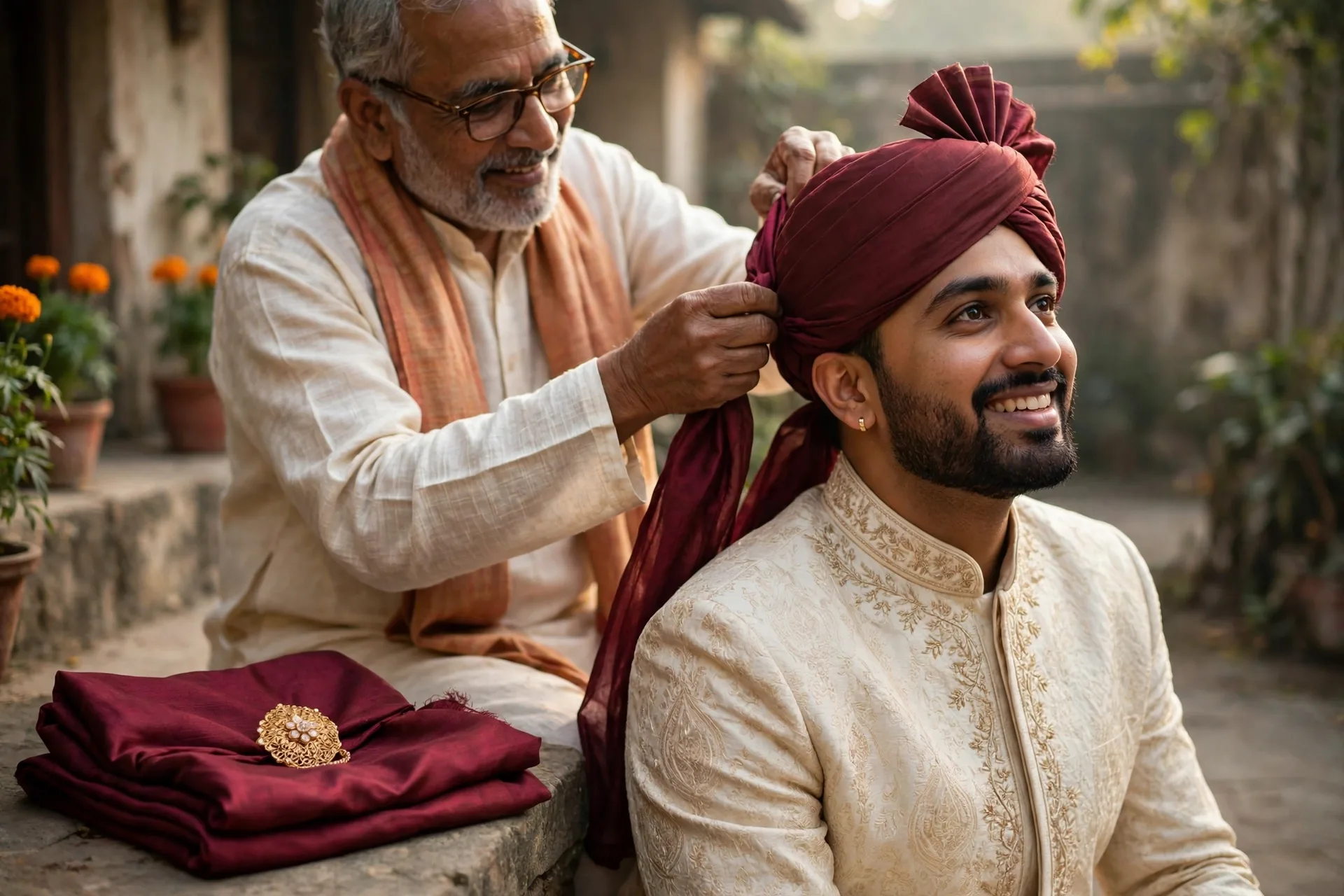
In many families the safa is also a ritual object. It is tied by an elder, a brother or a professional pagdi wala, often with blessings and a small ceremony of its own. That moment, the tying of the safa, is one of the most photographed parts of the groom's morning, so it deserves the same attention as the outfit itself.
The main safa styles
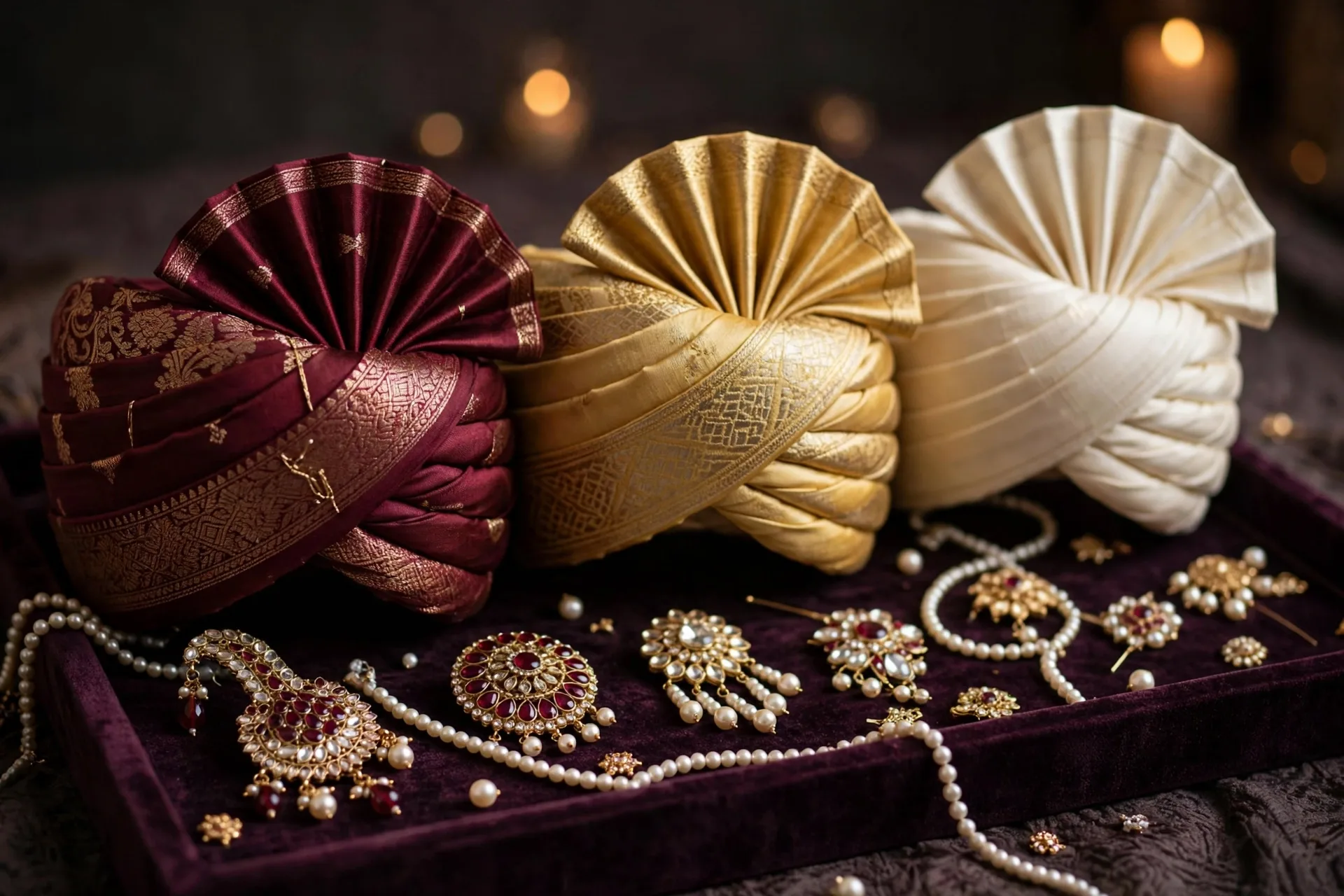
The Rajasthani safa is the most common: a long cloth wrapped around the head in a rounded shape, with a fan or a plume at the side. It suits sherwanis and Jodhpuri suits, and it is the style most grooms picture when they think of a turban.
The Maratha pagdi is taller and more structured, with a distinctive fan at the front. It suits Maharashtrian weddings and grooms who want a sharp, formal look. The Punjabi turban, or dastar, is tied differently again, with a neat, compact shape and often a farla, a small cloth fan, at the top.
The simplest modern style is the pre tied safa: a ready made turban that slips on and adjusts with a strap. It looks almost as good as a hand tied one in photographs, and it is the sensible choice for grooms who are short on time or whose families do not have a traditional tier.
Choosing the colour
The safa should be picked from the bride's outfit or from the groom's stole, not from the decor. A maroon safa with a gold brooch suits a groom in ivory or cream. A gold or cream safa suits a groom in burgundy or deep red. A safa in the same colour as the sherwani can work, but it needs a contrasting brooch to give it definition.
For haldi, a yellow or orange safa is traditional and photographs beautifully. For the wedding, deeper colours suit the ceremony: maroon, gold, cream or burgundy. Avoid black safas for the main ceremony, because most families consider black inauspicious for the pheras.
How the tying works
A hand tied safa takes fifteen to thirty minutes, and it needs a professional or a skilled family member. The cloth is usually five to six metres long, in silk, cotton silk or georgette. The tier wraps it around the head in layers, shaping it as he goes, and finishes with the fan or the plume and the brooch.
Book the tier in advance, and ask him to arrive at least an hour before the baraat leaves. A safa tied in a hurry is a safa that comes loose during the dancing, and a loose safa in the baraat photographs is a memory nobody wants.
Do a trial tie at least a week before the wedding. The trial tells you three things: whether the style suits your face, whether the colour works with the outfit, and how long the safa stays comfortable. Some grooms find a heavy safa gives them a headache after two hours, and the trial is where you discover that, not on the wedding morning.
The brooch, the sarpech and the kalgi
The brooch is the jewel of the safa. A sarpech is the traditional fan shaped brooch, often with a feather or a plume, and a kalgi is the smaller pin that holds the plume. Together they give the safa its royal finish.
Choose the brooch to match the groom's other jewellery, if any, and keep it in proportion to the safa. A large sarpech suits a large, rounded Rajasthani safa. A small kalgi suits a compact pagdi. Gold with a coloured stone, usually ruby or emerald, is the classic choice, and it should pick up a colour from the bride's outfit.
Pin the brooch securely, and check it before the baraat leaves. A brooch that slips during the dancing is a common groom's morning problem, and a small safety pin behind it prevents the embarrassment.
Comfort and the long day
A safa is heavy, and the groom wears it for hours. Ask the tier to keep it firm but not tight, and to pad the inside with a soft cloth if the fabric is rough. Keep a few safety pins in the groom's kit for quick fixes, and know who will re tie the safa if it loosens: usually the tier, a brother, or the groom himself if he has practised.
If the wedding is outdoors in summer, choose a lighter fabric for the safa, like cotton silk or georgette, rather than heavy silk. A heavy safa in the heat is miserable, and the photographs will show the discomfort.
What it costs
A good safa cloth typically costs between ₹1,500 and ₹5,000, depending on the fabric and the work. A pre tied safa usually falls between ₹2,000 and ₹6,000. A professional tier charges around ₹2,000 to ₹5,000 for the wedding day, including the trial. A brooch or sarpech can cost anything from ₹2,000 for a simple design to much more for real stones, so set the budget before you fall in love with one in the shop.
Frequently asked questions
How long does it take to tie a safa?
Fifteen to thirty minutes for a hand tied safa, depending on the style and the tier. A pre tied safa takes two minutes. Book the tier an hour before the baraat leaves, so there is no rush.
Can I tie my own safa?
You can learn, but the wedding morning is not the time to try. If you want to tie your own, practise for weeks before the wedding, and have a professional on standby. Most grooms are happier with a professional tier.
What colour safa goes with an ivory sherwani?
Maroon, gold or burgundy. The contrast gives the outfit definition and photographs beautifully. A cream safa on an ivory sherwani can look washed out without a strong brooch.
Should I wear a safa for every function?
No. The safa belongs to the wedding ceremony and the baraat, and sometimes the engagement. For haldi, sangeet and the reception, the groom usually goes without one, or wears a lighter version for the photographs only.
MyIndiAura theme showcase
These Cinematic Invites from MyIndiAura fit this wedding. Each one is ₹499.
- Kesar Swagat: saffron warmth for a groom in a maroon sherwani and gold safa.
- Jharokha Ki Shaam: a palace window at dusk for a royal Rajasthani baraat.
- Laal Doli: deep reds and celebration for a traditional wedding.
Related reading
- Baraat Planning: Music, Timing and Keeping the Energy Up
- Royal Wedding Invitation Card Designs for Indian Weddings
- Indian Wedding Planning Timeline: From Engagement to Wedding Day
A safa tied well is the crown of the outfit, so book the tier early, do the trial, and let the morning unfold without a rush.
Explore invitation designs
Choose a design and preview it free with your own names.
Found this useful? Share it with someone planning a celebration.
Share