Ganesh Puja Wedding Rituals Explained
Ganesh Puja opens a Hindu wedding by inviting Lord Ganesha to remove obstacles and bless the couple. Here is what it means, how it unfolds, and when it happens.
Ganesh Puja, explained simply
Ganesh Puja is the ritual that opens a Hindu wedding. Before any other ceremony, the families invite Lord Ganesha, the remover of obstacles, to bless the wedding and to make sure everything goes smoothly. This article explains what Ganesh Puja means, how it unfolds, and when it happens.
What is Ganesh Puja?
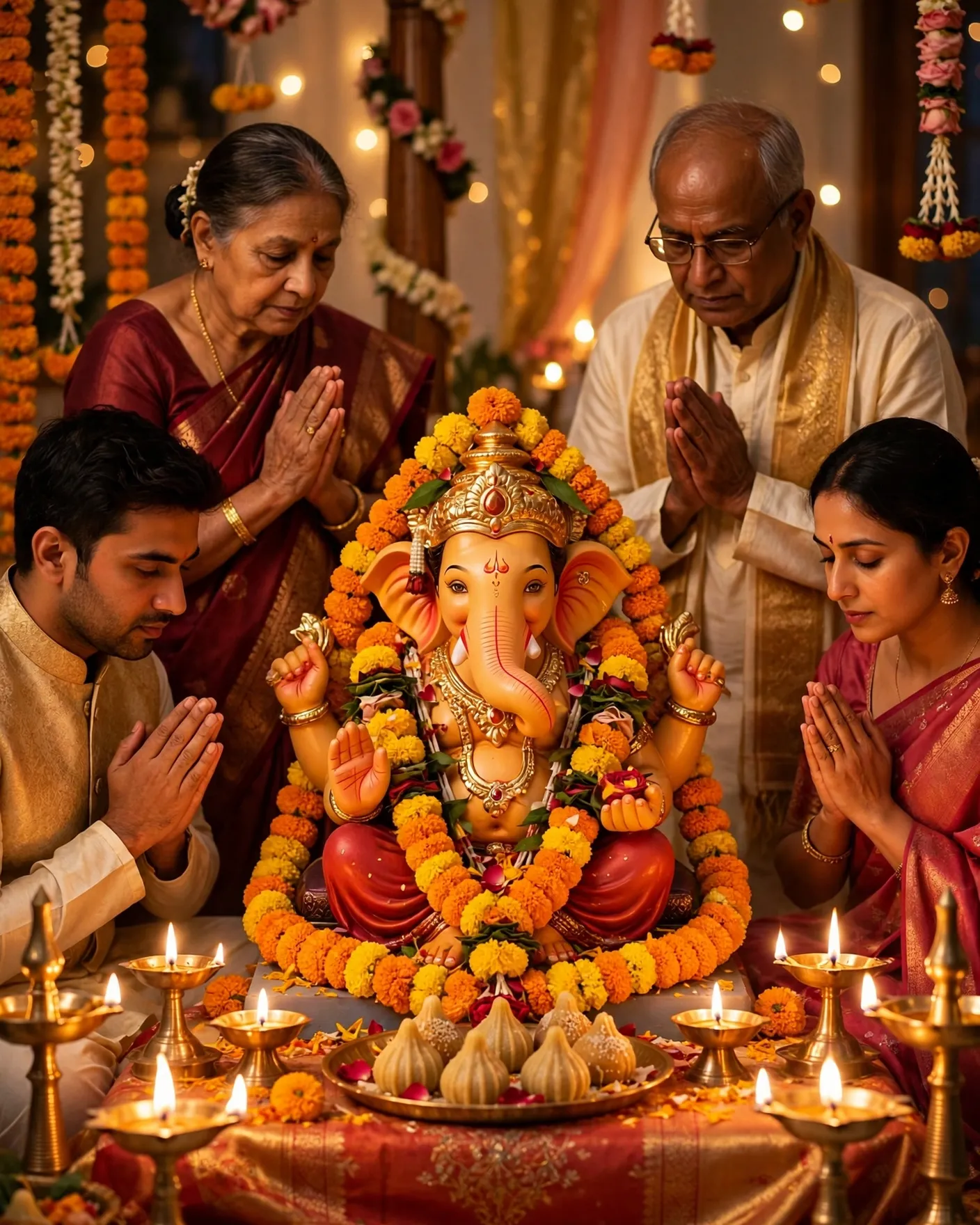
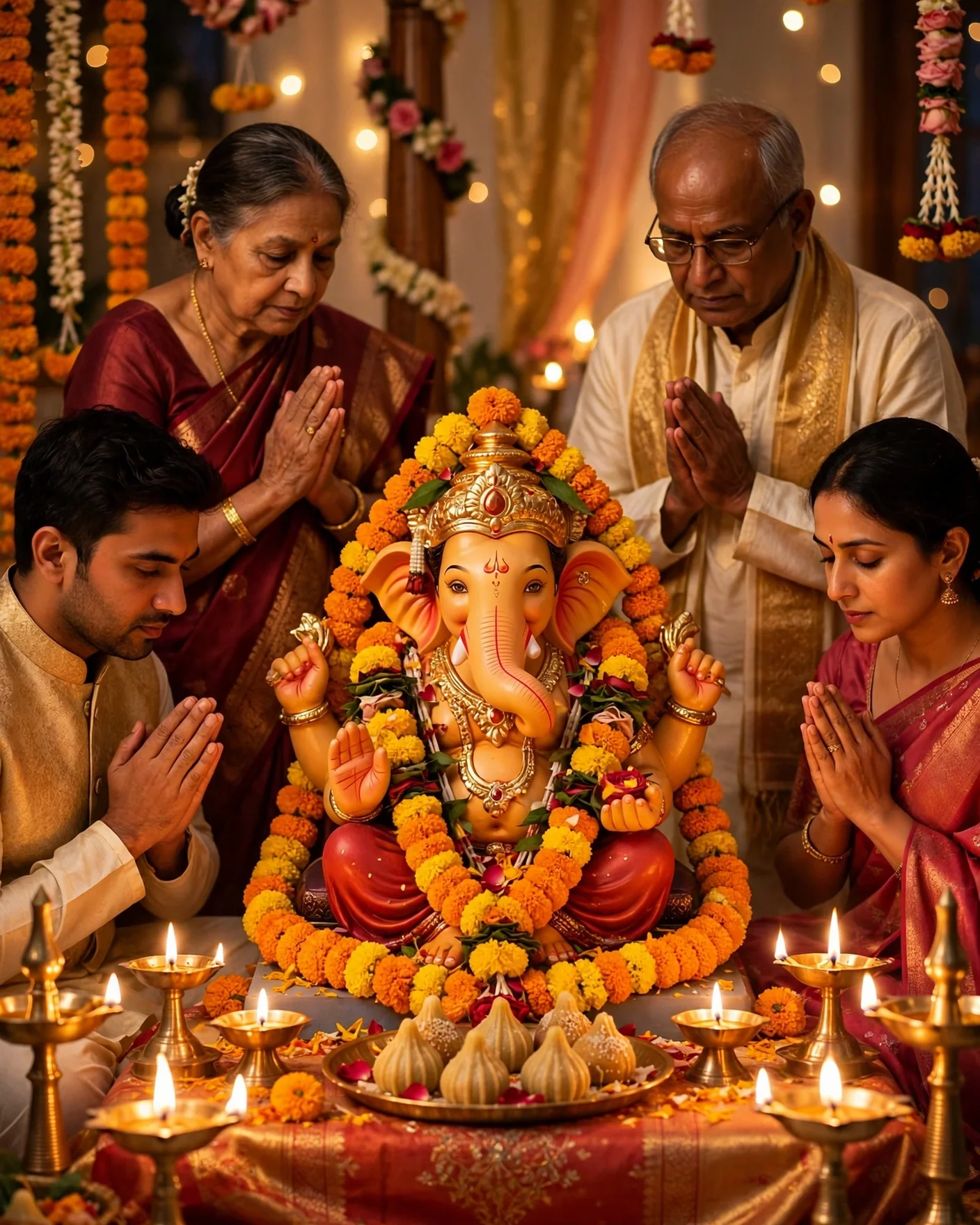
Ganesh Puja is a prayer to Lord Ganesha, the elephant headed god who removes obstacles and brings good fortune. In a wedding, the puja is performed at the start of the celebrations, often on the first day, to bless the couple and to ask Ganesha to remove any obstacles from their path. The families gather around a small altar with a statue or a picture of Ganesha, flowers, fruits, sweets and a lamp.
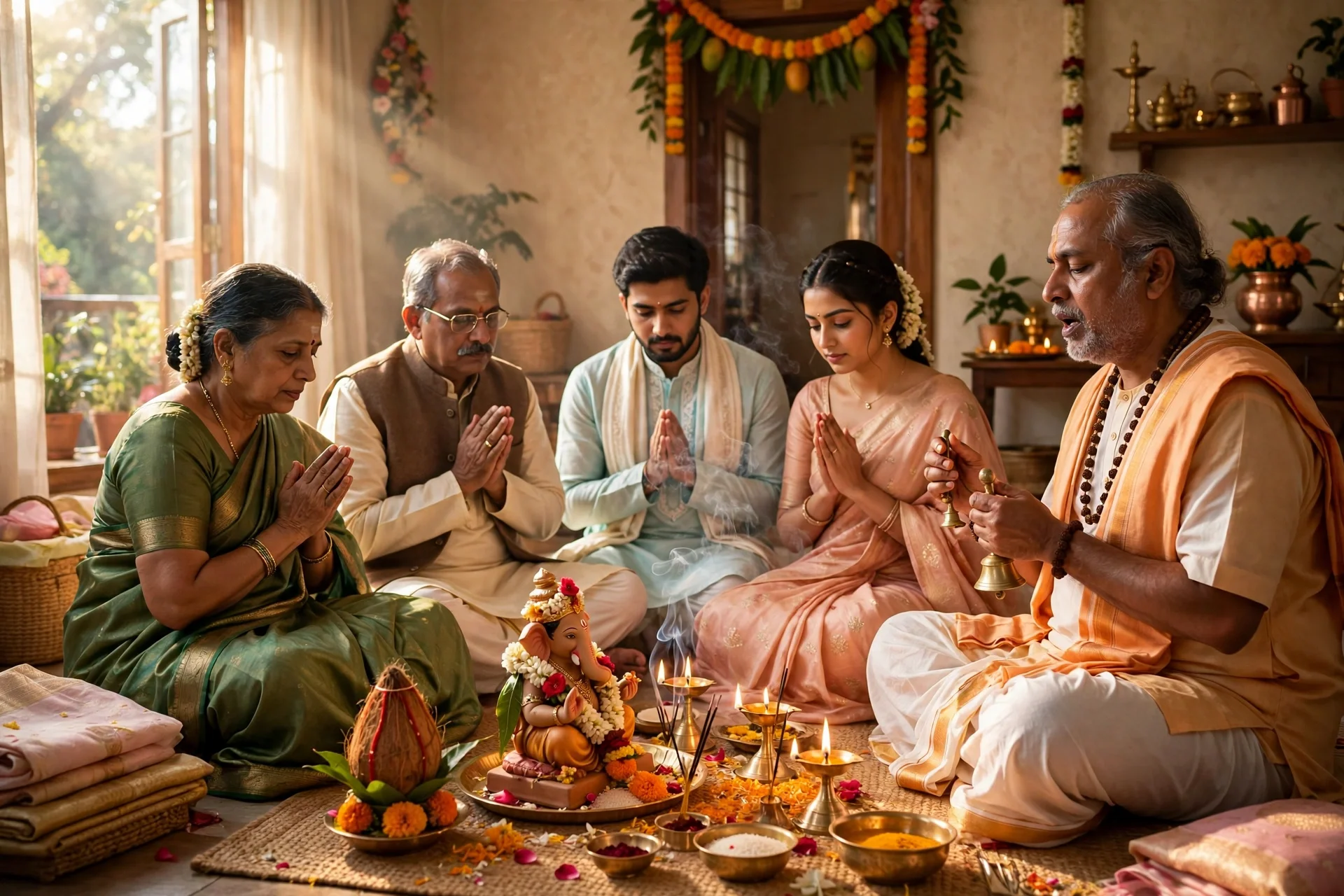
The puja is led by a priest, and the families take part together. The priest chants mantras, offers flowers and sweets to Ganesha, and blesses the couple. The atmosphere is calm and joyful, and the puja sets the tone for the whole wedding week.
When does Ganesh Puja happen?
Ganesh Puja happens at the start of the wedding celebrations, often on the first day, before the haldi, the mehndi or the sangeet. Some families perform it on the morning of the wedding itself, before the main ceremony. Others perform it a day or two before, as the first event of the wedding week.
The puja usually takes about thirty to forty five minutes. Guests are welcome to attend, and the families often invite close family and friends to join. If the invitation lists a time for Ganesh Puja, arrive ten minutes early, so you do not miss the start.
How does the ceremony unfold?
Ganesh Puja follows a clear order, and the priest guides it step by step.
- The priest sets up the altar with a statue or a picture of Ganesha, flowers, fruits, sweets and a lamp.
- The families gather around the altar, and the priest chants mantras to invite Ganesha.
- The couple offers flowers and sweets to Ganesha, and the priest blesses them.
- The families offer aarti, waving a lamp before Ganesha, and sing a short bhajan.
- Prasad, the blessed sweets and fruits, is shared with everyone present.
The whole ceremony is calm and joyful, and it is a lovely way to open a wedding week. Guests who attend feel part of the family from the very start.
Ganesh Puja across regions
Ganesh Puja is performed across India, with small differences in each region. In Maharashtra, the puja is often elaborate, with a large Ganesha statue and a full aarti, and the families sing Ganpati Bappa Morya together. In South India, the puja is called Ganapathi Homam, and it is performed with a sacred fire. In North India, the puja is simpler, with a small Ganesha statue and a short aarti. In Bengal, the puja is performed with a clay Ganesha and a full feast.
The meaning is the same everywhere: Ganesha is invited to remove obstacles and bless the wedding. The details change, but the blessing does not.
What guests should know
Guests at a Ganesh Puja should arrive early, because the puja starts on time and the priest chants from the beginning. Women often wear silk sarees in bright colours, and men wear a kurta. The families sit on the floor around the altar, and guests are welcome to sit anywhere.
The prasad after the puja is a sweet, often modak, Ganesha's favourite, and guests should accept it with both hands as a blessing. If you are invited to the haldi or the mehndi after the puja, stay, because the celebrations continue and the families will be glad you were there.
How to include Ganesh Puja on your invitation
If you are writing a Hindu wedding invitation, name Ganesh Puja with its time, so guests know when to arrive. A short line is enough: "Ganesh Puja at 9:00 AM, followed by haldi." Do not explain the ritual in full on the card, because the card is for details, not for a lesson.
If your guest list includes people who have never attended a Hindu wedding, add one warm line: "Join us for Ganesh Puja, when we invite Lord Ganesha to bless our wedding." That is enough, and it makes new guests feel welcome. You can also add a photo of a Ganesha statue or a design that shows the elephant headed god, to tell guests at a glance what to expect.
What it costs
On MyIndiAura, a Cinematic Invite is ₹499, an Invite App is ₹399, and an Invitation Suite is ₹99. Choose by what your invitation needs to do, not by price alone. A cinematic invite suits a wedding with a film led opening, while an invite app suits a full week of functions with RSVP and maps.
How to create your wedding invitation
- Pick a design from the designs page at myindiaura.com/designs.
- Add the wording, the date, the time, the venue, and the order of events, including Ganesh Puja.
- Add photos of the couple, the venue map, and the RSVP button.
- Preview the invitation on your own phone, then share the link on WhatsApp. See myindiaura.com/create to start, and myindiaura.com/pricing for the full price list.
Details to check before you send
- The names of the bride and groom, with parents, spelt exactly as the families use them
- The wedding date and time, checked with the priest
- The time for Ganesh Puja, checked with the priest
- The full venue address, with the area and a map link
- A dress code note, if you want guests in silk or bright colours
- An RSVP contact for guests who need directions
Frequently asked questions
What is the meaning of Ganesh Puja?
Ganesh Puja is a prayer to Lord Ganesha, the remover of obstacles, to bless the wedding and to make sure everything goes smoothly. It is performed at the start of the celebrations, before any other ceremony.
When is Ganesh Puja performed?
Ganesh Puja is performed at the start of the wedding celebrations, often on the first day, before the haldi, the mehndi or the sangeet. Some families perform it on the morning of the wedding itself.
How long does Ganesh Puja take?
Ganesh Puja takes about thirty to forty five minutes. The priest chants mantras, offers flowers and sweets to Ganesha, and blesses the couple. Guests are welcome to attend.
What is prasad?
Prasad is the blessed food, usually sweets and fruits, that is offered to Ganesha during the puja and then shared with everyone present. Modak, Ganesha's favourite sweet, is often served. Accept it with both hands as a blessing.
Can we include a photo of Ganesha on the invitation?
Yes, and it is a lovely touch. A photo of a Ganesha statue or a design that shows the elephant headed god tells guests at a glance what to expect and honours the blessing.
MyIndiAura theme showcase
These Cinematic Invites from MyIndiAura fit this wedding. Each one is ₹499.
- Diya Nagri: one lit diya lights a whole city of ghats and temples.
- Mandap Yatra: a walk through the venue, room by room, to the mandap.
- Kesar Swagat: saffron and gold in a palace courtyard, with falling rose petals.
Related reading
- Pheras: Seven Vows Explained
- Haldi Invitation Wording in Hindi and English
- Hindu Wedding Invitation Wording and Traditions
Create your wedding invitation on MyIndiAura, and let Ganesh Puja open your wedding with blessings.
Explore invitation designs
Choose a design and preview it free with your own names.

Found this useful? Share it with someone planning a celebration.
Share