Folk Dancers for Indian Weddings: Bhangra to Garba
From bhangra to garba to ghoomar, how to book folk dancers for your wedding, what they cost, and how to fit them into the sangeet and the baraat.
In short
Folk dance is the wedding remembering where it comes from. Bhangra, garba, ghoomar, and lavani each carry a region's joy.
Book a troupe that knows your community's form, and give them the family performance order early.
One folk act per function is enough. Let the family dance the rest.
Why folk dance belongs at a wedding
Folk dance is older than the wedding industry. Bhangra grew in the fields of Punjab, garba in the temple courtyards of Gujarat, ghoomar in the palaces of Rajasthan, and lavani on the stages of Maharashtra. Each form carries the music, the costume, and the movement of a place, and when dancers perform it at a wedding, the guests feel their roots in their bodies.
A folk troupe also solves a problem every sangeet has: the middle of the evening, when the family performances end and the open floor has not yet filled. A ten minute folk performance restarts the energy, gives the photographer a burst of colour, and pulls the shy guests onto the floor. It is the most reliable energy lift a planner can buy.
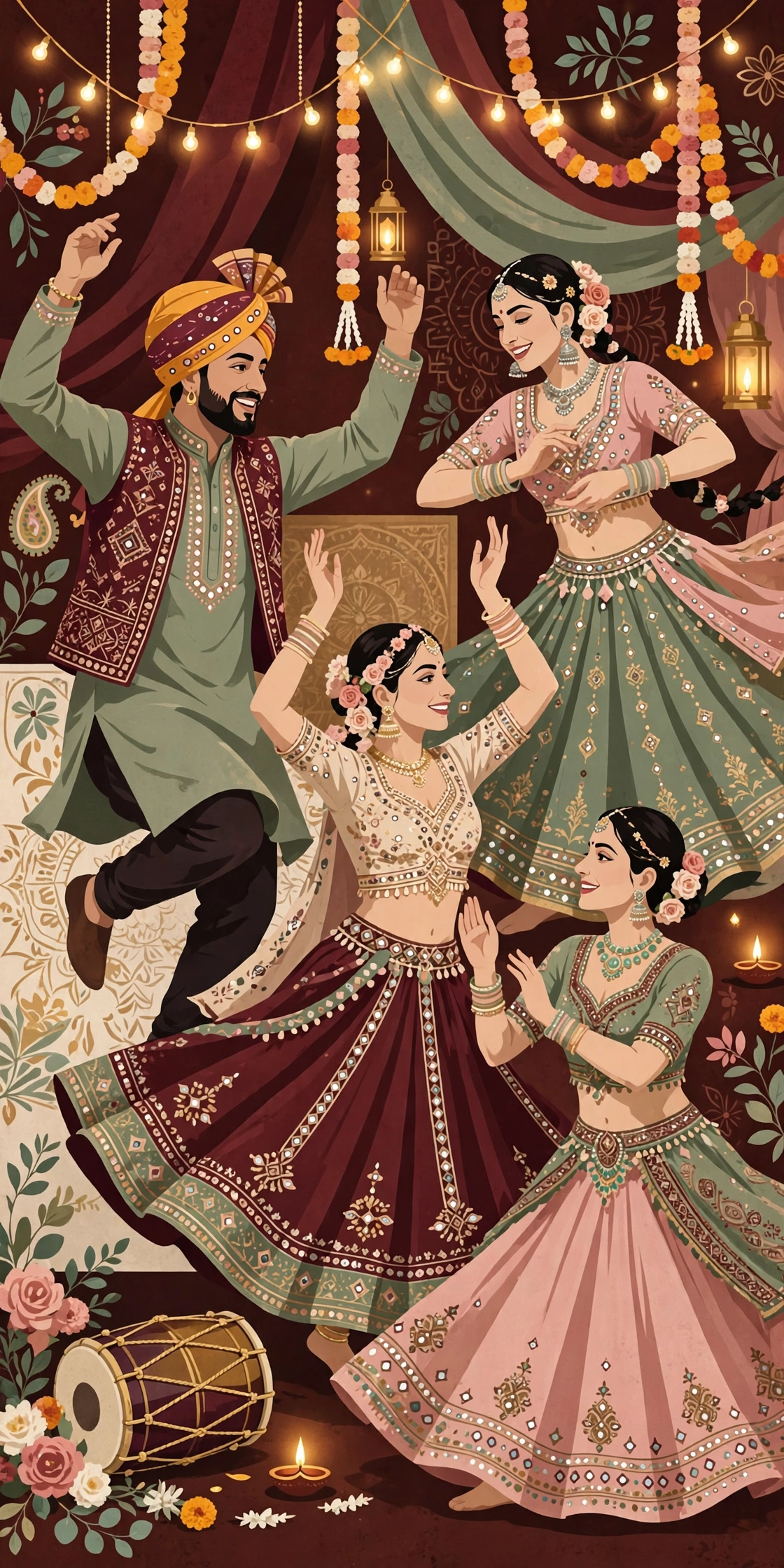
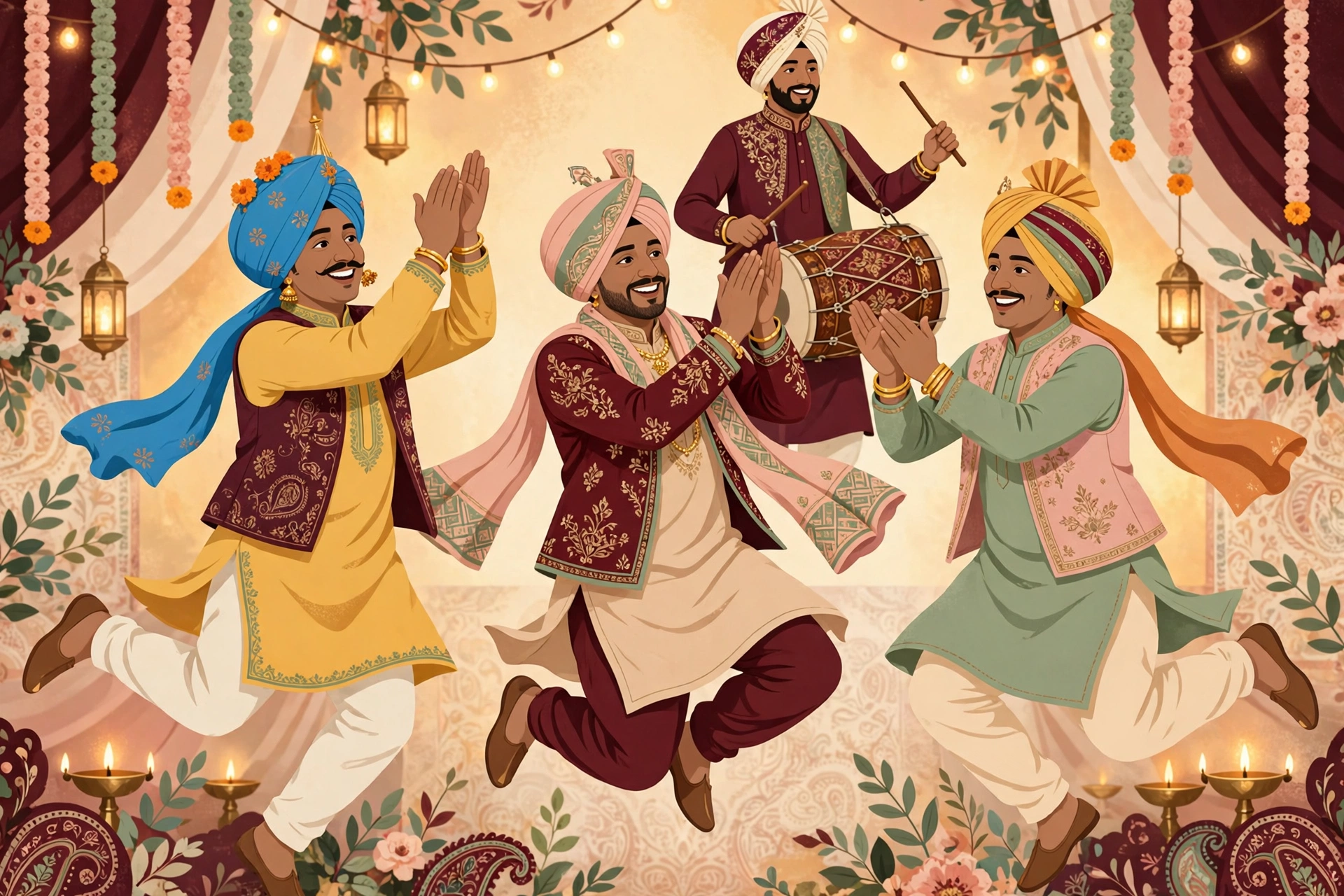
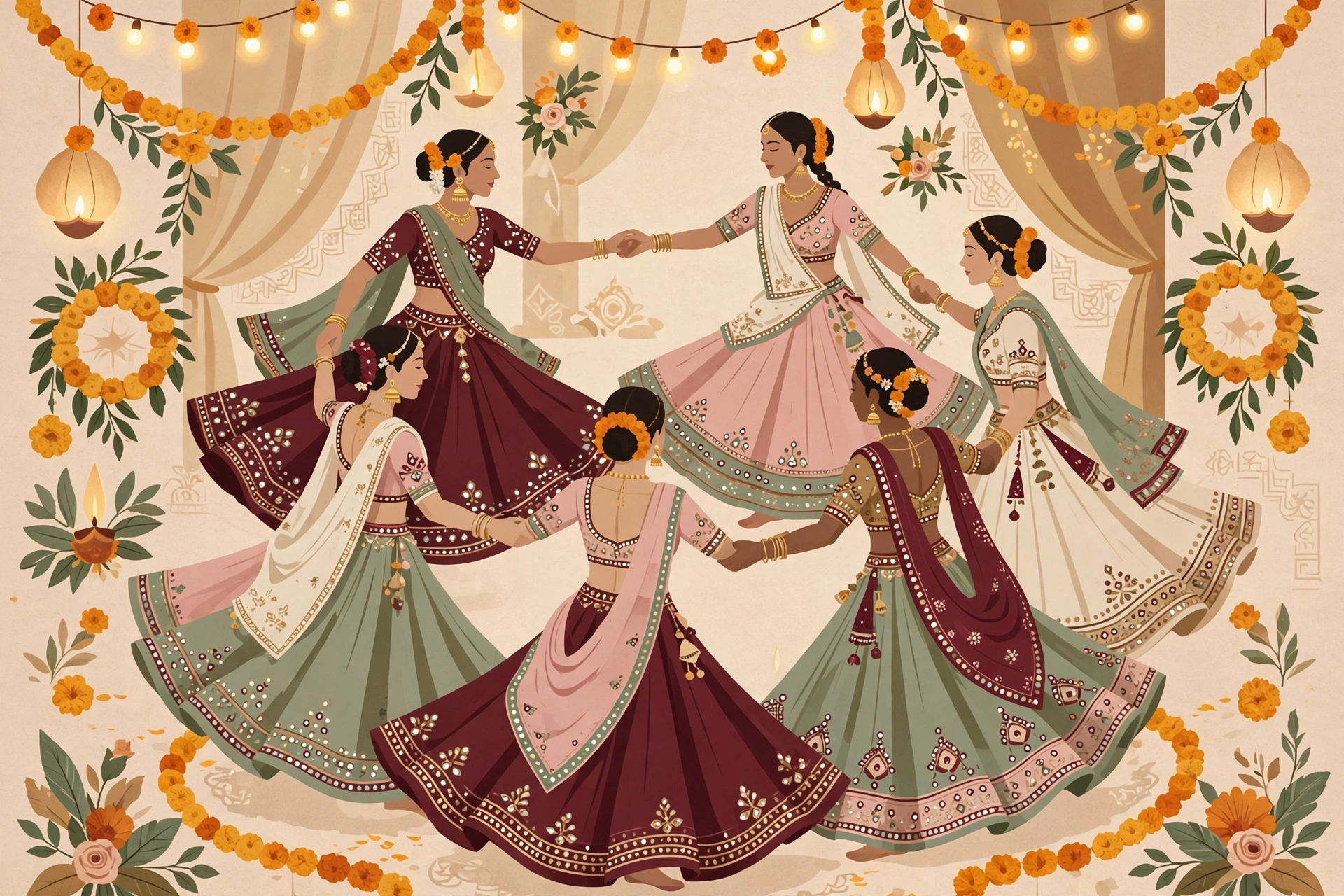
The costumes matter as much as the steps. Bright turbans and phulkari for bhangra, mirror work chaniya cholis for garba, flowing ghagras for ghoomar: these are the pictures that fill the wedding album. A troupe that arrives in full costume, ready to perform, changes the look of the whole function.
Bhangra: the Punjabi heartbeat
Bhangra is the most booked folk form for North Indian weddings, and the most energetic. The dancers leap, spin, and clap in time to the dhol, and the audience claps along whether they know the steps or not. It suits the baraat, the sangeet, and the reception entrance equally well.
Garba and dandiya: the Gujarati circle
Garba is a circle dance, and that shape is its magic. Guests join the circle, follow the steps, and the dance grows as more people join. A garba troupe can lead the circle, teach the basic steps in five minutes, and then let the family take over. It suits the sangeet, the mehendi, and a dedicated garba night.
Book the troupe with the dandiya sticks included, and ask whether they provide the music or work with your DJ. A live dhol and harmonium give garba its true sound, while a DJ can mix the folk tracks with film numbers for the younger crowd. Agree the mix in advance, so the change from live to recorded music feels smooth.
Ghoomar, lavani, and the other forms
Ghoomar is the graceful dance of Rajasthan, with slow spins and flowing ghagras. It suits a royal themed sangeet or a reception entrance, and it photographs beautifully in warm light. Book a troupe that knows the traditional steps, and give them a smooth floor: a rough surface will catch the long skirts.
Lavani is the fast, expressive dance of Maharashtra, with quick footwork and dramatic expressions. It suits a high energy sangeet and a crowd that loves performance. Kalbeliya, the snake charmer dance of Rajasthan, suits a smaller, more intimate function, where the guests can watch the details up close.
Match the form to the community. A Punjabi family expects bhangra. A Gujarati family expects garba. A Rajasthani family expects ghoomar. Booking the wrong form for the community is like serving the wrong food: guests will be polite, but they will not feel at home. Ask the elders which form they want, and book that one first.
How to choose a troupe
Hear them perform live before you book. A video of a full wedding set is the minimum, and a visit to a public performance is better. Watch the energy at the end of the set, not just the start. A troupe that is still smiling and sharp after twenty minutes is a troupe that can carry your sangeet.
Ask for two references from recent weddings and call them. Ask whether the troupe arrived on time, whether they performed the agreed set, and whether they handled the stage and the sound without fuss. Also ask what they charged and whether anything was added on the day.
The brief and the order of the night
Write the brief on one page. The function, the stage size, the set length, the songs or beats, and the place of the folk act in the order of the night. Share the family performance list with the troupe, so they know what comes before and after them.
Give the troupe the music in advance. If they perform to recorded tracks, share the exact versions a week ahead. If they perform live, agree the songs and the tempo. A folk act that has to improvise to an unfamiliar track will look uncertain, and the guests will feel it.
Agree the cues with the DJ and the anchor. The anchor introduces the troupe, the music starts cleanly, and the troupe takes the stage without a long wait. A five minute gap between the introduction and the first step kills the energy, so rehearse the handover at the sound check.
Style guidance: matching the dance to your wedding
Match the dance to the function and the crowd. Bhangra suits a high energy sangeet with a young crowd. Garba suits a family night where everyone is expected to join. Ghoomar suits a royal themed evening with a formal crowd. A small, intimate function suits a single graceful form rather than a loud troupe.
What you need before you book
Have these ready and the booking moves fast:
- The date, venue, and stage size for each function with folk dance.
- The form you want: bhangra, garba, ghoomar, lavani, or another.
- The set length and the place in the order of the night.
- The music, shared a week ahead in the exact versions.
- Two references from recent weddings, actually called.
- A contract that names the dancers, the costumes, and the timings.
Cost
A folk dance troupe in India usually costs between ₹20,000 and ₹1,50,000 for a function, depending on the number of dancers, the fame of the troupe, and the city. A small local troupe can cost less, while a well known troupe for a big sangeet can cost more. Costumes, travel, and stay are often extra, so ask for an itemised quote.
The invitation that tells guests about the dance nights is the Cinematic Invite at ₹499, the Invite App at ₹399, and Invitation Suites at ₹99. Add a line about the sangeet or garba night, so guests bring their dancing shoes and their energy.
How to create
- Pick your invite design from the Cinematic Invites on MyIndiAura and note the theme name.
- Add the sangeet and dance night details, with the venue and time.
- Add a line about the folk performances, so guests arrive on time.
- Preview the invite on your phone, then share it on WhatsApp, family first.
Start with the invitation
Folk dance will fill your sangeet with colour and joy, but the circle only forms if guests arrive on time. Send an invitation that names the dance night clearly, and the floor will be full before the first beat.
MyIndiAura theme showcase
These Cinematic Invites from MyIndiAura fit this wedding. Each one is ₹499.
- Laal Doli: Bold and festive, it carries the energy of bhangra and a big baraat.
- Jharokha Ki Shaam: Warm and traditional, it fits an evening of folk dance and family.
- Gulab Dil: Soft and joyful, it suits a garba night full of colour.
Related reading
Explore invitation designs
Choose a design and preview it free with your own names.
Found this useful? Share it with someone planning a celebration.
Share