Elderly Guests at Indian Weddings: Comfort Guide
The elders are the reason the wedding exists, so seat them where they can see, feed them on time, and keep the day short enough for them to enjoy.
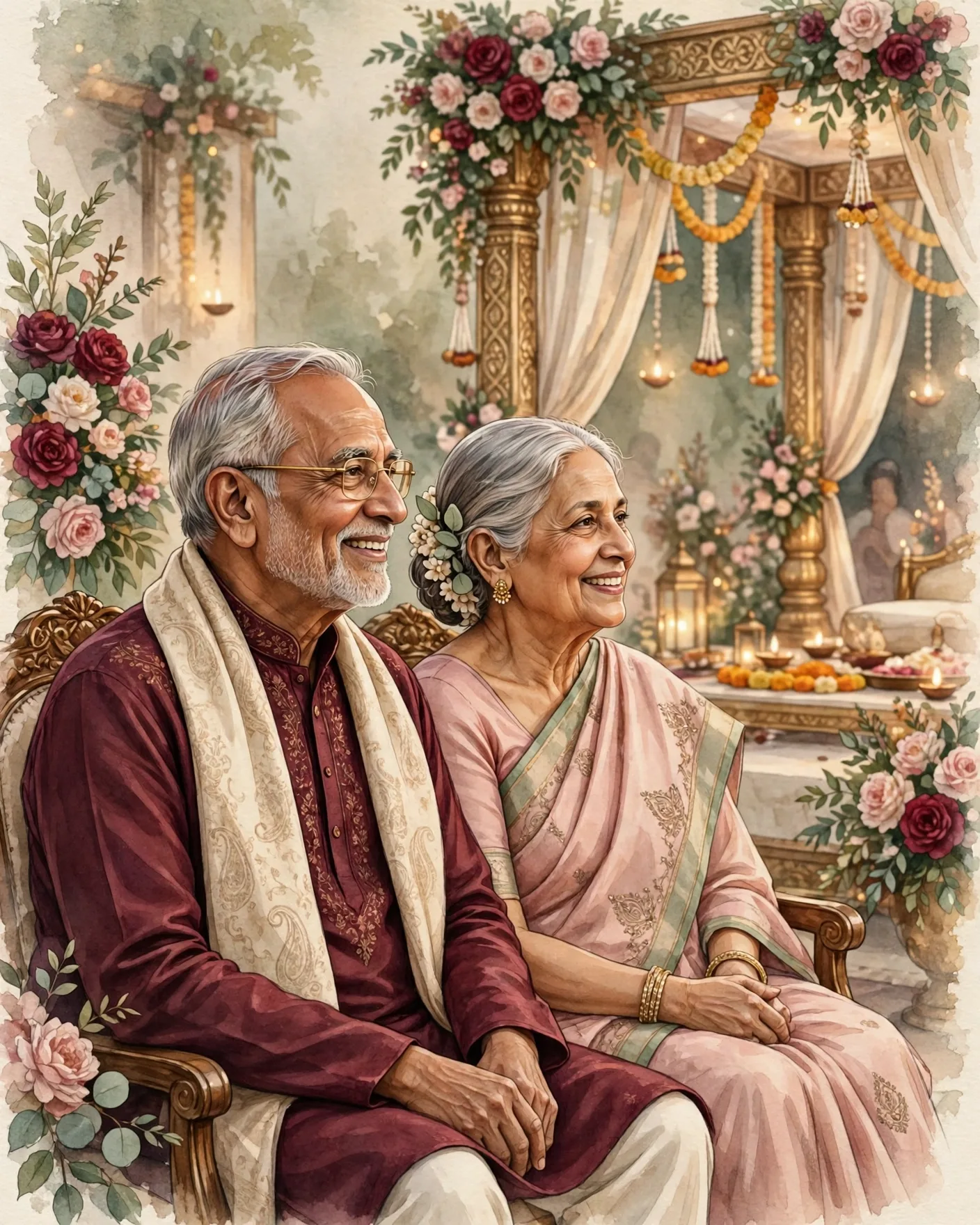
The elders are the reason for the wedding
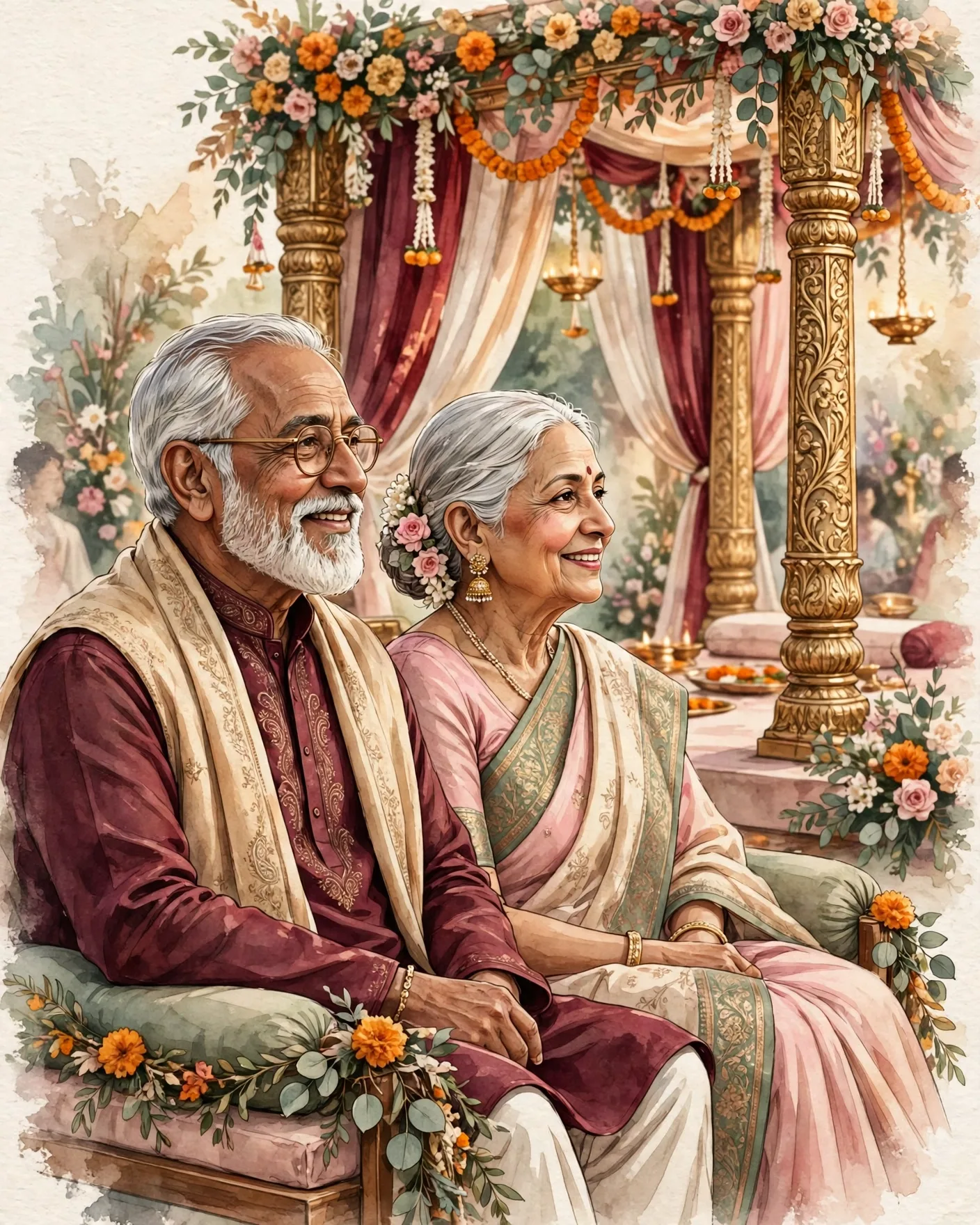
An Indian wedding is, more than anything, a gathering of elders. Grandparents, great aunts and uncles, the family priest, the neighbours who watched the couple grow up. They are the people whose blessings the couple seeks, and they are the people the wedding is most likely to exhaust. A five hour ceremony, a noisy sangeet, a late dinner, and a hall with nowhere to sit quietly is a hard day for a seventy year old, and a harder one for an eighty year old with a bad knee.
Comfort for elders is not luxury. It is seating where they can see, food on time, a quiet room, a toilet nearby, and a day that ends before they are too tired to enjoy it. Most of it costs nothing. All of it needs planning, because a hall that works for a dancing twenty year old does not work for a grandmother without thinking.
Seating, sightlines, and the ceremony
Seat elders at the front, near the mandap, where they can see the couple and hear the priest, and seat them with family, not with strangers. A front row chair with a back and armrests is worth more than a sofa at the back, because an elder who cannot stand up easily needs arms to push against. Keep the chairs stable on a flat floor, not on a lawn where they sink, and keep a clear path from the chair to the mandap, to the food, and to the toilet, with no cables, no steps, and no flower arrangements in the way.
The ceremony itself is long, and elders tire. Keep the pheras to the time the priest needs, and agree with the priest that the blessings and the family photographs happen promptly. Tell elders the order of the ceremony on a printed card on their chair, so they know what is happening and when they can leave.
Food, medicine, and timing
Elders eat early and eat lightly, and a wedding that serves dinner at ten at night has already lost them. Serve the elders first, at every meal, with mild food, less oil, less spice, and soft dishes they can eat comfortably. Keep water on their table at all times, and keep tea available, because elders drink tea and they will ask for it. Ask about dietary needs in advance, Jain, diabetic, low salt, and tell the caterer, because a caterer who knows will prepare a plate, and one who does not will shrug.
Medicine is personal, and the family should not manage it, but the family should make it easy. Tell elders to bring their medicines, and keep a small first aid kit with the coordinator, with pain relief, antacid, and a thermometer. Keep the number of the nearest hospital on a card with the coordinator, and keep a car ready for a hospital trip, because an elder who feels unwell needs a car in five minutes, not a discussion about whose car it is.
The quiet room, the toilet, and the transport
A quiet room near the hall is the single most useful thing for elders. A room with a bed or a sofa, dim light, water, and a chair, where an elder can rest for half an hour and come back. Tell elders where the room is when they arrive, and tell the family, so no one has to search for it. A tired elder who rests for half an hour stays for the evening. A tired elder with nowhere to rest goes home.
Toilets matter more than decor for elders. Keep a clean toilet near the hall, not at the far end of a garden, with a Western seat, a handrail if possible, and someone checking it through the day. Keep the path to it lit, dry, and free of steps, because a fall in a dark garden is the accident every family fears.
Transport should be door to door for elders. A car that picks them up from home and drops them at the hall door, and takes them home when they are ready, not when the bus leaves. Tell elders the transport time when the invitation goes out, so they can plan, and keep a car on standby through the evening for an early departure, because an elder who wants to leave at nine should not have to wait for a bus at eleven.
The sangeet, the noise, and the farewell
The sangeet is the loudest function, and elders love it in small doses. Seat them near the front but away from the speakers, and keep the volume lower for the first hour. Give elders a role, a blessing, a song, a dance with the grandchildren, so they are part of the evening.
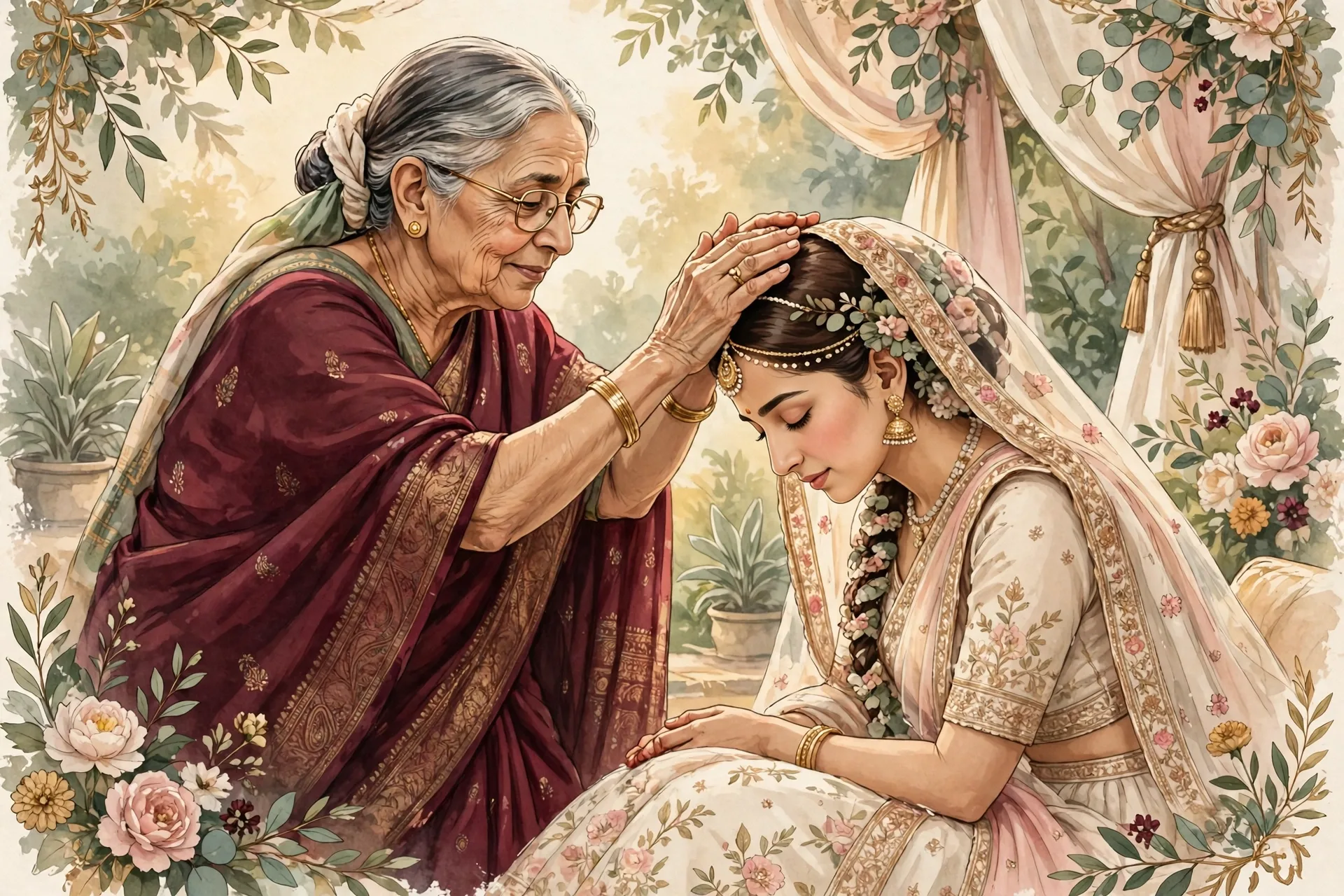
The vidaai is emotional for elders, and they need time. Give the farewell a real slot, with the family gathered, and let the elders bless the couple without rushing. Keep a car ready, with water and tissues, and keep the couple's bags already loaded, so the farewell is about the family. After the vidaai, check on the elders, because a wedding day is long and emotional, and a grandparent who has given their blessing deserves a quiet word and a car home.
What it costs
Comfort for elders costs little, a quiet room, a chair with arms, food served early, and a car on standby. The invitation that tells elders the timings, the venue, and the transport, so they arrive knowing what to expect, is a fixed and small cost. On MyIndiAura, a Cinematic Invite is ₹499, an Invite App is ₹399, and an Invitation Suite is ₹99. An Invite App suits a family wedding best, because it holds every function with its time, venue and map in one link, in large type that elders can read on a phone.
How to create your family wedding invitation
- Pick a design from the designs page at myindiaura.com/designs that matches your wedding colours.
- Add every function with its date, time and venue, so elders always know where to be.
- Add the venue map, the dress code for each function, and the RSVP button.
- Preview the invitation on your own phone, then share the link on WhatsApp. See myindiaura.com/create to start, and myindiaura.com/pricing for the full price list.
Details to check before you send
- Elders seated at the front, near the mandap, in chairs with backs and armrests
- A quiet room near the hall, with a bed, water and a chair, told to every elder on arrival
- Food served to elders first, mild and on time, with dietary needs told to the caterer
- A clean toilet near the hall, with a lit, dry, step free path
- Door to door transport for elders, with a car on standby for an early departure
- The nearest hospital number with the coordinator, and a car ready for five minutes
Frequently asked questions
How long should elders stay at a wedding?
As long as they enjoy it. Plan the ceremony and the dinner so elders can attend both and leave when they are tired, usually by ten at night. Never plan a day that needs them until midnight.
Should we seat elders separately from the young guests?
Seat them with family, near the front, not in a separate elders corner. They want to be part of the wedding, not parked away from it, and they want to see the couple, not the back of the hall.
What if an elder has a medical emergency?
Keep the hospital number and a car with the coordinator, and call for help at once. Tell the family in advance who the coordinator is, so no one wastes time deciding who to call.
MyIndiAura theme showcase
These Cinematic Invites from MyIndiAura fit this wedding. Each one is ₹499.
- Saanjh Mandir: climb the temple steps into a lit Nagara mandir at dusk.
- Bodhi Saanjh: touch the lotus by the Buddha shrine and watch it open on the lake.
- Cream Crest: a cream embossed envelope with a crest seal, opening to a Mediterranean balcony.
Related reading
- Wedding Guest Management and RSVP Tracking Guide
- How to Manage Wedding Guests with Kids
- Indian Wedding Planning Timeline: From Engagement to Wedding Day
The elders are the reason the wedding exists, and their comfort is the measure of a well planned day. Seat them where they can see, feed them on time, give them a quiet room, and let them leave when they are ready.
Explore invitation designs
Choose a design and preview it free with your own names.
Found this useful? Share it with someone planning a celebration.
Share