Destination Wedding Guest Logistics: Travel and Stay
Flights, rooms, cars and welcome hampers. Here is how to move your guests through a destination wedding without a single missed pickup.
Why guest logistics decides the wedding
A destination wedding is won or lost on logistics. The venue can be perfect and the decor can be beautiful, but if guests land at midnight with no car waiting, or reach the hotel to find no room ready, the whole week feels wrong. Good logistics are invisible. Guests notice them only when they fail.
Start with the numbers. Count the guests who need flights, the guests who need trains, and the guests who will drive. Count the rooms you need, the cars you need, and the meals you need to serve. A destination wedding moves a small village for three days, and the only way to move it well is to write it all down.
Name one person to own logistics. It can be a family member, a planner or a coordinator at the venue. That person holds the room list, the travel list and the car list, and every guest calls that one number. When five people hold five lists, guests fall through the gaps.
Flights, trains and the arrival plan
Book the travel early and share the plan with the invitation. Guests book flights earlier when they know which airport to fly into and which hotel to stay at. Give them two or three flight options, with the times and the airlines, so they can pick what suits them.
Arrange pickup for every guest who flies or trains in. A welcome desk at the airport with a familiar face, water and a car waiting changes the whole mood of the trip. Share the pickup list with the driver team a week before the wedding, with names, flight numbers and arrival times, so nobody waits at the airport.
Keep a buffer in the arrival plan. Flights get delayed, trains run late, and cars get stuck in traffic. Ask guests to arrive a day before the first function, so a delay does not mean a missed haldi. The wedding day itself should have no arrivals at all.
Rooms: blocking, sharing and the overflow
Block rooms in the wedding hotel first, then in a second hotel nearby for the overflow. Guests should never have to find their own hotel in a new place. Share the room list with the hotel 30 days before the wedding, with arrival times, so rooms are ready when people land.
Decide who shares with whom before you send the list. Couples share a room, single guests share with a friend or a sibling, and older guests get rooms near the lift and the dining hall. Ask guests about their room needs in the RSVP, so you do not learn about a wheelchair or a baby on the day itself.
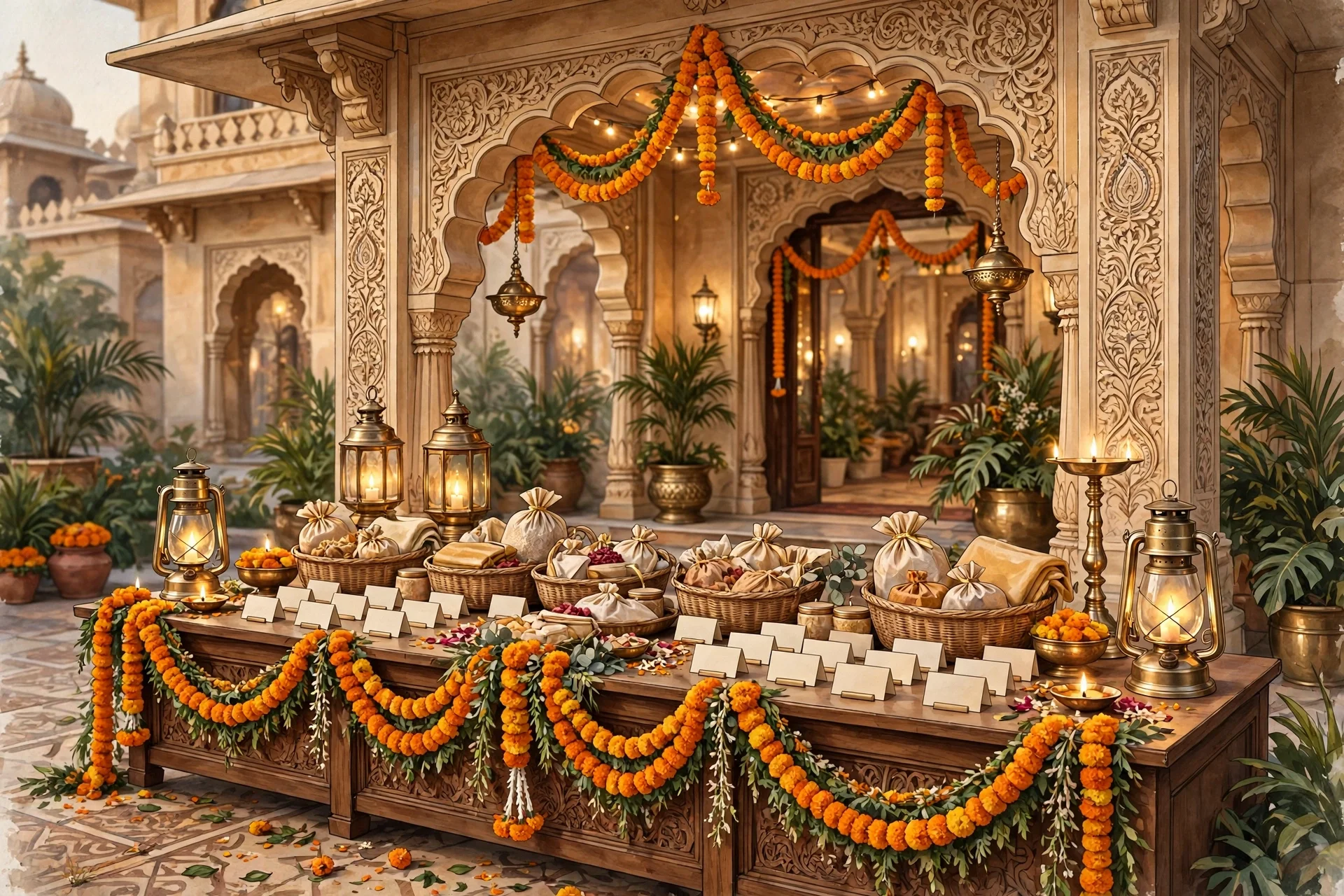
Give each guest a small welcome note in the room: the schedule, the dress code for each function, and one phone number to call for help. A welcome hamper with water, snacks and a local sweet is a kind touch, and it costs little. Keep the hamper simple, because guests will not carry a heavy box home.
Cars, buses and moving guests between venues
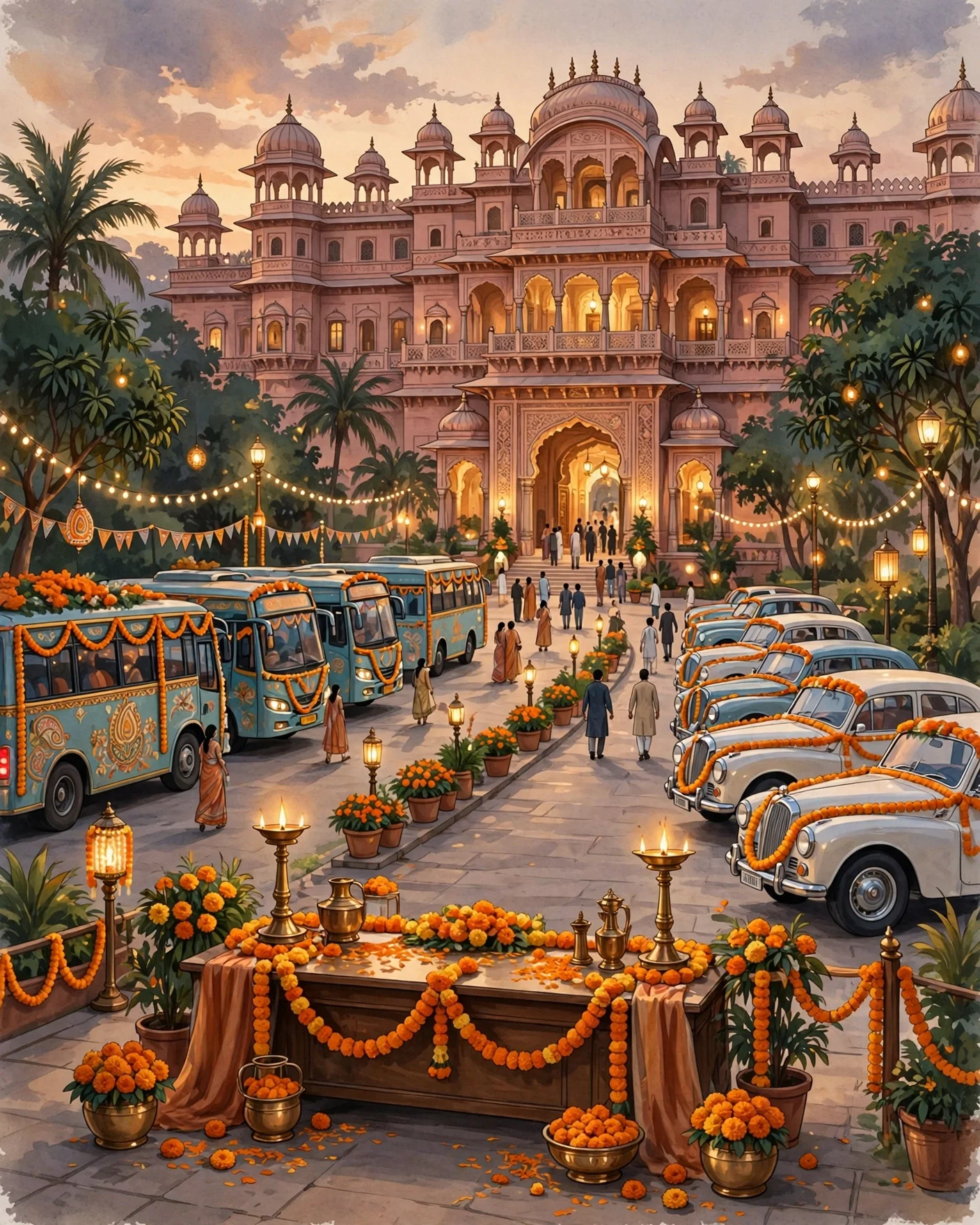
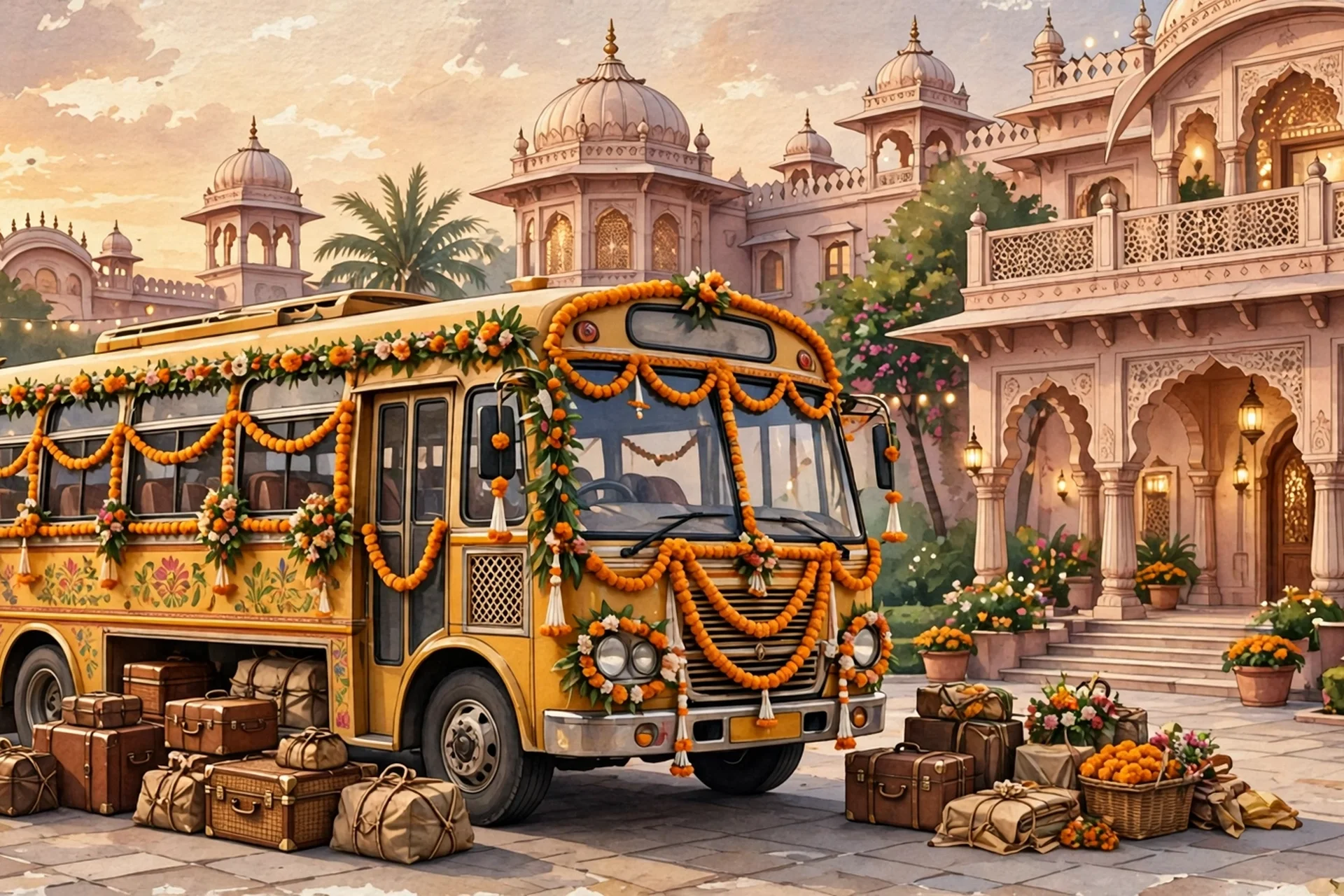
Count the cars you need for each day, not for the wedding as a whole. The baraat needs cars, the airport needs cars, and the dinner needs cars, and they all happen at different times. A small car can carry four guests, a bus can carry forty, and the right mix saves money and waiting time.
Put one bus on a loop between the hotels and the venue. Guests should never have to call a car or wait on the road. Share the bus timings with the invitation and again in the welcome note, so everyone knows when the bus leaves. Keep one car free at all times for emergencies, for older guests, and for the couple.
Food, water and the small comforts
Feed guests on time, every time. A destination wedding runs on long days, and hungry guests become unhappy guests. Keep water, tea and snacks available between functions, and keep a simple meal ready for guests who arrive late. Older guests and children need food first, so plan their meals before the main rush.
Keep a first aid kit and a small medical list at the venue. Note the nearest hospital and pharmacy, and share the numbers with the logistics owner. Guests with medicines should carry them in hand luggage, not in checked bags, because bags get delayed.
Check the weather and the season for the destination, and tell guests what to carry. Sunscreen for a beach, shawls for a desert night, mosquito repellent for a forest, and comfortable footwear for a heritage town. One line in the invitation saves a hundred questions later.
The welcome note and the schedule card
Send the travel plan with the invitation, not after it. Guests book earlier when they know the plan, and you get fewer last minute questions. The plan should name the airport or station, the hotel, the pickup time, and the first function.
Put a schedule card in every room. It should list each function with the date, the time, the venue and the dress code, in large print. Older guests read the card, younger guests read the invite, and both should agree. One phone number on the card, for the logistics owner, is enough.
What it costs
On MyIndiAura, a Cinematic Invite is ₹499, an Invite App is ₹399, and an Invitation Suite is ₹99. Choose by what your invitation needs to do, not by price alone. A cinematic invite suits a wedding with a film led opening, while an invite app suits a full week of functions with RSVP and maps.
How to create your destination wedding invitation
- Pick a design that matches your destination from the designs page at myindiaura.com/designs.
- Add the couple names, the venue, the dates for each function, and the full travel note for guests.
- Add photos of the couple, the venue map, and the RSVP button.
- Preview the invitation on your own phone, then share the link on WhatsApp. See myindiaura.com/create to start, and myindiaura.com/pricing for the full price list.
Details to check before you send
- The room list, with names, sharing and arrival times, shared with the hotel
- The travel plan: flights, trains, pickup, cars and buses
- The welcome note and the schedule card, printed and in every room
- The dress code for each function, and a note about what to carry
- The RSVP contact for guests who need directions or help
- The backup plan: a spare room, a spare car and the vendor numbers
Frequently asked questions
When should we send the travel plan to guests?
Send it with the invitation, not after it. Guests book flights earlier when they know the airport, the hotel and the pickup time, and you get fewer last minute questions.
How many rooms should we block?
Block rooms for every guest who needs one, in the wedding hotel first and a second hotel nearby for the overflow. Share the room list with the hotel 30 days before the wedding.
Who should own guest logistics?
Name one person: a family member, a planner or a coordinator at the venue. That person holds the room list, the travel list and the car list, and every guest calls that one number.
MyIndiAura theme showcase
These Cinematic Invites from MyIndiAura fit this wedding. Each one is ₹499.
- The Wedding Post: letters and stamps for a wedding that travels.
- Cream Crest: a soft cream palette for a calm celebration.
- Atelier Seal: a sealed invitation for a formal celebration.
Related reading
- Destination Wedding Planning Checklist
- How to Plan a Destination Wedding on a Budget
- Udaipur Destination Wedding Planning Guide
Create your destination wedding invitation on MyIndiAura, and let the logistics run quietly in the background.
Explore invitation designs
Choose a design and preview it free with your own names.



Found this useful? Share it with someone planning a celebration.
Share