Classical Music for Indian Wedding Ceremonies
How classical music, from shehnai to strings to the nadaswaram, shapes the ceremony, and how to choose the right musicians for your rituals.
In short
Classical music gives the ceremony its gravity. It tells the room that something sacred is happening, without a single announcement.
Match the music to the ritual: shehnai for a North Indian morning, nadaswaram for a South Indian ceremony, strings for a quiet evening.
Book musicians who know the ceremony order, and let them play softly under the rituals.
Why classical music belongs at the ceremony
A wedding ceremony is slow, deliberate, and full of small moments: the tying of a knot, the exchange of garlands, the circling of a fire. Recorded music can fill the silence, but it cannot breathe with the moment. Live classical musicians watch the rituals and follow them, speeding up a little when the couple move, softening when the priest speaks, and rising at the exact moment of the vows.
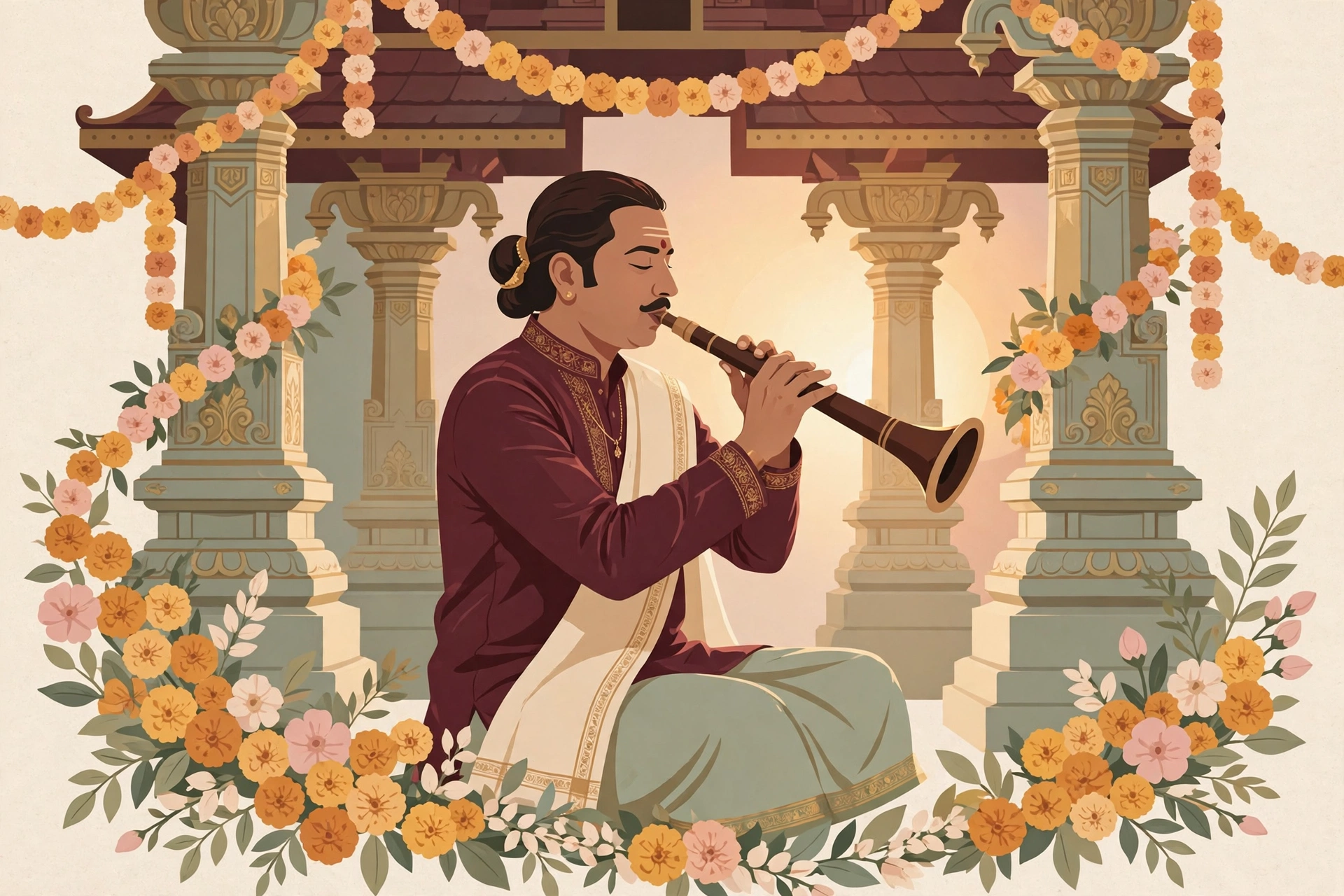
Classical music also photographs beautifully. A shehnai player in a corner of the mandap, a nadaswaram player at the temple door, a violinist under a tree: these images carry the feeling of the ceremony in a way that a speaker stack never will.
The instruments and where they fit
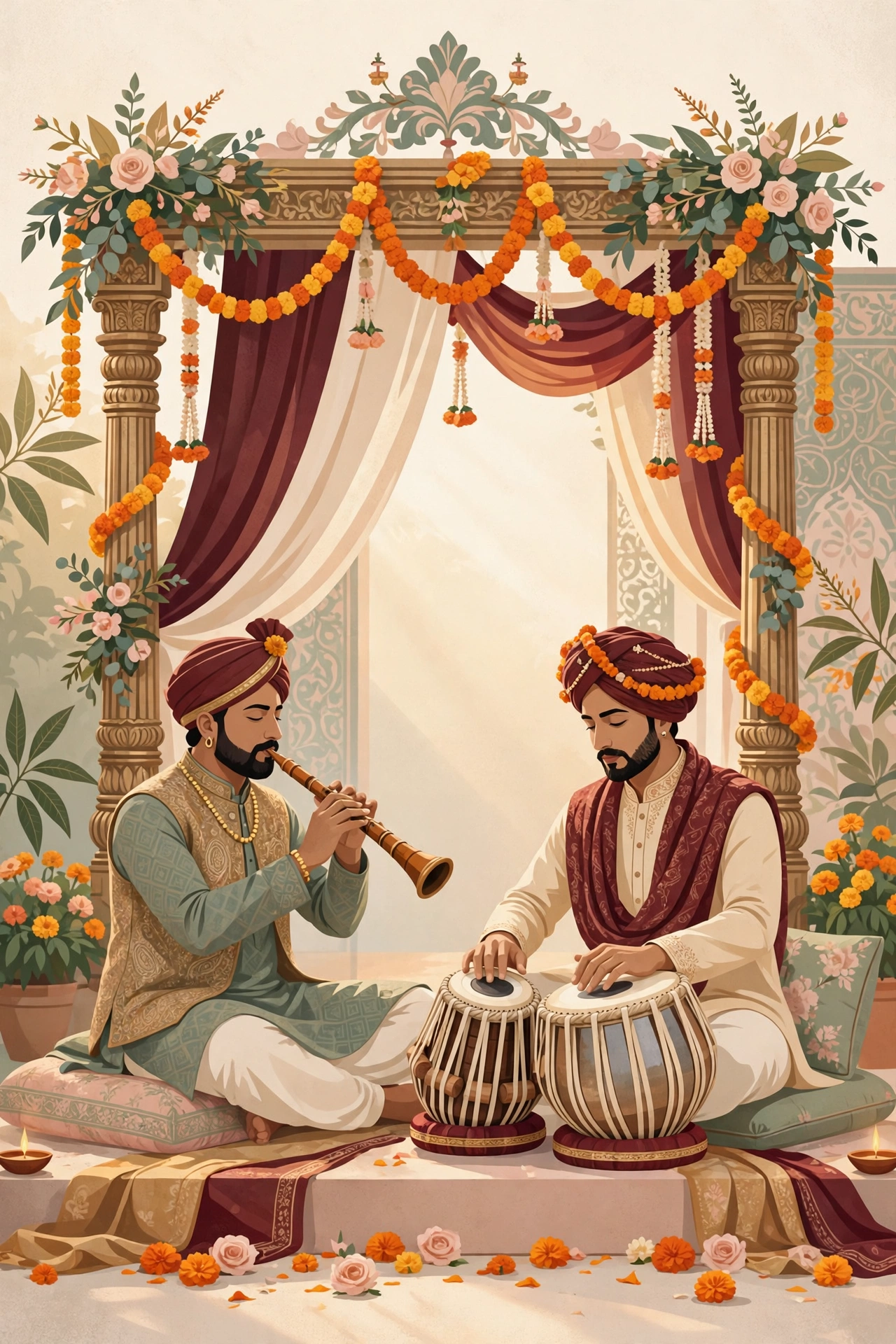
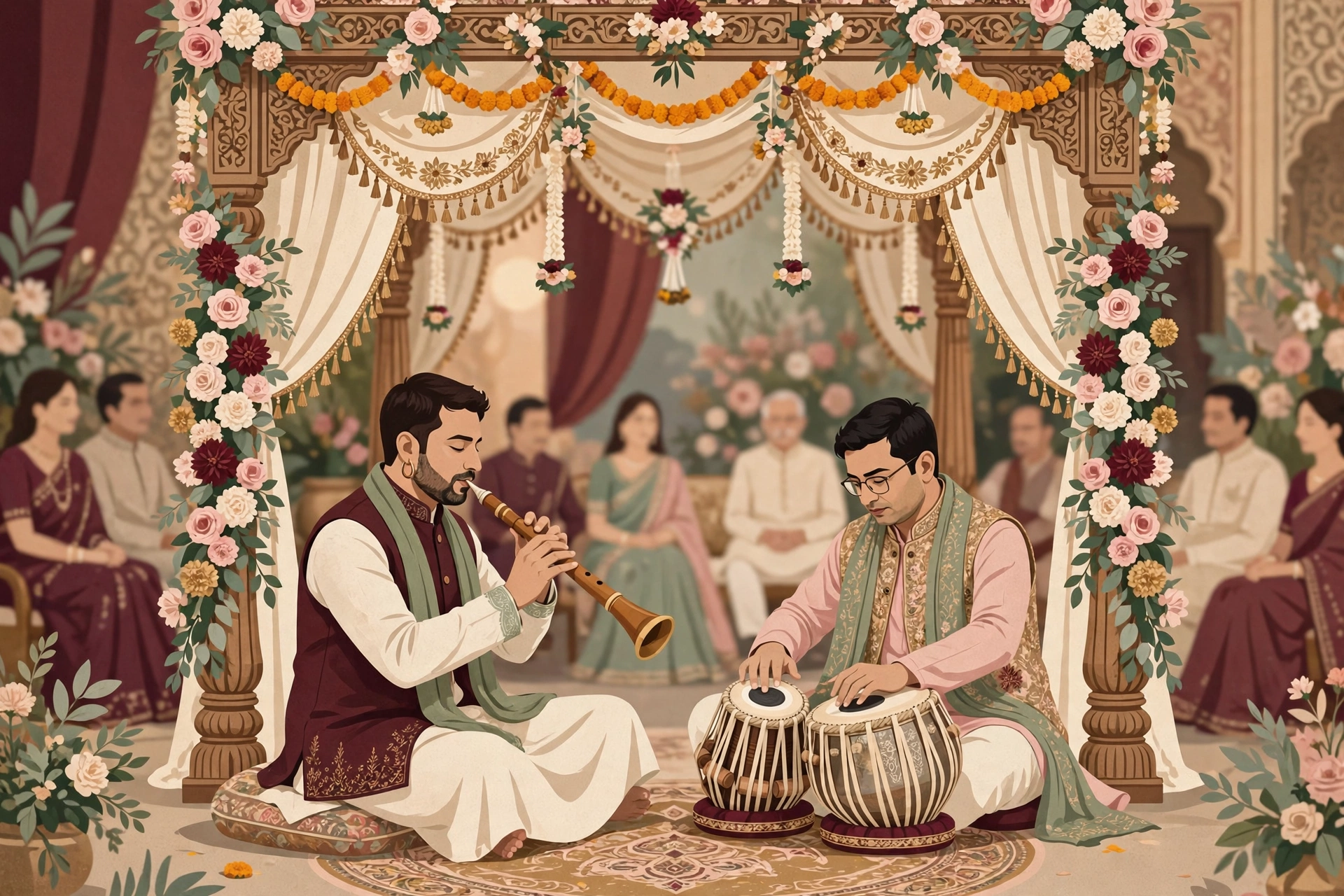
The shehnai leads North Indian ceremonies. It plays as guests arrive, during the groom's entry, through the varmala, and under the pheras. Its bright, singing tone carries across a hall without amplification, and it suits the morning ragas best.
The nadaswaram and thavil lead South Indian ceremonies. The nadaswaram is loud and joyful, made for temple courtyards and open halls. It announces the groom's arrival and accompanies the tying of the thaali. Families often book the same group for the engagement and the wedding, so the sound becomes part of the family's story.
The flute, or bansuri, suits quiet moments: the welcome, the haldi, and the time before the ceremony begins. Its soft tone calms a nervous morning. The veena suits a Carnatic ceremony and a small, intimate gathering. A string quartet or a solo violin suits an evening ceremony, a Christian wedding, or a reception that wants an elegant, unobtrusive sound.
Choose one lead instrument per function rather than mixing many. A ceremony with a shehnai, a flute, and a violin all playing at once will sound crowded. Let one voice lead each part of the day.
Choosing the musicians
Hear them play at a real ceremony before you book. A studio recording hides the things that matter: whether the player can hold a note for a full ritual, whether they watch the priest and follow the pace, and whether they know when to stop. Ask for a video of a full ceremony, and watch the quiet moments, not just the loud ones.
Ask about the repertoire. Can the musicians play the ragas suited to the time of day: morning ragas for a morning ceremony, evening ragas for an evening function. Can they play the devotional songs your family loves, and the film tunes the elders request at the welcome. A musician with a narrow repertoire will repeat the same three pieces all morning.
Check the group size. A solo shehnai suits a small ceremony. A shehnai with tabla suits a larger hall. A nadaswaram group is usually a team of three or more, with the thavil player setting the beat. A string quartet needs four players and a little more space. Agree the exact group in writing, with names, so a substitute does not arrive on the day.
The brief: ceremony order, sound, and silence
Write the brief on one page. The ceremony order with rough timings, the moments the music should lead, and the moments it should fall silent. The mantras and the vows belong to the priest and the couple, not to the musicians. A good classical musician already knows this, but writing it down prevents every misunderstanding.
Sound needs a light touch. Classical instruments are designed to fill a room without amplification, and too much microphone ruins the tone. In a small hall, no amplification is best. In a large banquet, one gentle microphone for the lead instrument is enough. Do a sound check with the room in its final layout, and listen from the back row as well as the front.
Classical music across the week
Many families pair classical music with a modern act. The shehnai leads the morning, the DJ takes the sangeet, and a string quartet plays the reception dinner. The contrast works because each function has its own mood, and the music marks the change. Tell each act about the others, so the handover feels planned rather than accidental.
Style guidance: matching the music to your wedding
Match the instrument to the community and the ritual. A Tamil wedding calls for the nadaswaram. A North Indian wedding calls for the shehnai. A Bengali wedding may want a soft flute and a harmonium. A Christian wedding may want strings or a choir. The music should feel like it belongs to the family, not like it was chosen from a catalogue.
Talk to the elders. For many grandparents, the ceremony music is not a detail, it is the wedding. Ask which instrument they expect, and include it even if the rest of the wedding is modern. The elders will relax, and the ceremony will feel right to everyone.
Keep the rest of the ceremony simple. The music, fresh flowers, and a clean mandap are enough. A ceremony crowded with extra acts and loud sound will lose the very calm that classical music creates. Let one beautiful sound lead, and the morning will feel complete.
What you need before you book
Have these ready and the booking moves fast:
- The date, venue, and start time of the ceremony.
- The ceremony order in writing, with music and silence marked.
- The instrument you want, matched to your community and rituals.
- Solo or group, with the names of the players agreed in writing.
- The sound setup and the seating spot, confirmed with the venue.
- One family point of contact for the musicians.
Cost
Classical musicians in India usually cost between ₹15,000 and ₹1,00,000 for a ceremony, depending on the instrument, the fame of the artist, and the city. A solo flute player can cost less, while a well known shehnai maestro or a full nadaswaram group can cost more. Travel is often extra, so ask for an itemised quote.
The invitation that carries the ceremony details to your guests is the Cinematic Invite at ₹499, the Invite App at ₹399, and Invitation Suites at ₹99. Add the ceremony start time clearly, so guests arrive while the music is still playing its welcome.
How to create
- Pick your invite design from the Cinematic Invites on MyIndiAura and note the theme name.
- Add the ceremony details, with the venue and the start time.
- Add a line about the morning ceremony, so guests plan to arrive early.
- Preview the invite on your phone, then share it on WhatsApp, family first.
Start with the invitation
Classical music will give your ceremony its soul, but only the guests who arrive on time will hear it. Send an invitation with the ceremony time written clearly, and the hall will be full before the first note.
MyIndiAura theme showcase
These Cinematic Invites from MyIndiAura fit this wedding. Each one is ₹499.
- Music Box: A musical theme that suits a ceremony where classical music leads.
- Nadavathil: Warm and traditional, it fits a South Indian ceremony beautifully.
- Mandap Yatra: A journey to the mandap, made for a ceremony led by music and ritual.
Related reading
Explore invitation designs
Choose a design and preview it free with your own names.

Found this useful? Share it with someone planning a celebration.
Share