Chandi Silver Jewellery for Indian Weddings
Chandi, or silver, is the cool, graceful metal of Indian weddings. Here is how to choose silver jewellery, from anklets to necklaces, that suits every ceremony.
How to choose chandi silver jewellery
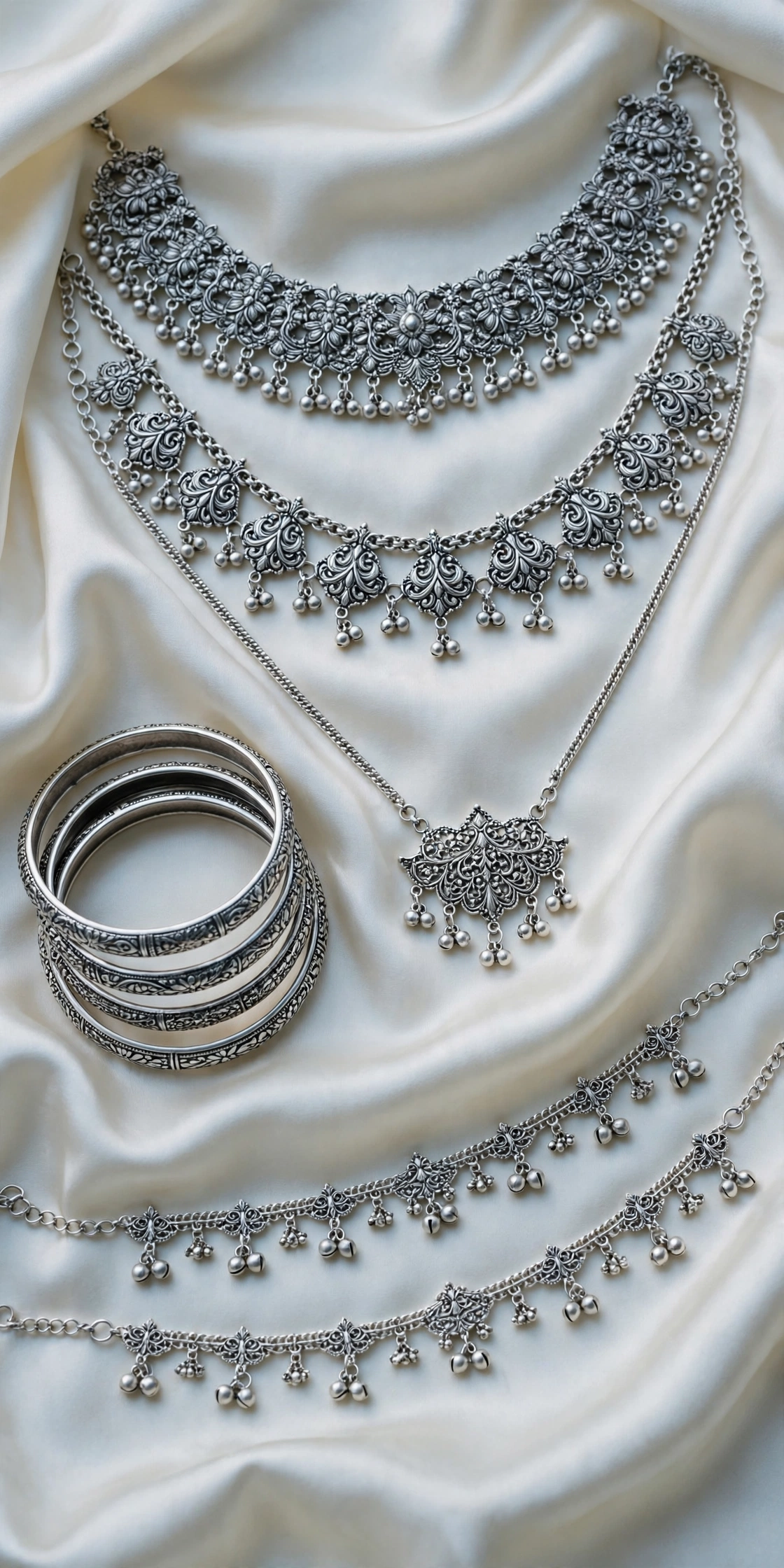
Chandi, or silver, is the cool, graceful metal of Indian weddings. Where gold is warm and regal, silver is soft, bright, and calm. It suits pastel outfits, daytime ceremonies, and brides who want elegance without the weight and the price of gold. Silver jewellery has its own traditions too: anklets, toe rings, and silver vessels are part of many Indian weddings, and a silver set can be as meaningful as a gold one. The rule is simple: pick silver that suits your outfit, your skin, and your ceremony.
Necklaces, earrings and bangles in silver
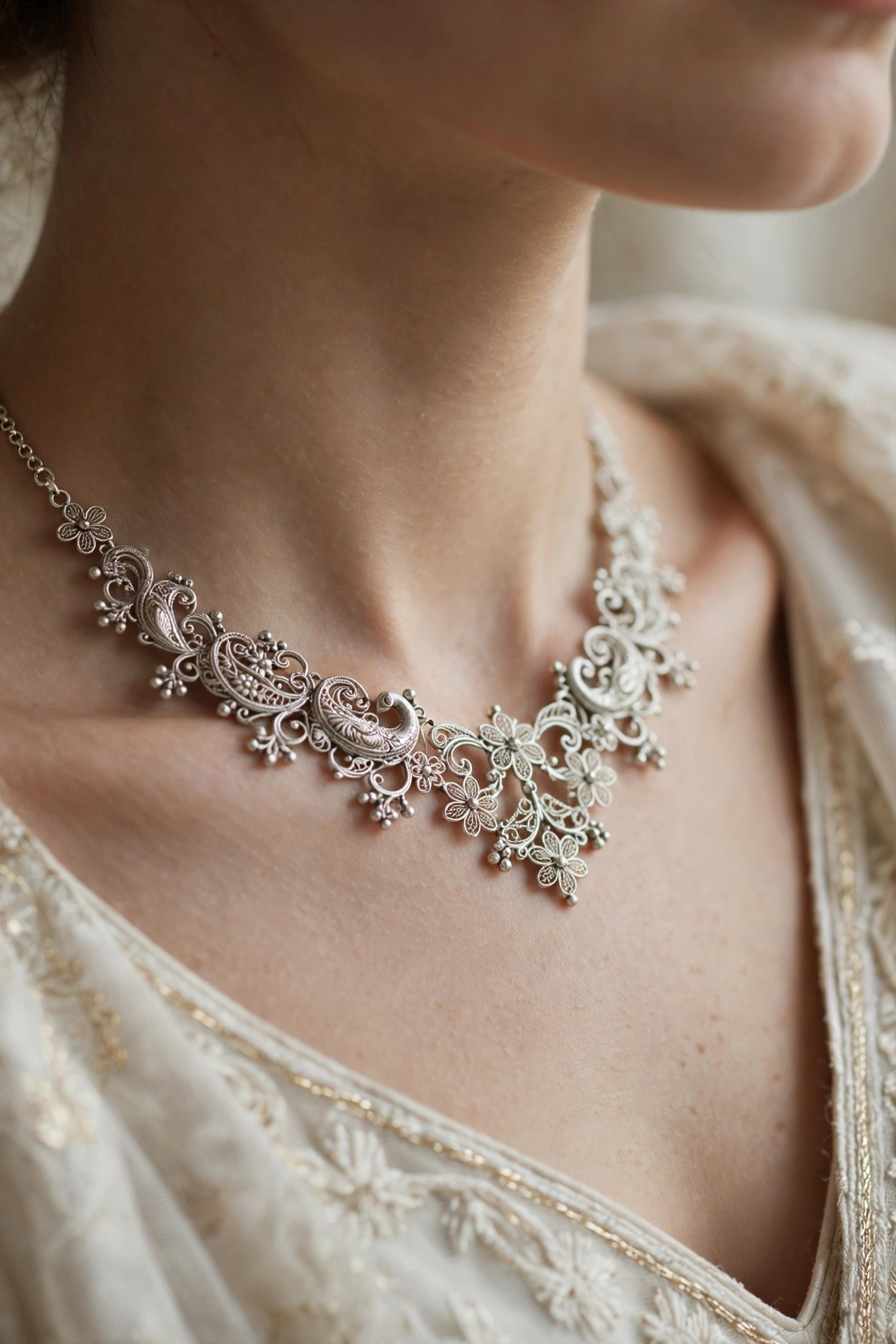
A silver necklace can be a choker, a mid length necklace, or a long haaram, just like a gold one. A silver choker with pearl drops suits a pastel lehenga beautifully, because the cool silver and the soft pearls match the light colours. A silver haaram with a large pendant suits a traditional ceremony, because it adds length and drama. A silver necklace with meenakari enamel work, in blue, green, or pink, is a beautiful choice, because the coloured enamel warms the cool silver.
Anklets, toe rings and silver traditions
Silver anklets, called payal, are one of the most traditional pieces of Indian bridal jewellery. They are worn on both ankles, and they make a soft sound when the bride walks. A silver payal with small bells suits a traditional ceremony, and it is often part of the bridal shringaar, the sixteen adornments of a bride. Toe rings, called bichhiya, are worn on the second toe of both feet, and they are a symbol of marriage in many North Indian traditions.
Silver is also used for wedding gifts and rituals: silver coins, silver vessels, and silver idols are common wedding gifts, and they are considered auspicious. In many South Indian weddings, silver lamps and silver plates are part of the ceremony. If your family follows these traditions, ask the elders which silver pieces matter most, and include them in your jewellery plan. A silver set that honours the family tradition will mean more than a fashionable one.
Silver with pearls, stones and meenakari
Silver is rarely worn alone. The classic silver set pairs silver with pearls, because the soft white pearls warm the cool silver and make it glow. A silver and pearl set suits an ivory or pastel lehenga beautifully, and it is the most versatile silver choice. Meenakari enamel work is the second classic partner: a silver necklace with blue or green enamel suits a pastel outfit, and it adds colour without the price of gemstones.
Coloured stones are the third partner: a silver set with turquoise, moonstone, or uncut polki diamonds suits a modern bride, because the stones add sparkle to the cool metal. Some silver sets use oxidised silver, with a dark, antique finish, for a bohemian or tribal look. Oxidised silver suits a daytime ceremony and a cotton or handloom outfit, but it is less formal than polished silver, so save it for haldi or mehndi rather than the wedding. When you choose the stones, match them to your outfit, not to each other.
Matching silver to your outfit and ceremony
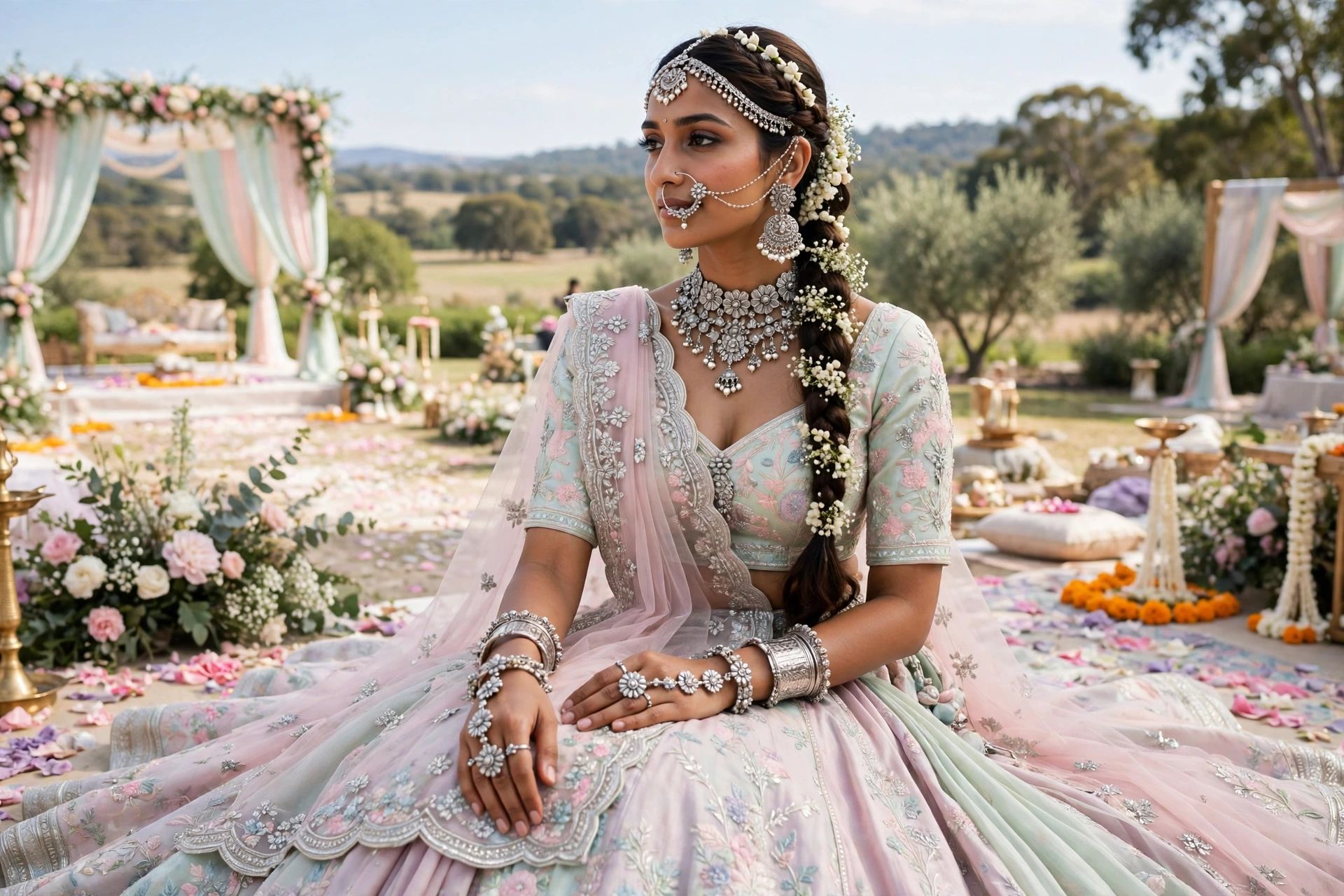
Silver suits a pastel outfit best, because the cool metal and the light colours belong together. For haldi, a silver set with a yellow outfit is a fresh, modern choice, because the silver cools the warm yellow. For mehndi, a silver set with a green outfit is beautiful, because the silver and the green contrast gently. For the wedding, a silver set with a red lehenga is a bold choice, because the cool silver stands out against the warm red, and it suits a bride who wants to look different.
For a daytime wedding, a lighter silver set with pearls suits the soft light, because the silver glows without glaring. For an evening wedding, a heavier silver set with meenakari or stones suits the warm lights, because the coloured enamel catches the light. And for a destination wedding, a minimal silver set, with just a necklace and earrings, is the practical choice, because it travels well and suits a lighter outfit. Whatever you choose, try the set with the outfit, the blouse, and the dupatta together, because the necklace should sit on the fabric, not on bare skin.
Buying, caring and keeping silver safe
Buy silver from a trusted jeweller, and ask for the hallmark or the purity stamp, which certifies the silver content. Sterling silver, marked 925, is 92.5 percent pure silver, and it is the standard for good jewellery. Check the craftsmanship: the filigree work should be crisp and detailed, and the stones should sit securely. Ask about the making charges and the exchange policy in writing, because silver jewellery is also an investment, even if it costs less than gold.
What it costs
A silver jewellery set for a wedding usually costs between ₹10,000 and ₹75,000, depending on the silver weight, the stones, and the craftsmanship. A simple silver necklace with earrings costs less, from about ₹5,000. A heavy silver haaram with meenakari work costs more, up to about ₹1,00,000. Silver is far more affordable than gold, which is why many brides choose a silver set for haldi or mehndi and a gold set for the wedding. Set your budget before you shop, and remember that silver needs regular care to stay bright.
The invitation is a fixed, small cost. On MyIndiAura, a Cinematic Invite is ₹499, an Invite App is ₹399, and an Invitation Suite is ₹99. Your silver jewellery photographs will look beautiful inside any of them. See the pricing page for the current prices.
How to create your silver jewellery invitation
- Pick a design that matches your wedding colours from the designs page at myindiaura.com/designs.
- Add your names, the ceremony dates and times, and the venue for each function.
- Add photographs of the couple, including one that shows the silver jewellery.
- Preview the invitation on your own phone, then share the link on WhatsApp. See myindiaura.com/create to start, and myindiaura.com/pricing for the full price list.
Details to check before you send
- The names of the bride and groom, spelt exactly as the families use them
- The date and time of each function, with the venue and the dress code
- A photograph that shows the wedding colours, so guests can plan their outfits
- The RSVP contact for guests who need directions or timings
- The silver hallmark, the purity stamp, and the jeweller's bill, kept safe
- A full hour trial of the silver set, with the outfit you will wear
Frequently asked questions
Is silver jewellery suitable for a wedding?
Yes. Silver is a traditional wedding metal, and it suits pastel outfits, daytime ceremonies, and brides who want elegance without the price of gold. Many families also wear silver anklets and toe rings as part of the bridal tradition.
How do I keep silver jewellery from tarnishing?
Store it in an airtight box or a soft pouch, away from damp and perfume. Clean it with a silver cloth or warm soapy water, and take it to the jeweller once a year for a polish.
What is the difference between sterling silver and pure silver?
Sterling silver, marked 925, is 92.5 percent pure silver mixed with a small amount of other metal for strength. Pure silver is too soft for jewellery, so sterling silver is the standard for good pieces.
MyIndiAura theme showcase
These Cinematic Invites from MyIndiAura fit this wedding. Each one is ₹499.
- Porcelain Doves: white and silver tones for chandi jewellery.
- Cream Crest: soft ivory for a silver jewellery look.
- Winter Glow: cool light for silver and pearl.
Related reading
- Pheras: Seven Vows Explained
- Indian Wedding Planning Checklist
- Hindu Wedding Invitation Wording and Traditions
Create your silver jewellery invitation on MyIndiAura, and let the invitation carry the cool glow of silver to every guest.
Explore invitation designs
Choose a design and preview it free with your own names.
Found this useful? Share it with someone planning a celebration.
Share