Bridal Saree Guide: Kanjivaram and Banarasi for Brides
Kanjivaram and Banarasi are the two great bridal silks of India. Here is how they differ, how to spot the real weave, and how to choose one for your ceremony.
How to choose a bridal saree
A bridal saree carries more history than any other wedding outfit. It is the outfit grandmothers wore, the one that appears in the oldest family photographs, and the one many brides still choose for the pheras even when every other function has a lehenga. Two silks dominate the bridal saree: Kanjivaram from Tamil Nadu and Banarasi from Varanasi. Both are handloom, both are heavy with gold zari, and both suit a wedding. They differ in weave, in feel, and in the ceremonies they suit best.
Kanjivaram: the silk of Tamil weddings
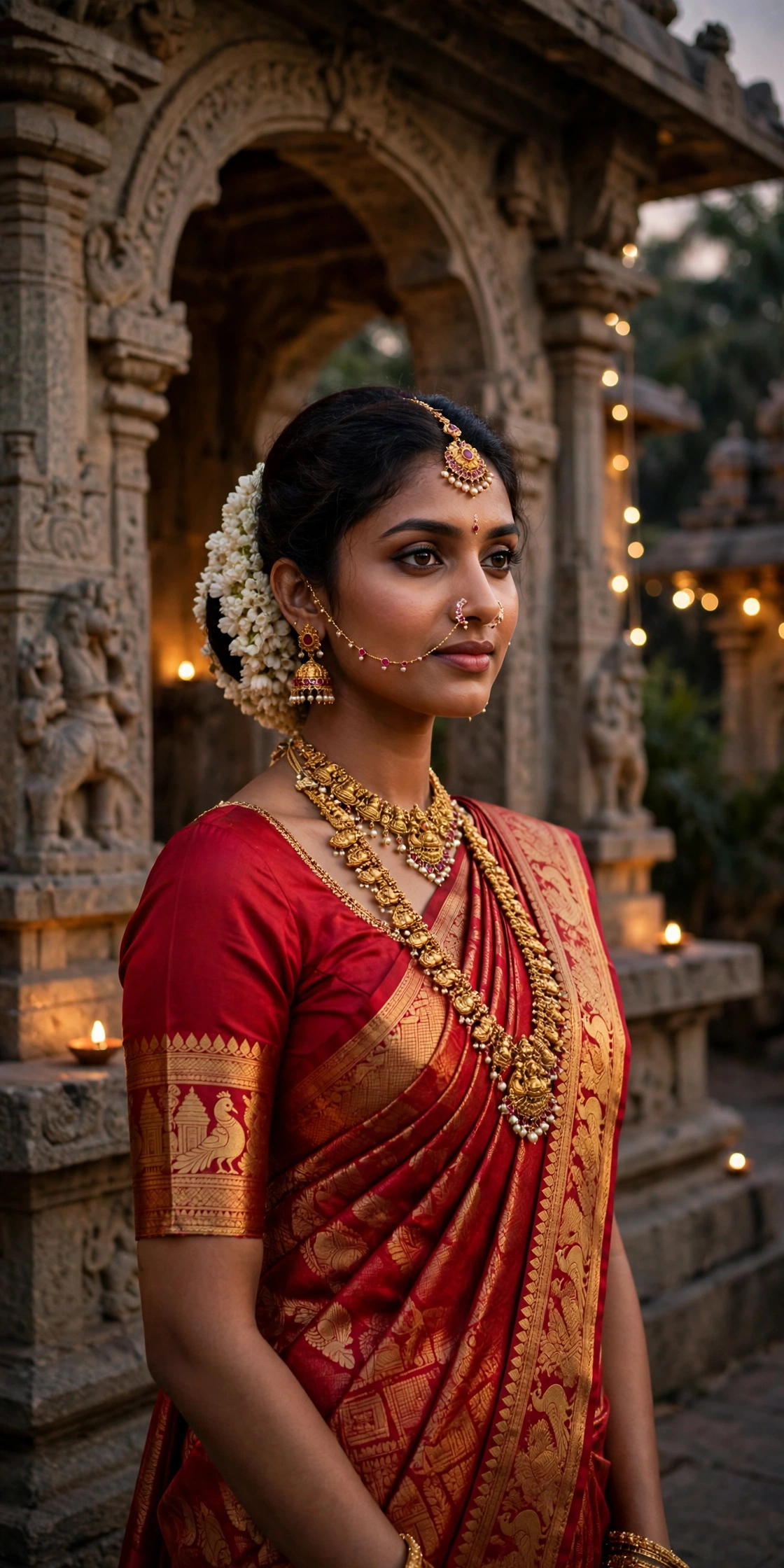
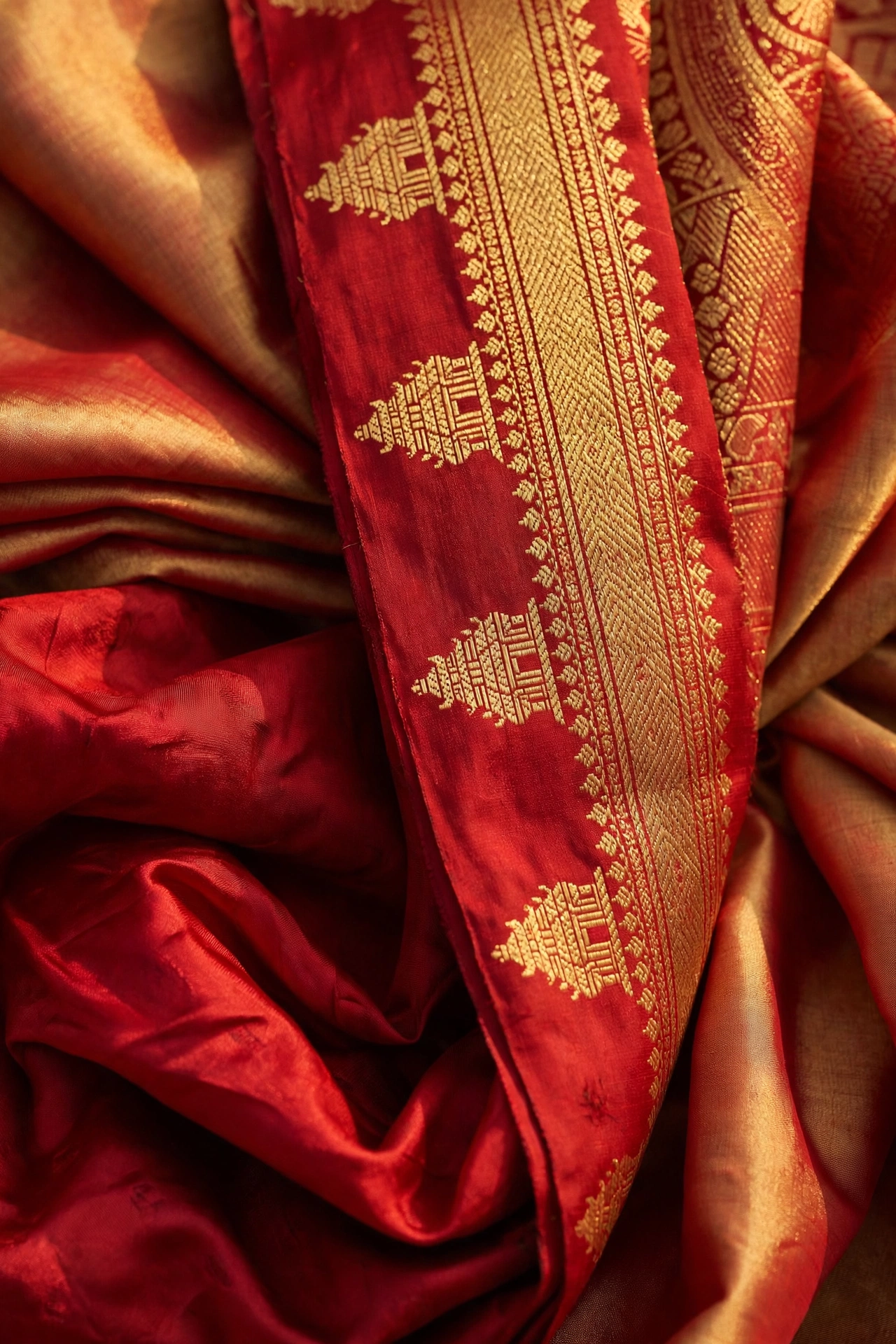
Kanjivaram silk comes from Kanchipuram in Tamil Nadu, and it is woven from pure mulberry silk with gold zari. The weave is dense and the silk is heavy, so a real Kanjivaram falls in clean, structured pleats and holds its shape through a long ceremony. The borders are wide and bold, often in a contrasting colour, with temple motifs, peacocks, checks, and mango patterns woven in, not printed on.
Banarasi: the weave of North India
Banarasi silk comes from Varanasi, and its beauty is in the fine, detailed weaving. Where Kanjivaram is bold, Banarasi is delicate: small floral jaal patterns, tiny paisleys, and fine gold thread work that looks almost like embroidery but is woven into the cloth. A Banarasi bridal saree is usually lighter than a Kanjivaram, so it drapes softly and suits a bride who wants elegance without weight.
The classic bridal Banarasi is red or deep pink with gold zari, worn with kundan or polki jewellery. It suits the pheras and the reception equally well, because the fine weave catches light beautifully in photographs. Banarasi also comes in lighter versions, like organza and tissue, which suit summer weddings and day ceremonies. When you shop, ask whether the saree is handloom or powerloom. Handloom Banarasi has small irregularities that prove the hand, and it costs more, while powerloom is uniform and cheaper.
How to tell a real silk saree from a copy
Real silk has a few honest tests. First, look at the back of the saree. In a real handloom silk, the pattern shows through on the reverse, because the threads are woven in. In a printed copy, the back is plain and the pattern sits only on the front. Second, feel the fabric. Pure silk feels smooth and cool, with a slight grain, and it warms in your hand. A synthetic copy feels slippery and plasticky, and it clings with static.
Third, check the zari. Real gold zari is made with silver thread coated in gold, so it has a soft, warm shine and does not flake. Imitation zari is bright and brassy, and it can tarnish or peel. Fourth, ask for the silk mark tag and the shop's bill with the saree details written on it. A trusted shop will give both without hesitation. If the price seems far below the usual range for a handloom silk, it is almost certainly a powerloom or synthetic copy.
Draping, blouse and jewellery pairing
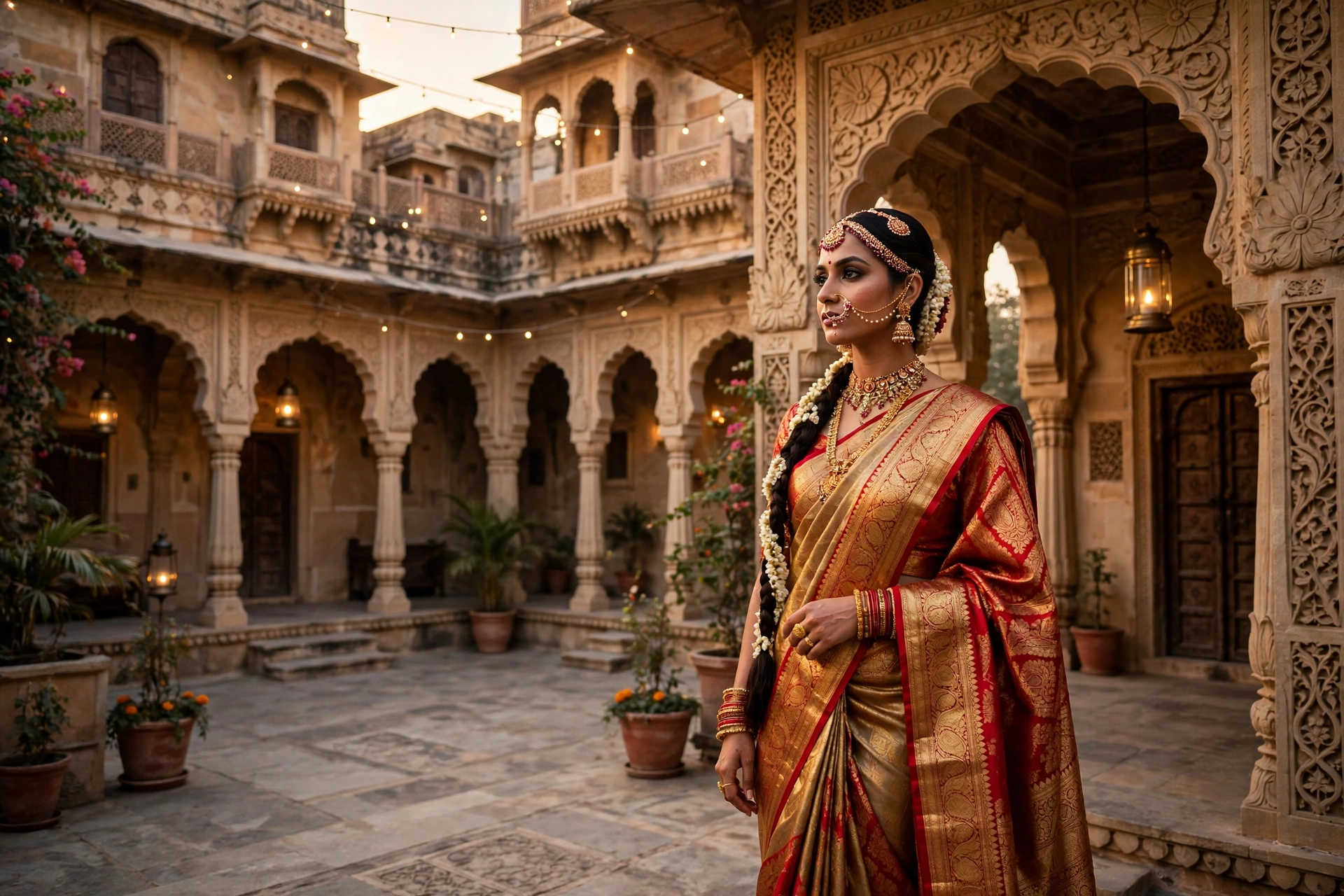
A saree is only as good as its drape, so practise before the day. The Kanjivaram is usually draped in the classic Nivi style with neat, narrow pleats tucked at the waist and the pallu over the left shoulder, often with the Madisar or the Tamil style for the muhurtham in some families. The Banarasi is draped the same way, with the pallu falling gracefully over the shoulder. Ask your draper to pin the pallu and the pleats where they will stay, and practise sitting cross legged for the pheras with the drape pinned.
The blouse sets the tone. A Kanjivaram pairs with a silk blouse in the border colour, often with a high neck or elbow sleeves and a simple gold border. A Banarasi pairs with a blouse in the body colour or a deep contrast, with zari work on the sleeves. Temple jewellery suits Kanjivaram best, with a long haram, jhumkas, and a vanki. Kundan or polki suits Banarasi best, with a choker and a maang tikka. Keep the jewellery to one statement set, so the saree and the jewellery do not compete.
Where to shop for Kanjivaram and Banarasi sarees
For Kanjivaram, the most trusted shops are in Kanchipuram itself, and in Chennai, where the big silk houses keep handloom stock with silk mark tags. In other cities, look for shops that specialise in South Indian silk and can show you the weave on the reverse. For Banarasi, Varanasi is the source, and the old city shops and weaver cooperatives sell genuine handloom. In Delhi and Mumbai, the established silk houses in the old markets carry both handloom and powerloom, so ask clearly which one you are buying.
What it costs
A genuine handloom Kanjivaram bridal saree usually starts around ₹20,000 and can go well past ₹1,00,000 for a heavy gold zari piece, while a handloom Banarasi bridal saree usually starts around ₹15,000 and rises with the fineness of the weave. Powerloom copies cost far less, from about ₹5,000, but they are not the same cloth. Keep a small part of the budget for the blouse stitching, the fall and pico, and a good petticoat that matches the saree colour.
The invitation costs far less, and it is fixed. On MyIndiAura, a Cinematic Invite is ₹499, an Invite App is ₹399, and an Invitation Suite is ₹99. Your saree photographs will look beautiful inside any of them. See the pricing page for the current prices.
How to create your bridal saree invitation
- Pick a design that matches your saree colours from the designs page at myindiaura.com/designs.
- Add your names, the ceremony dates and times, and the venue for each function.
- Add photographs of the couple, including one that shows the saree and the jewellery.
- Preview the invitation on your own phone, then share the link on WhatsApp. See myindiaura.com/create to start, and myindiaura.com/pricing for the full price list.
Details to check before you send
- The names of the bride and groom, spelt exactly as the families use them
- The date and time of each function, with the venue and the dress code
- A photograph that shows the saree colours, so guests can plan their outfits
- The RSVP contact for guests who need directions or timings
- The silk mark tag and the shop bill, kept safe with the saree
- The blouse trial, the drape practice, and the jewellery, all tried together once
Frequently asked questions
Which is better for a bride, Kanjivaram or Banarasi?
Neither is better. Kanjivaram is heavier and bolder, and it suits Tamil ceremonies and temple jewellery. Banarasi is lighter and finer, and it suits North Indian pheras and kundan jewellery. Pick the one your family tradition and your ceremony call for.
How can I tell a handloom saree from a powerloom one?
Look at the reverse of the saree. Handloom shows the pattern on the back, because the threads are woven through. Powerloom and printed copies are plain on the back. Handloom also has tiny irregularities that prove the hand.
Can I wear a Kanjivaram or Banarasi saree for the reception too?
Yes. A Kanjivaram in a deep colour with a different blouse and jewellery reads as a fresh look, and a Banarasi with a modern drape suits a reception well. Many brides wear one silk for the wedding and the other for the reception.
MyIndiAura theme showcase
These Cinematic Invites from MyIndiAura fit this wedding. Each one is ₹499.
- Neelam Mandapam: a temple setting that suits a Kanjivaram bride.
- Kesar Swagat: warm saffron tones for a Banarasi silk look.
- Resham Satin: silk textures that echo a woven saree.
Related reading
- Valaikappu: Tamil Bangle Ceremony Explained
- Hindu Wedding Invitation Wording and Traditions
- Indian Wedding Planning Checklist
Create your bridal saree invitation on MyIndiAura, and let the invitation carry the silk and gold of the day to every guest.
Explore invitation designs
Choose a design and preview it free with your own names.


Found this useful? Share it with someone planning a celebration.
Share