Bridal Lehenga Guide: How to Choose, Where to Shop
How to pick a bridal lehenga that suits your ceremony, your body and your budget, from fabric and colour to trials and trusted shops.
How to choose a bridal lehenga
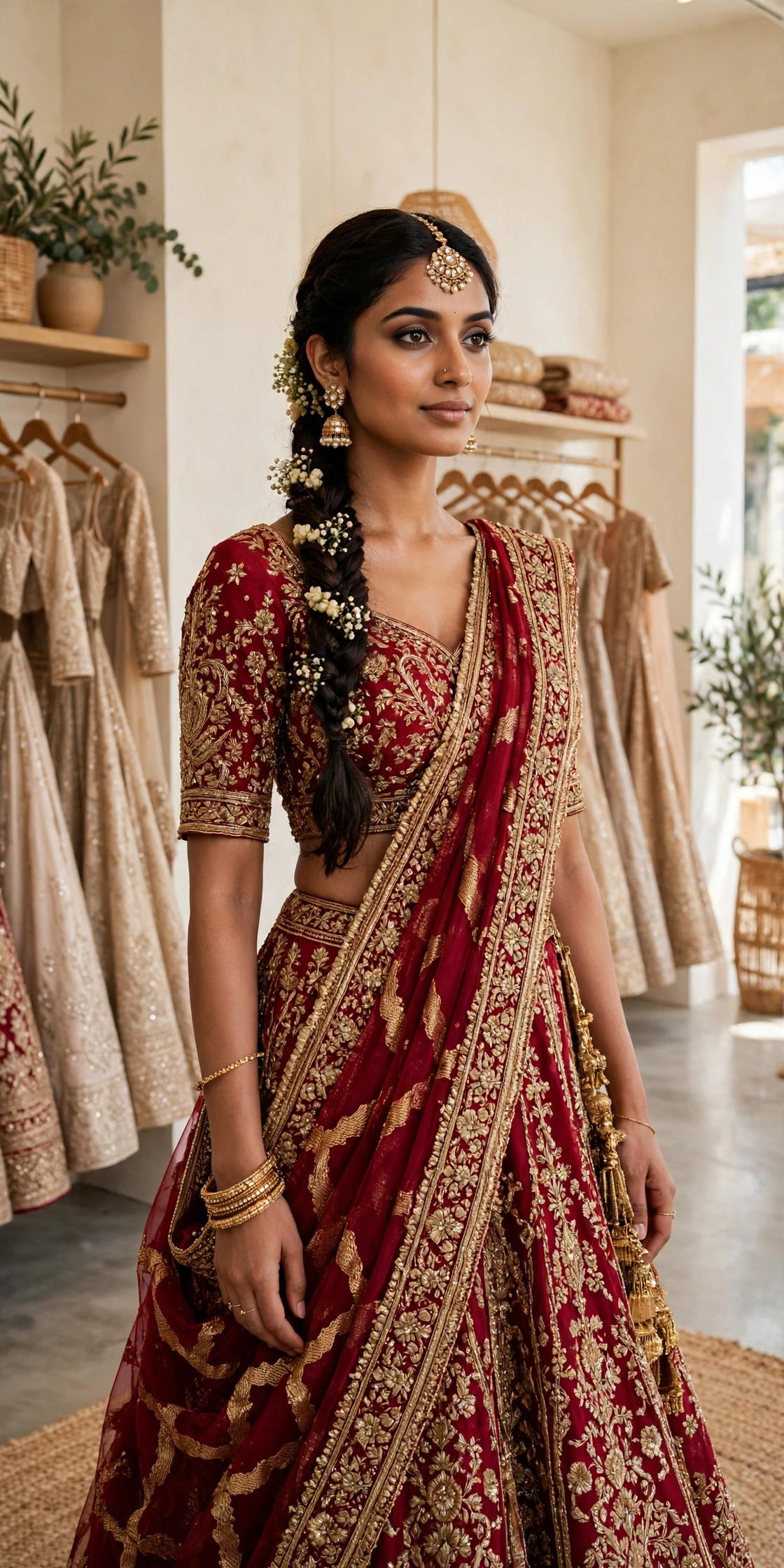
A bridal lehenga is the outfit most guests will remember from the wedding. It appears in the first photographs, in the entry, in the pheras, and in every family picture after. That is why choosing it feels so big. The good news is that a good choice is not about the most expensive lehenga in the shop. It is about a lehenga that suits your ceremony, your body, your venue, and the hours you will spend in it.
Start with the ceremony and the venue
A lehenga for the pheras is not the same as a lehenga for the sangeet. The pheras call for tradition, so deep reds, maroons, and rich golds suit the rituals and the photographs around the fire. A sangeet lehenga can be lighter, brighter, and easier to dance in, with a shorter flare or a pre draped dupatta. A reception lehenga can be the most dramatic of the three, with a full flare and heavy work, because you will mostly stand, greet, and pose.
Fabrics that suit Indian weddings
Fabric decides how the lehenga looks, how it moves, and how comfortable it is after four hours. Raw silk has a rich, slightly rough texture and holds a structured flare beautifully. It suits traditional ceremonies and photographs very well. Velvet is the heaviest and warmest choice, best for winter evening weddings, and it makes deep colours look deeper. Georgette and chiffon are light and flowing, and they suit summer weddings and dancing, because they move with you and do not trap heat.
Net and organza add volume without weight, so they are often used for the flare or the dupatta while the inner layers stay light. Crepe is smooth and falls cleanly, and it suits a modern, minimal lehenga with clean lines. When you try a lehenga, sit down in it, walk across the shop, and climb a step. If the fabric pulls, bunches, or makes you hot in five minutes, it will only feel worse on the wedding day.
Embroidery and work: what to look for
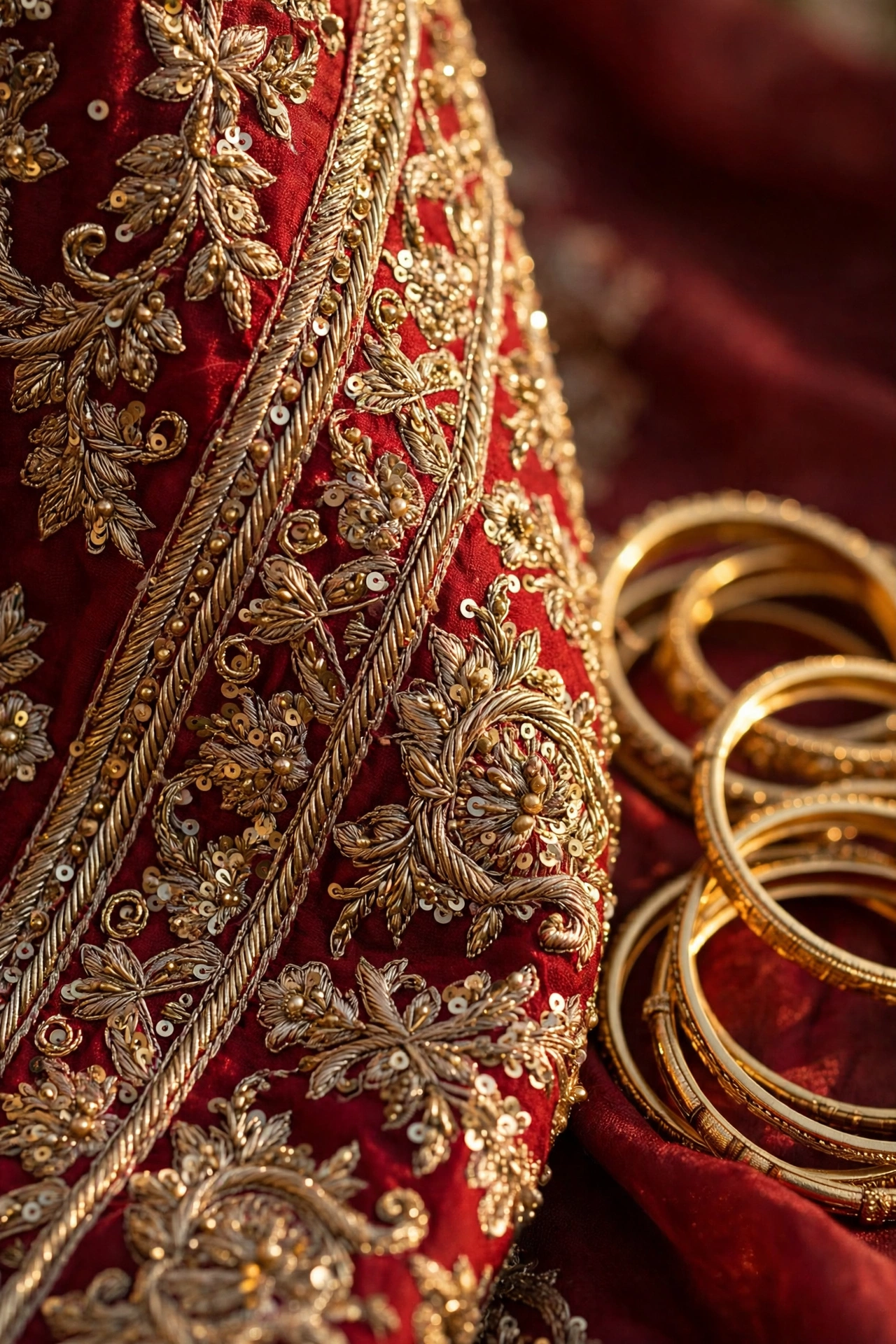
The work on a lehenga is where much of the price sits, so it is worth understanding. Zardozi is metal thread embroidery, heavy and regal, and it suits traditional red and maroon lehengas. Resham is silk thread work, softer and lighter, and it suits floral and pastel designs. Sequin and mirror work catch the light and suit sangeet and reception outfits. Gota patti is a Rajasthani craft of gold ribbon applique, light and festive, and it suits day ceremonies beautifully.
Check the finish, not just the front. Turn the lehenga inside out and look at the back of the embroidery. Neat, flat work with no loose threads will last the day and survive a gentle clean. Loose threads, rough knots, and glue marks mean the work was rushed, and it will snag on jewellery and seating. Also check the weight. A lehenga that feels heavy on the hanger will feel twice as heavy after three hours, so ask the shop to weigh it or simply hold it at arm's length for a minute.
The fit: trials, draping and comfort
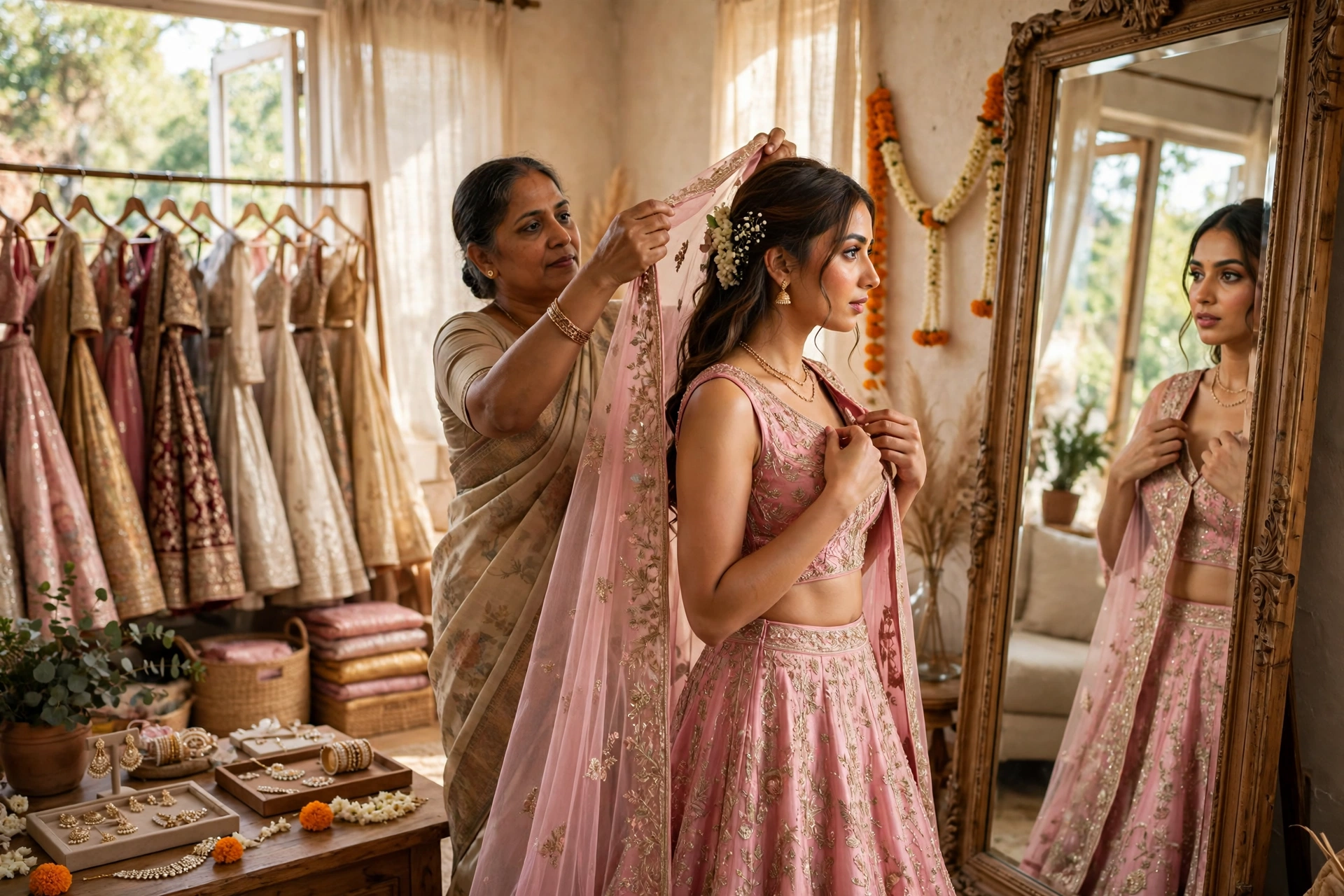
A lehenga is only as good as its fit, and fit is decided in the trials, not on the hanger. Book at least two trials. The first trial checks the length, the waist, and the blouse. The second trial, closer to the wedding, checks the final fit after any changes, with the exact blouse, the dupatta draping, and the jewellery you plan to wear. Bring your wedding shoes to the trial, because the lehenga length depends on the heel height.
The blouse deserves as much attention as the skirt. A blouse that is too tight will pinch when you sit for the pheras, and one that is too loose will slip. Sleeves should let you raise your arms for the varmala without pulling. The dupatta draping should be pinned where it will stay, and you should practise sitting, standing, and walking with it pinned. Ask the tailor to add a loop or a hook inside the flare if the lehenga is heavy, so you can hold it up while walking without showing the mechanism.
Where to shop for a bridal lehenga
Start shopping four to six months before the wedding, because a good lehenga needs time for trials and alterations. In Delhi, Chandni Chowk and Karol Bagh have shops at every price, from budget to designer, and Shahpur Jat suits brides who want boutique designers. In Mumbai, Juhu, Bandra, and Santacruz cover the same range, and in Jaipur and Lucknow the old city markets are strong for traditional work. Most cities also have reliable online options, but order a swatch first, because colours on a screen are never exact.
What it costs
A bridal lehenga in India can cost anywhere from about ₹15,000 in a local market to several lakhs for a designer piece, and the price depends on fabric, work, and the label. A good mid range lehenga with neat embroidery usually sits between ₹50,000 and ₹1,50,000. Set your budget before you shop, and keep about ten percent aside for the blouse stitching, the fall and pico of the dupatta, the cancan lining, and the alterations, because those extras add up fast.
The invitation is the smaller cost, and it is fixed. On MyIndiAura, a Cinematic Invite is ₹499, an Invite App is ₹399, and an Invitation Suite is ₹99. Your lehenga photographs will look beautiful inside any of them, and the invitation carries the outfit story to every guest before the day. See the pricing page for the current prices.
How to create your bridal lehenga invitation
- Pick a design that matches your lehenga colours from the designs page at myindiaura.com/designs.
- Add your names, the ceremony dates and times, and the venue for each function.
- Add photographs of the couple, including one that shows the lehenga, so guests see the colours before the day.
- Preview the invitation on your own phone, then share the link on WhatsApp. See myindiaura.com/create to start, and myindiaura.com/pricing for the full price list.
Details to check before you send
- The names of the bride and groom, spelt exactly as the families use them
- The date and time of each function, with the venue and the dress code
- A photograph that shows the lehenga colours, so guests can plan their outfits
- The RSVP contact for guests who need directions or timings
- The lehenga trial dates, the alteration plan, and the delivery date from the shop
- The blouse, the dupatta pinning, and the shoes, all tried together once
Frequently asked questions
When should I start shopping for my bridal lehenga?
Four to six months before the wedding is ideal. It leaves time for two trials, alterations, and a calm final fitting, without the panic of a last minute shop.
How many lehengas do I need for the wedding?
Most brides choose two or three: one for the pheras, one for the sangeet or haldi, and one for the reception. One lehenga can serve two functions if the ceremonies are close together and the styling changes.
Is red still the right colour for a bridal lehenga?
Yes, red is still the classic choice, and it suits most Indian skin tones and photographs beautifully. But maroon, pink, ivory, and pastels are all accepted now, so pick the colour that suits you, not the one tradition expects.
MyIndiAura theme showcase
These Cinematic Invites from MyIndiAura fit this wedding. Each one is ₹499.
- Resham Satin: silk and gold tones that match a classic red lehenga.
- Laal Doli: a red bridal palanquin theme for a traditional ceremony.
- Gulab Dil: roses and warm colour for a romantic lehenga look.
Related reading
- Indian Wedding Planning Checklist
- How to Plan a Memorable Wedding Reception
- Bridal Shower Invitation Wording and Designs
Create your bridal lehenga invitation on MyIndiAura, and let the invitation carry the colours of the day to every guest.
Explore invitation designs
Choose a design and preview it free with your own names.
Found this useful? Share it with someone planning a celebration.
Share