Bridal Hairstyles: Juda, Braids and Buns
A bridal hairstyle has to survive hours of rituals and still look perfect in photographs. Here are juda, braid and bun ideas that suit every face and every ceremony.
How to choose a bridal hairstyle
A bridal hairstyle has to survive hours of rituals and still look perfect in photographs. It has to hold through the pheras, the varmala, the dancing, and the greeting, without falling apart or giving you a headache. The three great bridal hairstyles are the juda, the braid, and the bun, and each one suits a different face, a different outfit, and a different ceremony. The rule is simple: pick a style that suits your face, stays secure, and works with your jewellery and your dupatta.
Juda: the classic bridal bun
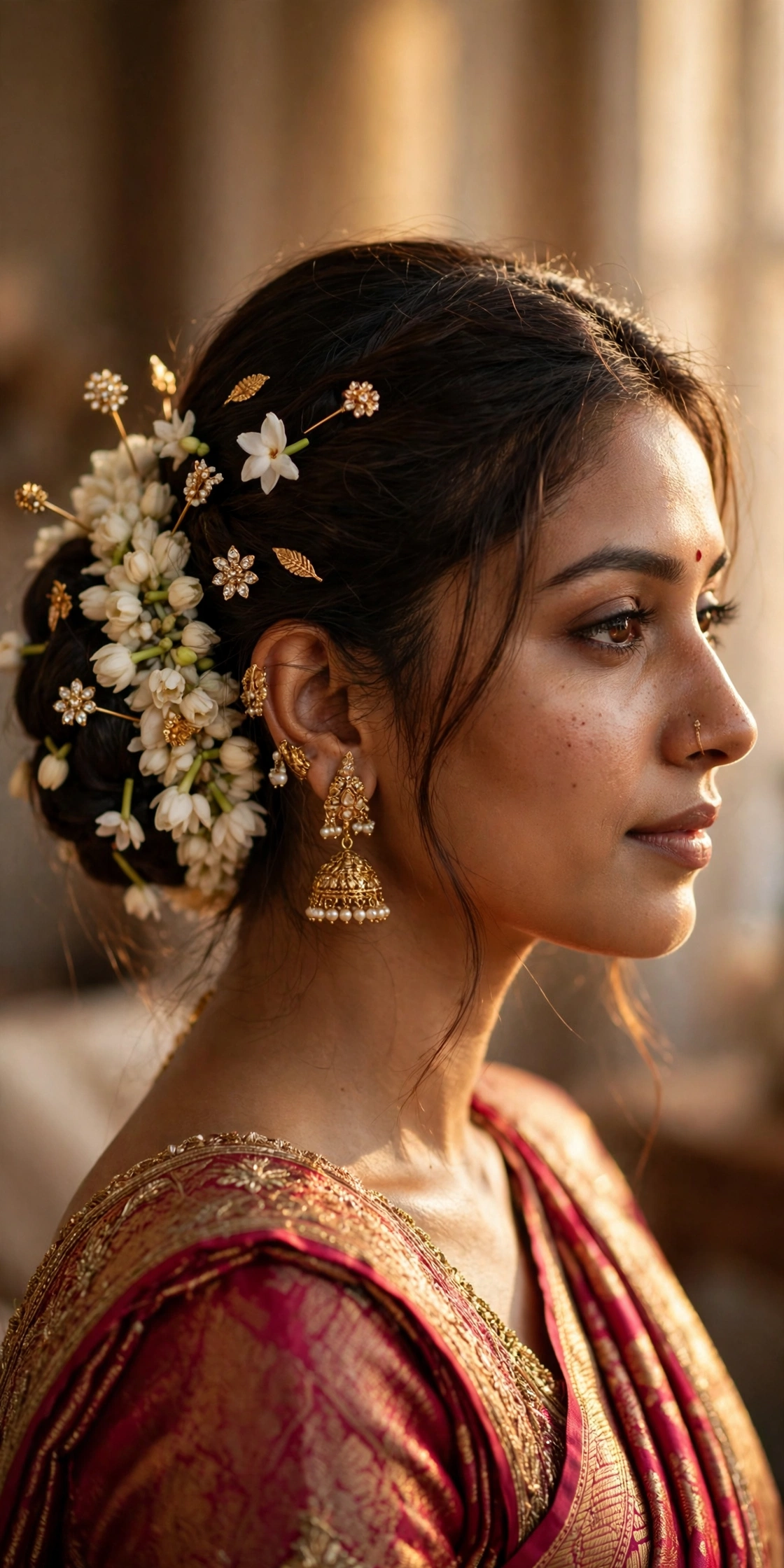
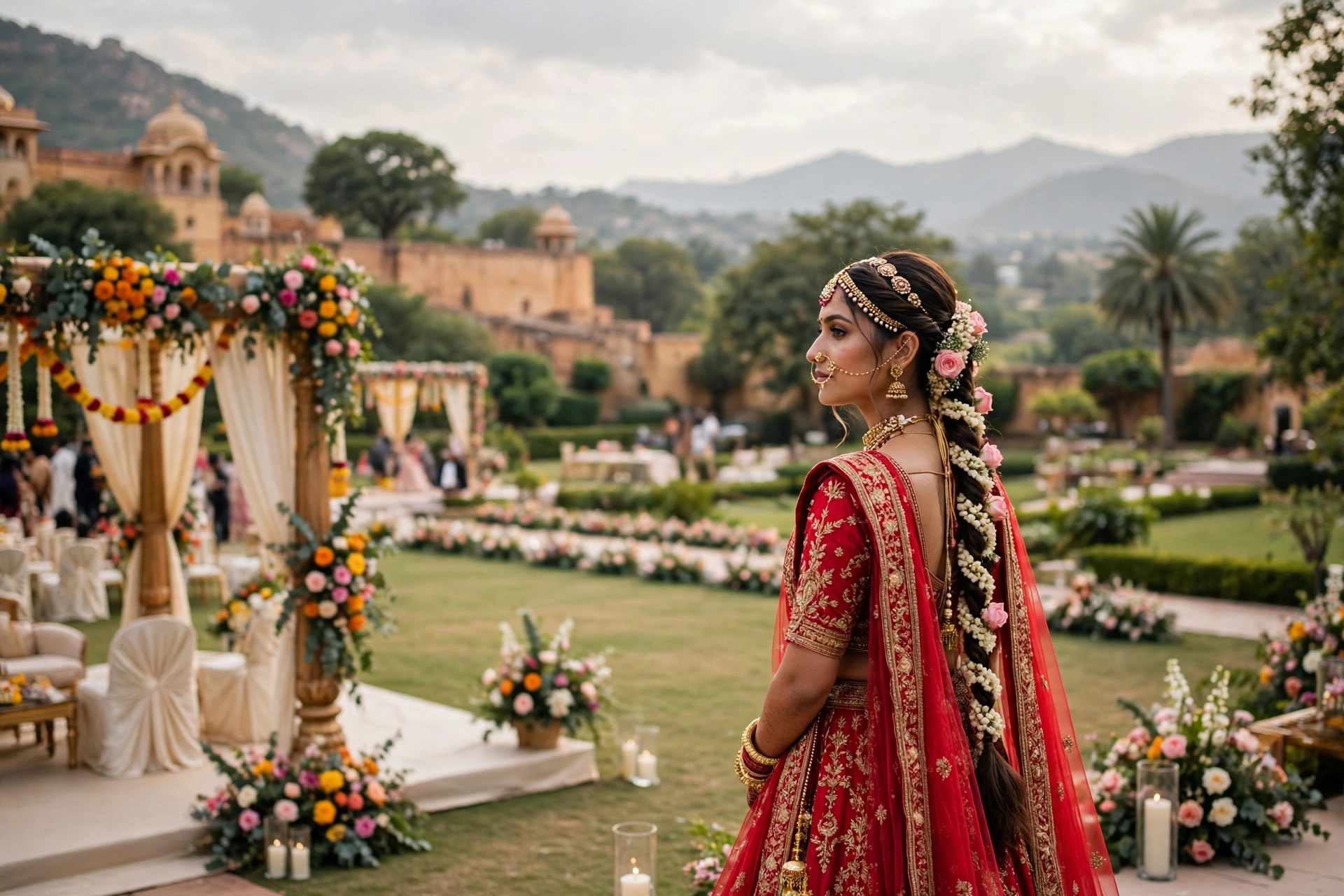
The juda is a bun worn high on the head or at the crown, and it is the classic North Indian bridal hairstyle. It suits a lehenga and a heavy dupatta, because it keeps the hair off the neck and lets the dupatta drape cleanly. A juda with jasmine flowers, called a gajra, is the traditional look, and it smells lovely through the ceremony. A juda with gold pins, a maang tikka, and a matha patti is the royal look, and it suits a grand wedding.
Braids: the romantic choice
A braid is the most romantic bridal hairstyle, and it suits a bride who wants a soft, feminine look. A side braid, draped over one shoulder, suits a lehenga with a deep neckline, because it frames the face and shows the jewellery. A braid down the back suits a saree, because it follows the drape. A braided crown, or a braid wrapped around the head, suits a modern bride, because it looks like a halo and holds the hair securely.
Braids can be decorated with flowers, gold accessories, or small pearls, woven into the braid for a festive look. A braid with jasmine flowers is the classic South Indian look, and it suits a Kanjivaram saree beautifully. A braid with gold pins suits a North Indian wedding, and it catches the light in photographs. Braids are comfortable to wear for hours, because the weight is distributed, and they do not pull the scalp like a tight bun can. But they need a skilled stylist, because a loose braid will unravel, and a tight one will hurt.
Buns: low, side and messy
A bun is the most versatile bridal hairstyle, and it comes in many forms. A low bun, worn at the nape of the neck, is the most elegant, and it suits a gown or a saree, because it keeps the neckline clean. A side bun, worn low on one side, is the most romantic, and it suits a lehenga with a one sided dupatta. A messy bun, with soft, loose strands around the face, is the most modern, and it suits a reception or a cocktail, because it looks relaxed and glamorous.
A bun can be decorated with flowers, a maang tikka, or a hair accessory, and it should be pinned securely, with a strong hairspray, so it holds through the evening. A low bun suits a long neck and a high neckline, while a high bun suits a round face and a deep neckline. Try the bun with the dupatta and the jewellery in the trial, because the dupatta pinning and the bun must work together, or the dupatta will pull the bun loose.
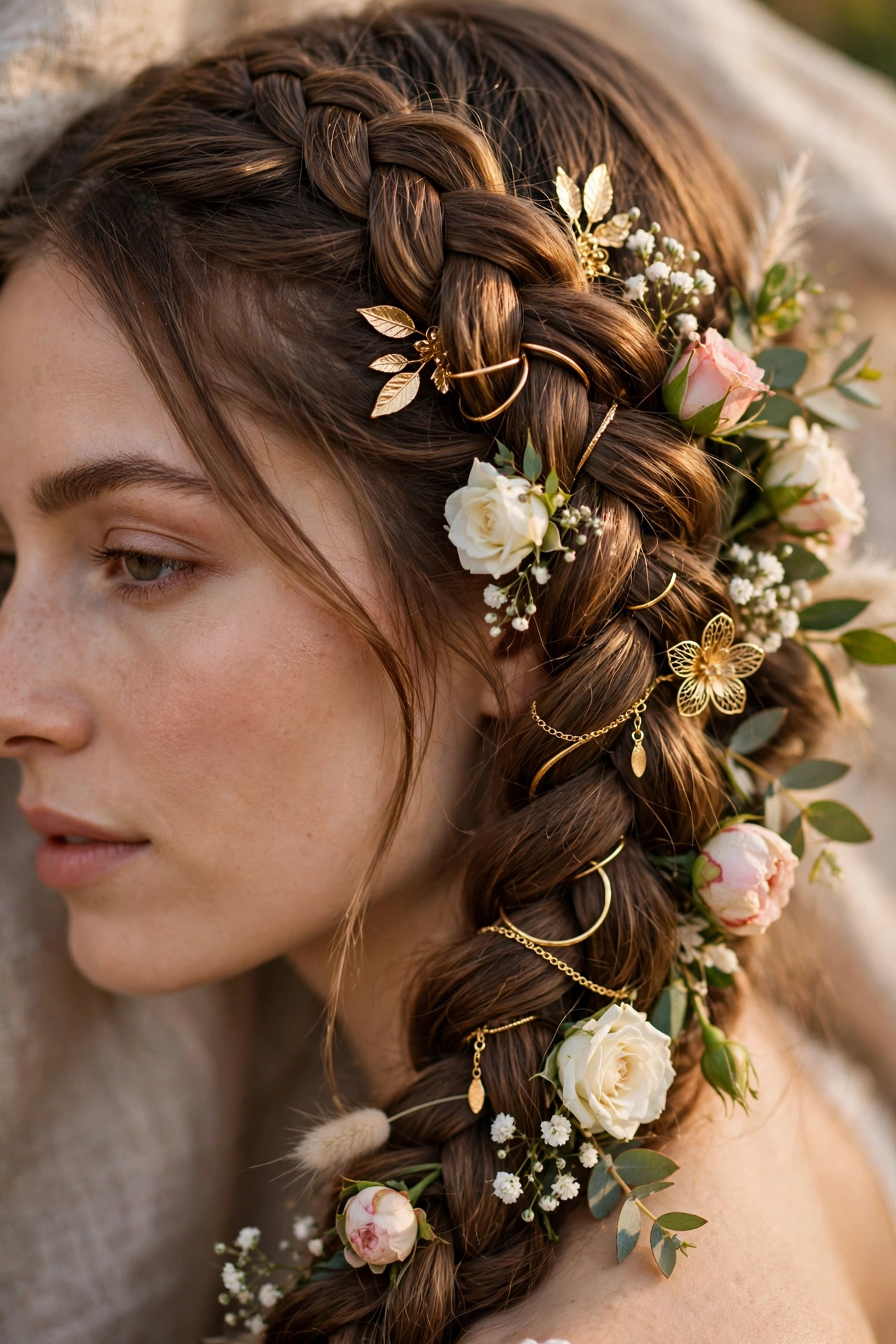
Hair accessories, flowers and jewellery
Hair accessories make a bridal hairstyle, and they should be chosen with the outfit. A maang tikka sits on the centre parting and ties the hairstyle to the jewellery. A matha patti, a band across the forehead, suits a grand wedding and a heavy jewellery set. A passaa, or side tikka, suits a modern bride and a lighter set. Gold hair pins, in a temple or floral design, suit a traditional hairstyle, while pearl pins suit a modern one.
Fresh flowers are the most beautiful hair accessory, and they suit every bridal hairstyle. Jasmine, called mogra, is the classic bridal flower, and it smells lovely through the ceremony. Roses, in red or pink, suit a North Indian wedding, while marigolds suit haldi and mehndi. Order the flowers fresh on the morning of the wedding, because they wilt in a few hours. And keep the flowers light, because heavy flowers will pull the hairstyle down and give you a headache.
Hairstyles for each ceremony
Each ceremony calls for a different hairstyle. For haldi, a simple braid with marigolds, or loose hair with a flower crown, suits the relaxed morning, because it is comfortable and fresh. For mehndi, a side braid with flowers suits the evening, because it is romantic and stays neat through hours of sitting. For sangeet, a high bun or a braided updo suits the dancing, because it stays secure through spins and jumps.
What it costs
Bridal hair styling usually costs between ₹5,000 and ₹15,000, depending on the stylist, the hairstyle, and the city. A hair trial costs between ₹2,000 and ₹5,000, and it is worth it, because the trial lets you test the style, the comfort, and the way it photographs. Fresh flowers for the hair cost between ₹500 and ₹2,000, depending on the flowers and the city. Hair accessories, like gold pins or a maang tikka, are often part of the jewellery set, so budget for them together.
The invitation is a fixed, small cost. On MyIndiAura, a Cinematic Invite is ₹499, an Invite App is ₹399, and an Invitation Suite is ₹99. Your bridal hairstyle photographs will look beautiful inside any of them. See the pricing page for the current prices.
How to create your bridal hairstyle invitation
- Pick a design that matches your wedding colours from the designs page at myindiaura.com/designs.
- Add your names, the ceremony dates and times, and the venue for each function.
- Add photographs of the couple, including one that shows the bridal hairstyle.
- Preview the invitation on your own phone, then share the link on WhatsApp. See myindiaura.com/create to start, and myindiaura.com/pricing for the full price list.
Details to check before you send
- The names of the bride and groom, spelt exactly as the families use them
- The date and time of each function, with the venue and the dress code
- A photograph that shows the wedding colours, so guests can plan their outfits
- The RSVP contact for guests who need directions or timings
- The hair trial date, the stylist booking, and the hairstyle photographs, kept ready
- Extra pins, a small mirror, and fresh flowers, packed for the day
Frequently asked questions
Which bridal hairstyle lasts longest?
A juda or a low bun lasts longest, because it is pinned securely and keeps the hair off the neck. A braid also lasts well, because the weight is distributed. Loose hair falls flat fastest, so save it for a short photo session.
Can I wear my hair down for the wedding?
You can, but loose hair is hard to manage through hours of rituals, and it will fall flat and tangle. A half up style, with the front pinned and the back loose, is a good compromise, and it suits a reception better than the wedding.
How do I keep my juda from giving me a headache?
Ask the stylist to distribute the weight with padding and pins, not a single tight pull. Try the juda for an hour in the trial, with the full jewellery, and tell the stylist if it hurts. A slightly looser juda with more pins is more comfortable than a tight one.
MyIndiAura theme showcase
These Cinematic Invites from MyIndiAura fit this wedding. Each one is ₹499.
- Jharokha Ki Shaam: evening window light for a bridal hairstyle.
- Pichola Parde: lakeside tones for a juda and braid look.
- Ganga Ke Saath: flowing river tones for a soft bridal hairstyle.
Related reading
- Bridal Shower Invitation Wording and Designs
- Indian Wedding Planning Checklist
- Valaikappu: Tamil Bangle Ceremony Explained
Create your bridal hairstyle invitation on MyIndiAura, and let the invitation carry the beauty of the day to every guest.
Explore invitation designs
Choose a design and preview it free with your own names.

Found this useful? Share it with someone planning a celebration.
Share