Bengali Wedding Rituals: From Bor Jatri to Sindoor Khela
A Bengali wedding runs from the bor jatri procession to the sindoor khela, when married women smear vermilion on each other. Here is what each ritual means, and when it happens.
Bengali wedding rituals, from bor jatri to sindoor khela
A Bengali wedding is joyful, musical and full of warmth. Its rituals run from the bor jatri, the groom's procession, to the sindoor khela, when married women smear vermilion on each other in a joyful celebration. This article explains each ritual, what it means, when it happens, and how to include it on your invitation.
Bor Jatri: the groom's procession
Bor Jatri is the groom's procession, and it opens the Bengali wedding day. The groom, called the bor, travels to the bride's home in a decorated car, while his family and friends sing and dance around him.
When the procession reaches the bride's home, the bride's family welcomes the groom with aarti, showering him with flowers and rice. The groom's mother performs a small ritual to ward off the evil eye, and the groom is led to the mandap. The whole procession takes about thirty to forty five minutes, and guests should arrive before it starts, so they do not miss the welcome.
Boron and the welcome
After the bor jatri, the bride's family performs the boron, the welcome, when the groom is greeted at the door with aarti and flowers. The bride's mother applies a tilak to the groom's forehead, and the groom is given a garland of flowers.
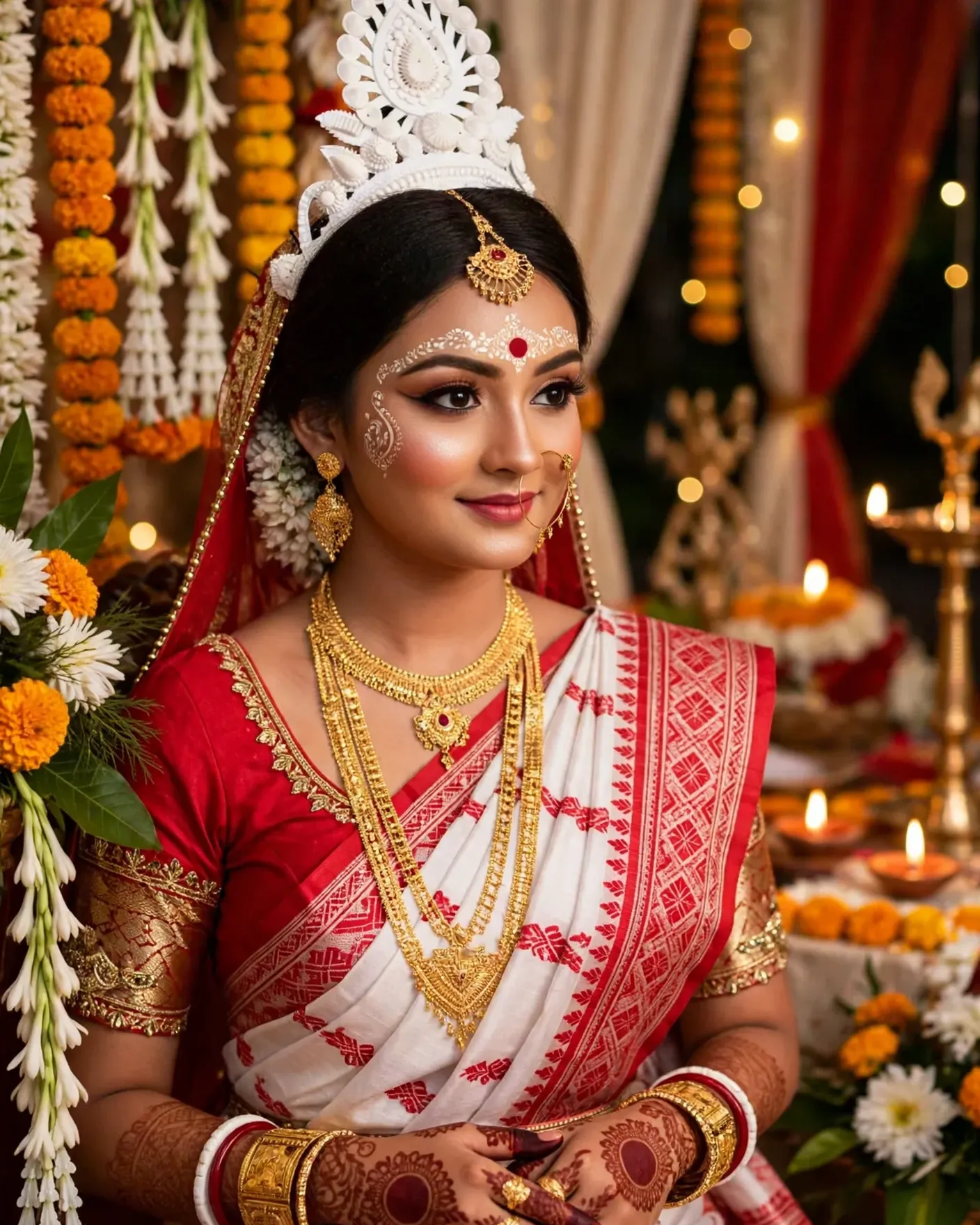
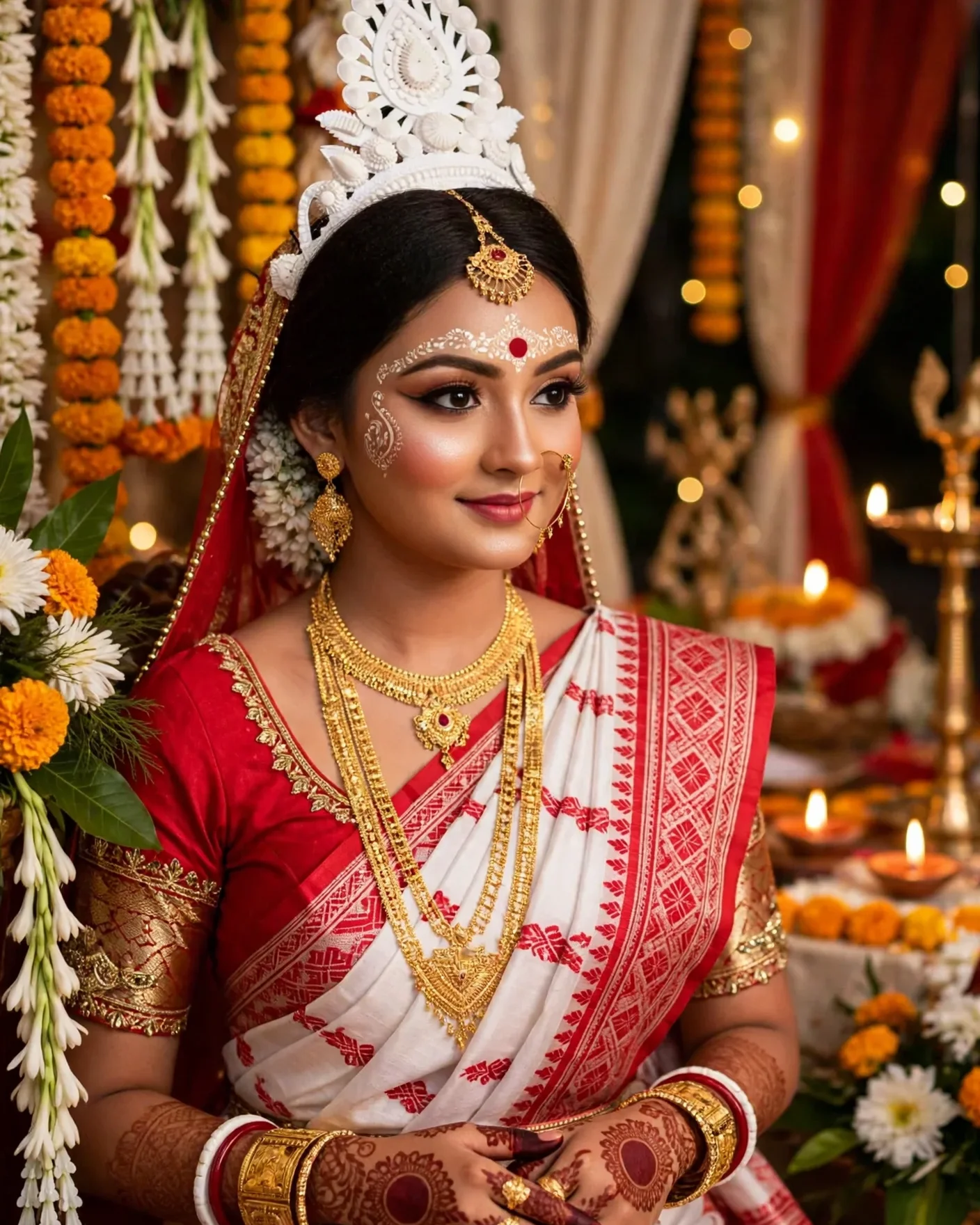
The groom is then led to the mandap, where the bride waits behind a curtain. The priest chants mantras, and the families gather around the mandap for the main ceremony. The bride wears a red and white saree, with a gold crown called a mukut, and the groom wears a dhoti and kurta with a topor, a conical hat made of white shola.
Sampradan and the pheras
Sampradan is the ritual where the bride's father gives his daughter away to the groom. The bride's father places his daughter's hand in the groom's hand, and the priest chants mantras as the families shower the couple with flowers.
After Sampradan, the couple takes the pheras, the seven vows around the sacred fire. Each step is a vow: for food, for strength, for prosperity, for happiness, for children, for health, and for friendship. The priest chants a mantra for each step, and the couple walks together around the fire. The pheras are the heart of a Bengali wedding, and they are the moment the couple truly becomes husband and wife.
Sindoor Daan and the shakha pola
After the pheras, the groom applies sindoor to the bride's hair parting, in a wide line from the forehead to the crown. The sindoor is a red powder that stands for love and prosperity, and the act of applying it is one of the most sacred moments of the wedding. The bride also wears shakha pola, the red and white bangles that mark her as a married Bengali woman.
The families shower the couple with flowers, and the priest blesses them. The couple then exchanges garlands, called varmala, before the reception dinner and dancing.
Sindoor Khela: the vermilion play
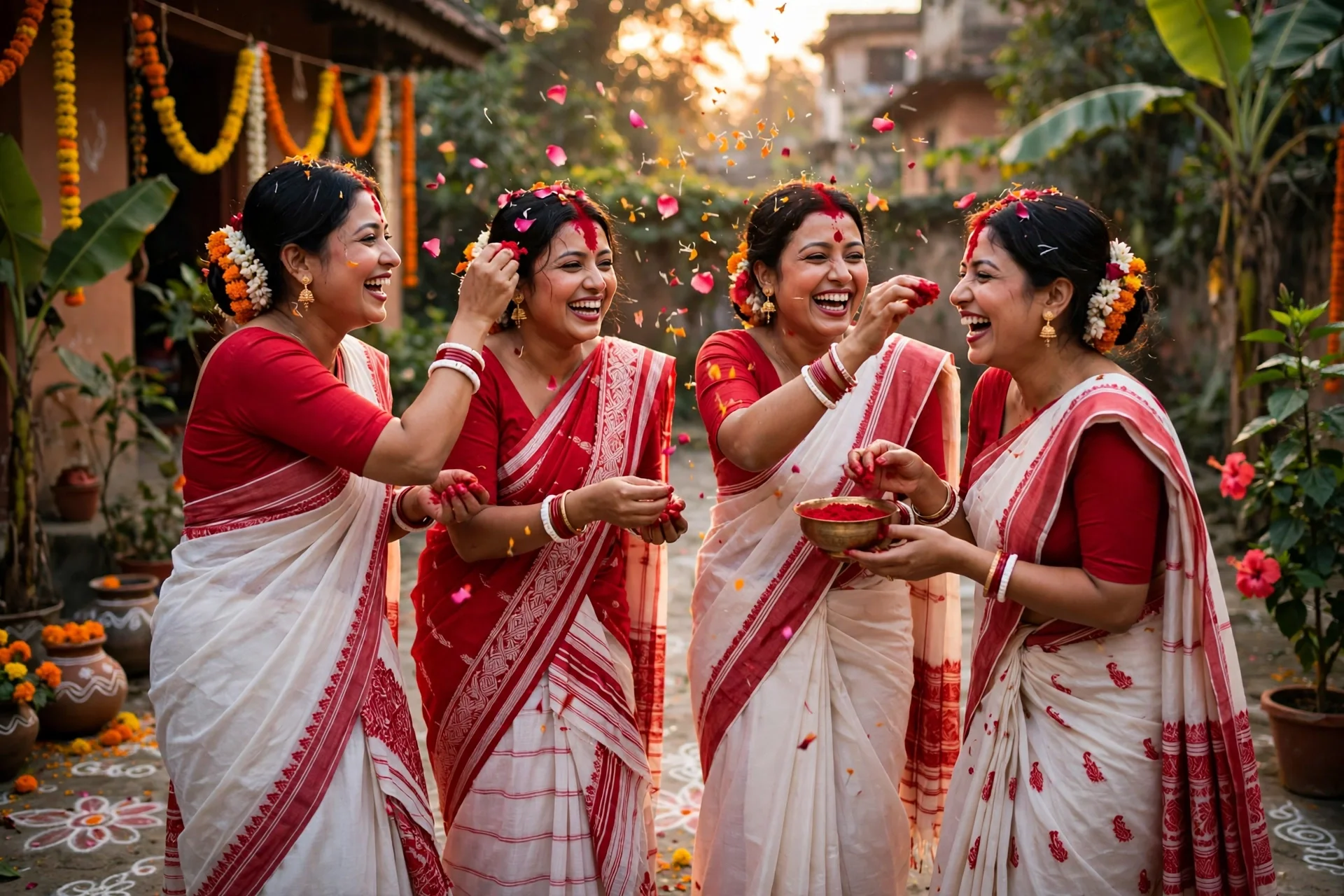
Sindoor Khela is the joyful ritual that closes the Bengali wedding celebrations. It happens on the last day, after the wedding, when married women gather around the bride and smear sindoor on each other's faces, foreheads and hands. The ritual is loud, joyful and full of laughter, and it is a celebration of married life and sisterhood.
The women wear red and white sarees and dance to the dhaak drum, smearing sindoor on the bride first and then on each other, while the families cheer. It is a moment of pure joy that guests remember for years.
The order of a Bengali wedding day
A Bengali wedding day follows a clear order, and the invitation reads better when it reflects it.
- Bor Jatri, the groom's procession to the bride's home.
- Boron, the welcome, when the bride's family greets the groom.
- Sampradan, when the bride's father gives his daughter away.
- Pheras, the seven vows around the sacred fire.
- Sindoor Daan, when the groom applies sindoor to the bride's hair parting.
- Varmala, the exchange of garlands.
- Sindoor Khela, the vermilion play, when married women celebrate together.
You do not need to explain every ritual on the card. Name the ones guests attend, with times, and let the priest and the families carry the meaning on the day. A short line about the muhurtham, and a line about dinner, covers most questions guests will ask.
What guests should know
Guests at a Bengali wedding should arrive early, because the bor jatri starts on time and the rituals run to the minute. Women often wear a red and white saree, and men wear a dhoti and kurta or a sherwani. The groom's family and the bride's family sit on opposite sides of the mandap, and guests are welcome to sit anywhere.
The dinner after the ceremony is a full Bengali feast, with fish, rice, dal, vegetables, and mishti doi. Stay if you can, and come to sindoor khela too, because it is joyful and you will be welcome.
What it costs
On MyIndiAura, a Cinematic Invite is ₹499, an Invite App is ₹399, and an Invitation Suite is ₹99. Choose by what your invitation needs to do, not by price alone. A cinematic invite suits a wedding with a film led opening, while an invite app suits a full week of functions with RSVP and maps.
How to create your Bengali wedding invitation
- Pick a design from the designs page at myindiaura.com/designs.
- Add the Bengali and English wording, the muhurtham time, the venue, and the order of events, including the bor jatri and sindoor khela.
- Add photos of the couple, the venue map, and the RSVP button.
- Preview the invitation on your own phone, then share the link on WhatsApp. See myindiaura.com/create to start, and myindiaura.com/pricing for the full price list.
Details to check before you send
- The names of the bride and groom, with parents, spelt exactly as the families use them
- The wedding date and time, checked with the priest
- The times for the bor jatri and sindoor khela, checked with the families
- The full venue address, with the area and a map link
- A dress code note, if you want guests in red and white
- An RSVP contact for guests who need directions
Frequently asked questions
What is the bor jatri?
The bor jatri is the groom's procession to the bride's home. The groom, called the bor, travels in a decorated car, while his family and friends sing and dance around him. It is loud, joyful and full of colour.
What is Sampradan?
Sampradan is the ritual where the bride's father gives his daughter away to the groom. It is similar to Kanyadaan, and it is one of the most emotional moments of a Bengali wedding.
What is sindoor khela?
Sindoor Khela is the joyful ritual when married women smear sindoor on each other's faces, foreheads and hands, in a celebration of married life and sisterhood. It happens on the last day of the wedding, and it is one of the most beloved parts of a Bengali wedding.
When should we send a Bengali wedding invitation?
Send digital invitations four to six weeks before the wedding, and earlier for outstation guests. A short WhatsApp reminder two or three days before, and again the evening before, is enough for most families.
What do guests wear to a Bengali wedding?
Women often wear a red and white saree, and men wear a dhoti and kurta or a sherwani. Mention the dress code on the invite if you want guests to match the day.
MyIndiAura theme showcase
These Cinematic Invites from MyIndiAura fit this wedding. Each one is ₹499.
- Laal Doli: part the red zardozi curtain of the doli to a marigold mandap.
- Peony Bloom: peony painted doors tied with an ivory satin bow.
- Mandap Yatra: a walk through the venue, room by room, to the mandap.
Related reading
- Bengali Wedding Invitation Card Designs
- Pheras: Seven Vows Explained
- Kanyadaan Ritual: Meaning and Ceremony
Create your Bengali wedding invitation on MyIndiAura, and let the bor jatri and sindoor khela bless your wedding day beautifully.
Explore invitation designs
Choose a design and preview it free with your own names.

Found this useful? Share it with someone planning a celebration.
Share