Baraat Welcome Ideas and Gate Ceremony
The baraat welcome is the first moment of the wedding itself. Here is the gate ceremony step by step, and how to welcome the groom's family well.
The welcome is the first moment of the wedding
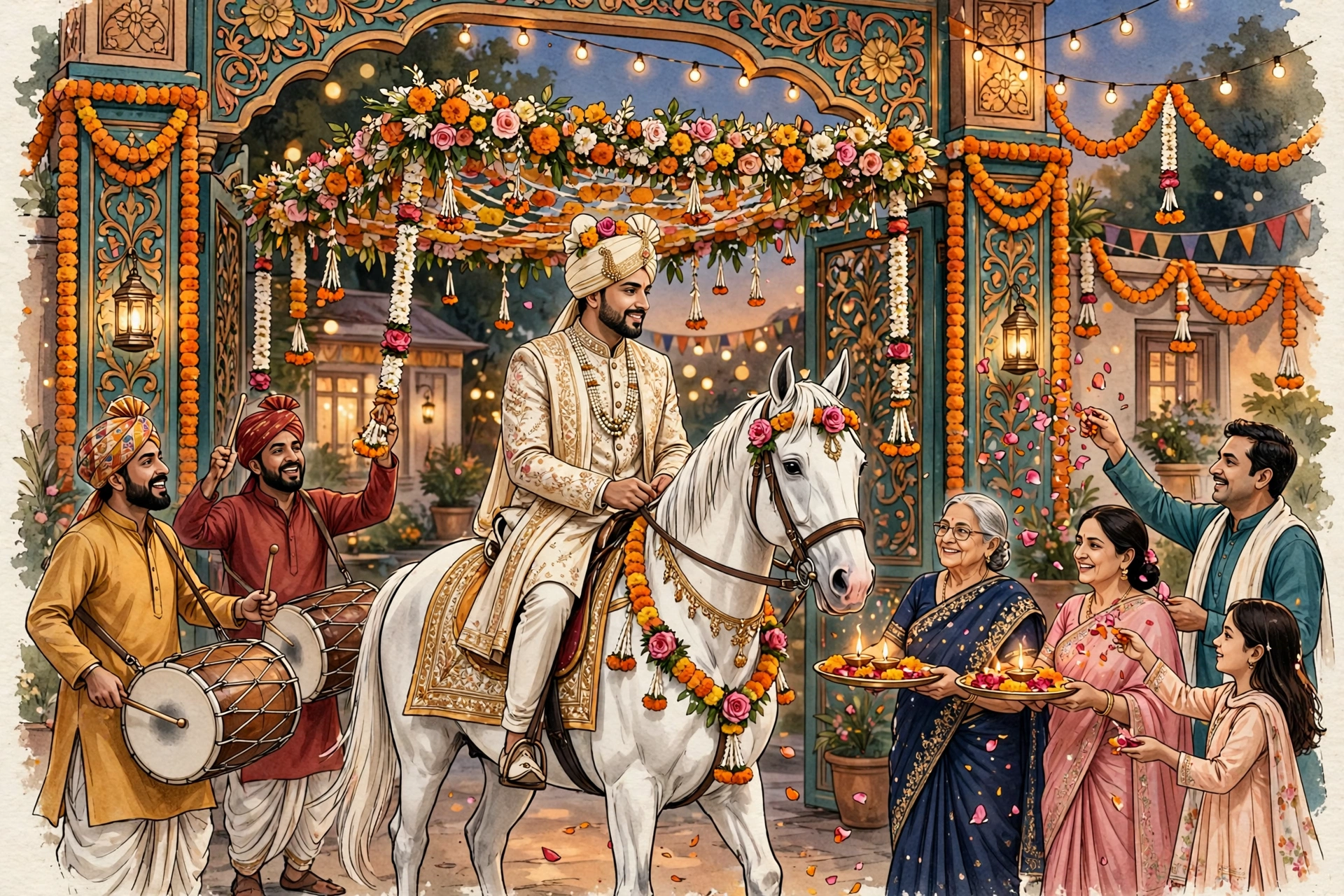
The baraat welcome is the first moment of the wedding itself. The groom arrives, the bride's family receives him, and the two families meet as one. It lasts twenty minutes, but guests remember it for years. A welcome that is warm, organised, and beautiful sets the tone for everything that follows. A welcome that is chaotic, with nobody knowing where to stand, sets the opposite tone.
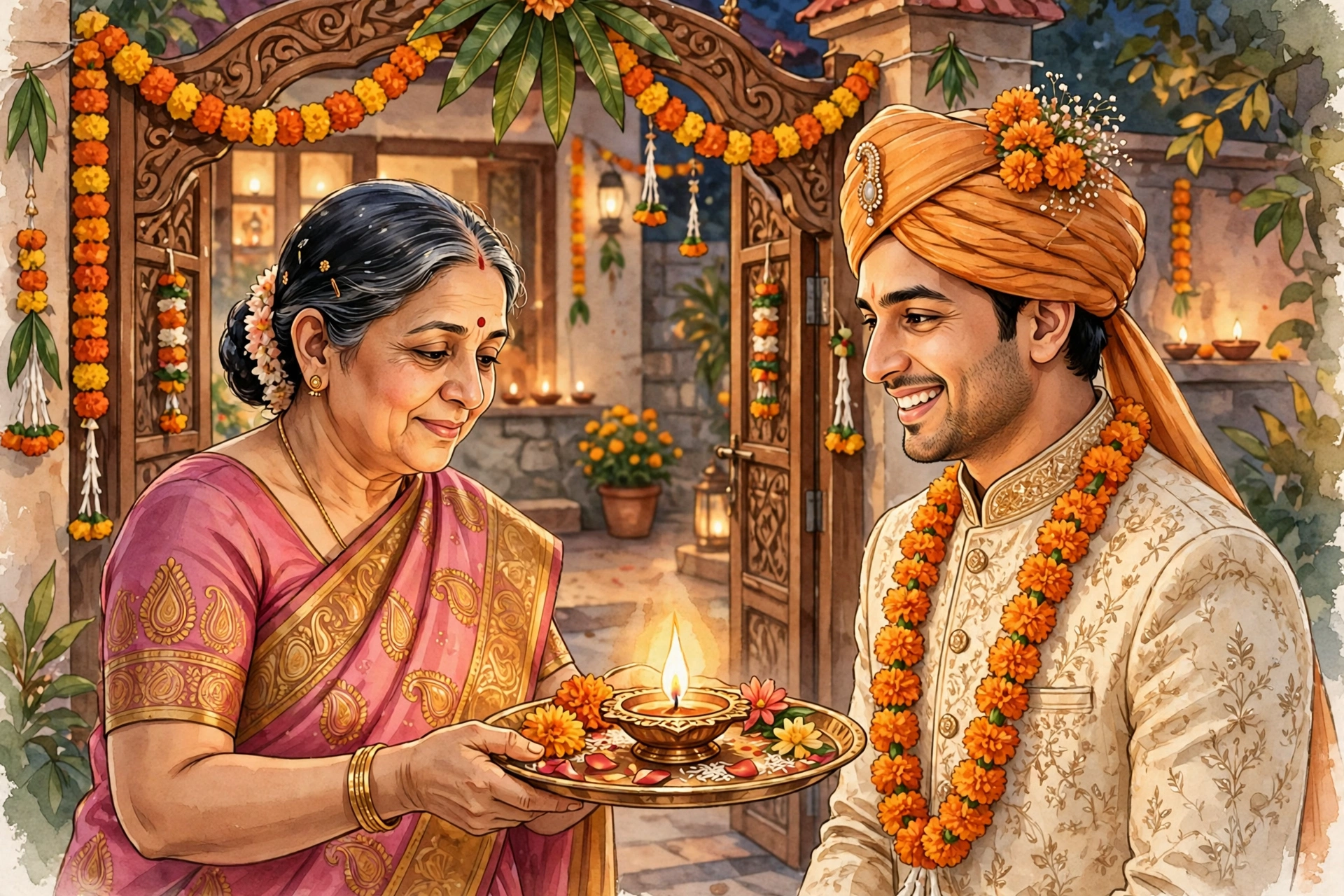
The heart of the welcome is simple. The bride's mother performs the aarti, applies a tilak to the groom's forehead, and offers him something sweet. The groom's family is welcomed with flowers and garlands. And then everyone moves inside, together. Everything else, the gate, the music, the petals, is decoration around that moment. Keep the ritual at the centre, and let the decoration serve it.
Plan the welcome like a small ceremony, not like an afterthought. Agree the order with both families a week before. Who performs the aarti? Who holds the garlands? Who welcomes the groom's parents? Write it down, and tell everyone. On the day, assign one person to guide the groom's family from the gate to the entrance, so nobody is left standing around wondering where to go.
The gate ceremony, step by step
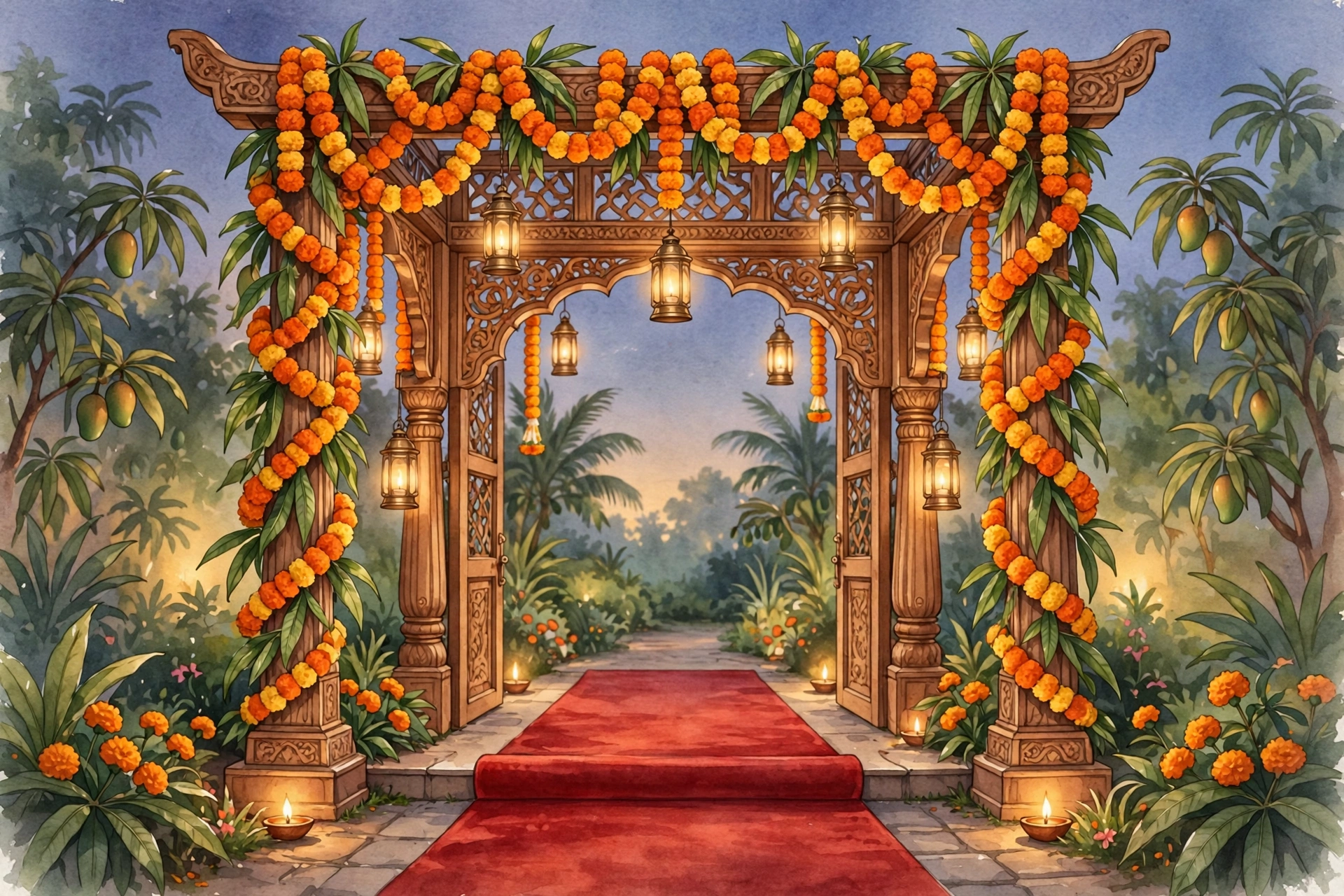
The gate is where the welcome happens, so it deserves attention. A decorated gate, with marigold garlands, mango leaves, and warm lanterns, tells the baraat they have arrived. A red carpet from the gate to the entrance keeps the groom's path clear and photographs beautifully. Keep the gate wide enough for the groom on his horse or in his car, and keep the area in front of it clear of parked vehicles.
The ceremony itself follows a simple order. The groom arrives at the gate, with music and dancing. The bride's mother comes forward with the aarti plate, a lit diya, flowers, and a sweet. She circles the plate before the groom, applies the tilak, and offers the sweet. The groom's mother is welcomed next, with a garland and a warm greeting. Then the two families exchange garlands, or simply greet each other, and everyone moves inside together.
Music, flowers and the details that matter
Music is what makes a baraat welcome feel alive. Dhol players at the gate, leading the dancing, are the classic choice, and they are worth hiring. Two dhol players, for the thirty minutes of the welcome, will lift the whole baraat. If the budget allows, a small brass band or a DJ at the gate adds to the energy. Keep the music loud enough to dance to, but not so loud that the aarti cannot be heard.
Flowers matter more than structures. Marigold garlands on the gate, petals for guests to throw, and a garland for the groom are the essentials. Buy the flowers fresh on the morning, and keep them in water until the last hour. A garland that is a day old looks tired in photographs. And keep a basket of petals at the gate, so guests can shower the groom as he arrives.
The aarti plate deserves care. A brass plate, with a lit diya, fresh flowers, a little kumkum, and a sweet, is the centre of the ritual. Prepare it an hour before, and keep it covered until the moment comes. Assign one person to hold the plate and one to hold a small towel, since the diya can drip. And keep a lighter or matches nearby, since a diya that will not light at the crucial moment is a small disaster.
Welcoming the groom's family
The groom arrives with his family, and they deserve a welcome too. Greet the groom's parents first, with garlands and a warm word, and guide them inside. Assign a family member to look after them through the evening, so they are never standing alone. A small gesture, like a reserved seat near the front, tells them they are honoured guests, not just the groom's luggage.
The groom's friends and cousins, the ones who danced the whole way, will be hot and thirsty. Keep water and a light drink at the gate, so they can refresh themselves before moving inside. A small welcome drink, like a rose sharbat or a nimbu pani, is a kind touch, and it costs very little. And keep a place for them to sit once inside, so they are not left standing while the ceremony begins.
What to avoid, and the timing
The most common mistake is a welcome with no plan. The groom arrives, nobody knows who does the aarti, the music is too loud to hear the host, and the families stand around awkwardly. A ten minute planning conversation a week before, with the order written down, prevents all of it. The second mistake is a welcome that runs too long. Twenty minutes is enough. A welcome that stretches to forty minutes, with speeches and extra rituals, tires the guests before the wedding has even begun.
Avoid blocking the road. A baraat that stops traffic for an hour will annoy the neighbours and stress the families. Keep the dancing at the gate, not in the middle of the road, and move inside promptly once the aarti is done. Avoid too many photographers at the gate, since they can block the groom's path. One photographer and one videographer, in agreed positions, are enough.
Time the welcome carefully. The groom should arrive about thirty minutes before the ceremony begins, so there is time for the welcome and for everyone to settle. If he arrives too early, the guests will be waiting. If he arrives too late, the ceremony will start in a rush. Tell the groom's family the exact arrival time, and ask them to keep to it.
What it costs
On MyIndiAura, a Cinematic Invite is ₹499, an Invite App is ₹399, and an Invitation Suite is ₹99. Choose by what your invitation needs to do, not by price alone. A cinematic invite suits a wedding with a film led opening, while an invite app suits a full week of functions with RSVP and maps.
How to create your wedding invitation
- Pick a design from the designs page at myindiaura.com/designs.
- Add the wedding date and time, the venue, and the dress code for guests.
- Add photos of the couple, the venue map, and the RSVP button.
- Preview the invitation on your own phone, then share the link on WhatsApp. See myindiaura.com/create to start, and myindiaura.com/pricing for the full price list.
Details to check before you send
- The names of the bride and groom, spelt exactly as the families use them
- The wedding date and time, checked with the priest
- The full venue address, with the area and a map link
- The dress code, if you want guests in festive colours
- An RSVP contact for guests who need directions
- The order of events, from the baraat to the pheras
Frequently asked questions
How long should a baraat welcome take?
About twenty minutes, from the groom's arrival at the gate to everyone moving inside. A welcome that stretches to forty minutes tires the guests before the wedding has begun.
Who performs the aarti for the groom?
Usually the bride's mother, with a brass plate holding a lit diya, flowers, kumkum, and a sweet. Agree this with both families a week before, and write the order down.
What is the gate blocking tradition?
In many families, the bride's sisters block the gate and ask the groom for a small gift before they let him pass. Agree the gift in advance, so the moment stays playful and does not become a negotiation.
Should we hire dhol players for the welcome?
Yes, if the budget allows. Two dhol players for thirty minutes at the gate will lift the whole baraat, and the welcome will feel alive in a way recorded music cannot match.
MyIndiAura theme showcase
These Cinematic Invites from MyIndiAura fit this wedding. Each one is ₹499.
- Laal Doli: a red palanquin journey, made for a groom's arrival.
- Arched Doors: carved arches and warm light, made for a wedding welcome.
- Kesar Swagat: a saffron welcome, made for a groom's arrival.
Related reading
- Baraat Planning: Music, Timing and Keeping the Energy Up
- Hindu Wedding Invitation Wording and Traditions
- Wedding Schedule Template for Indian Ceremonies
Create your wedding invitation on MyIndiAura, and plan a welcome the groom will remember.
Explore invitation designs
Choose a design and preview it free with your own names.

Found this useful? Share it with someone planning a celebration.
Share