Backhand Mehndi Design Ideas for Brides
The back of the hand is the part of the mehndi everyone sees first. Here are the designs brides ask for most, and how to pick one that suits your hands.
What makes a backhand design different
The back of the hand is the part of the mehndi everyone sees first. When the bride greets guests, waves, or holds her phone, it is the backhand that shows. Yet for years it was treated as an afterthought, a few lines while the palm got all the attention. That has changed. Brides now plan the backhand as its own design, and artists have built a whole language for it.
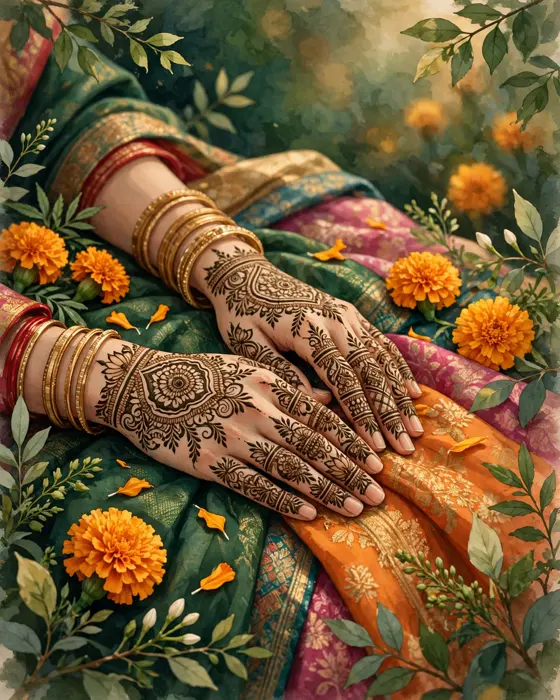
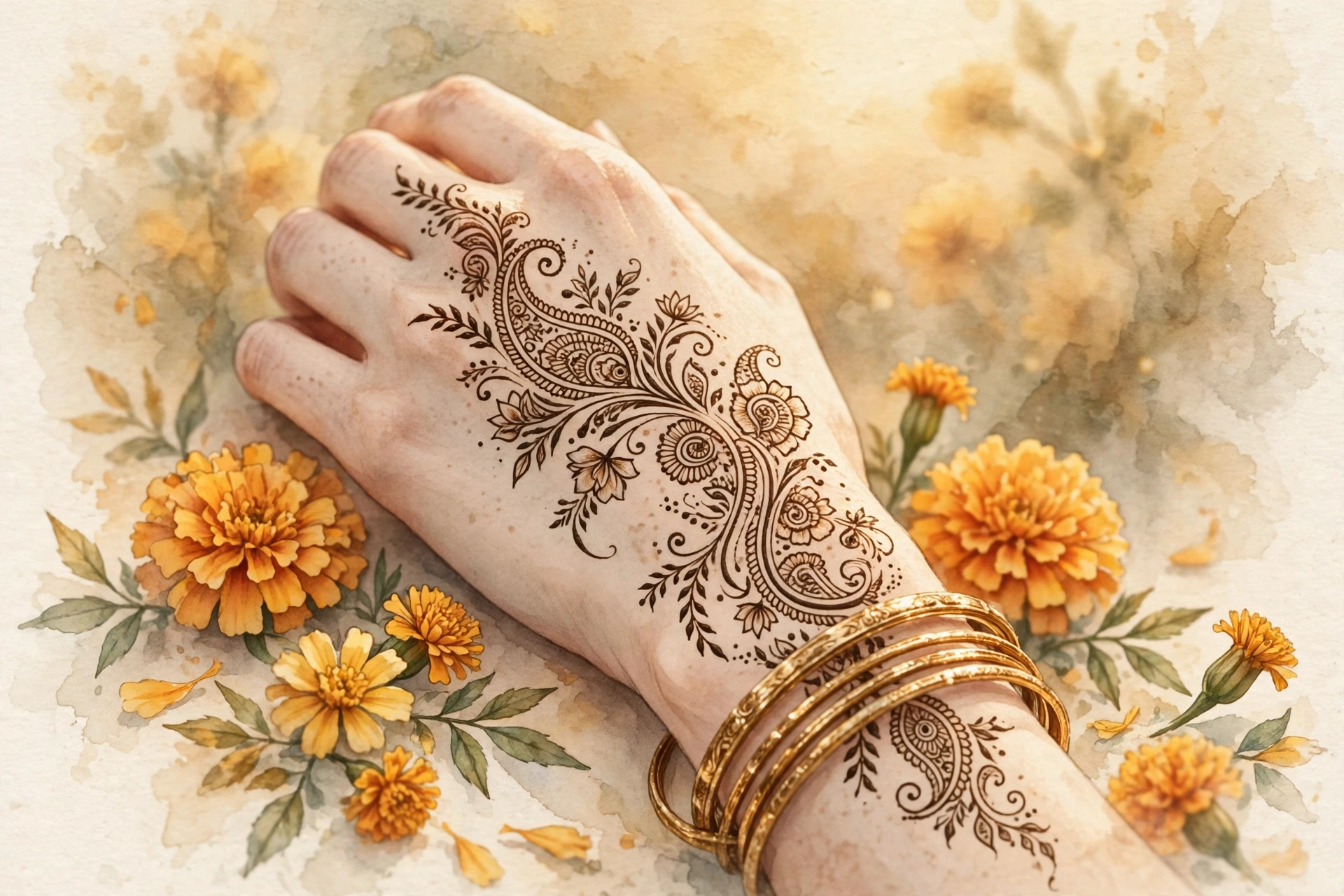
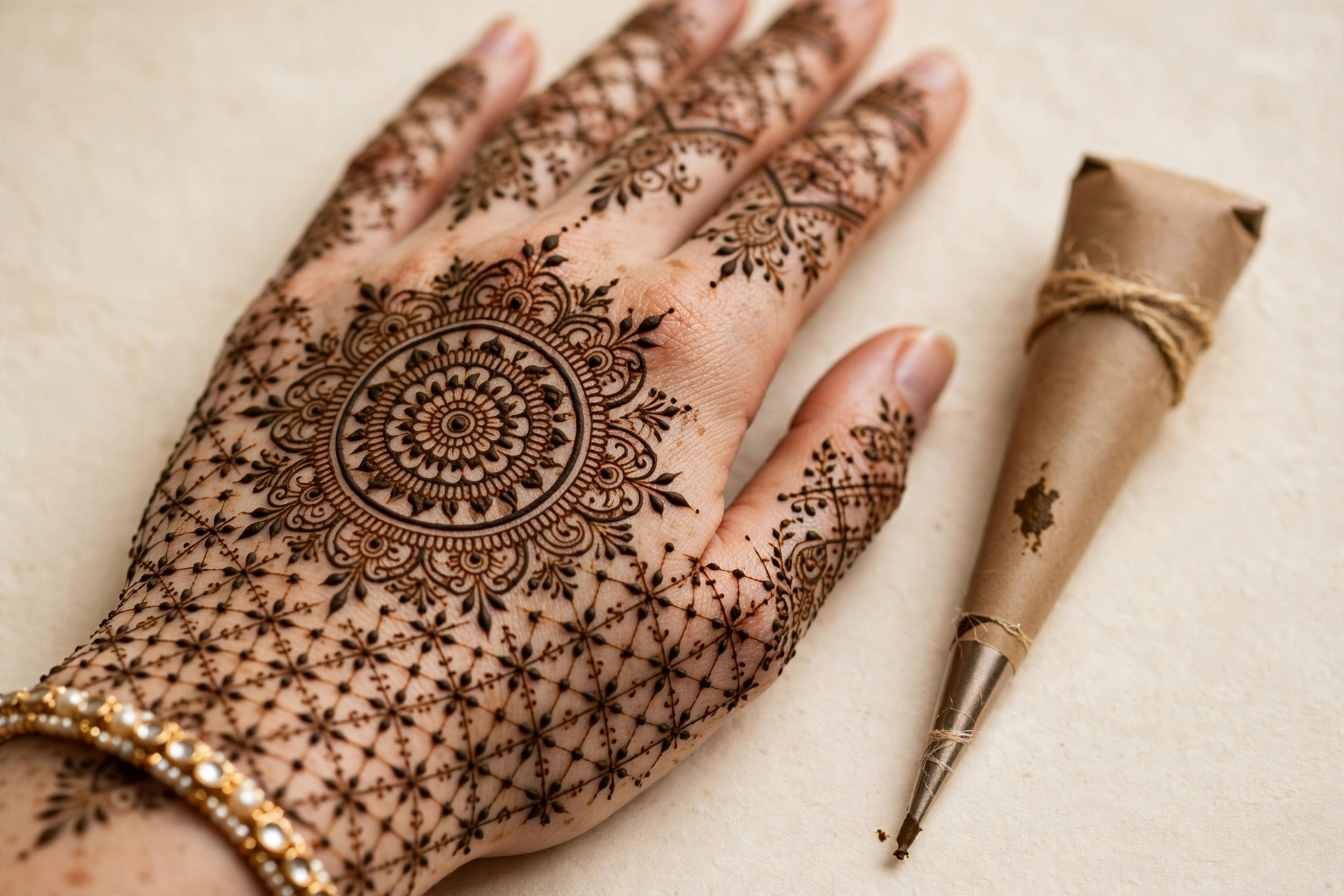
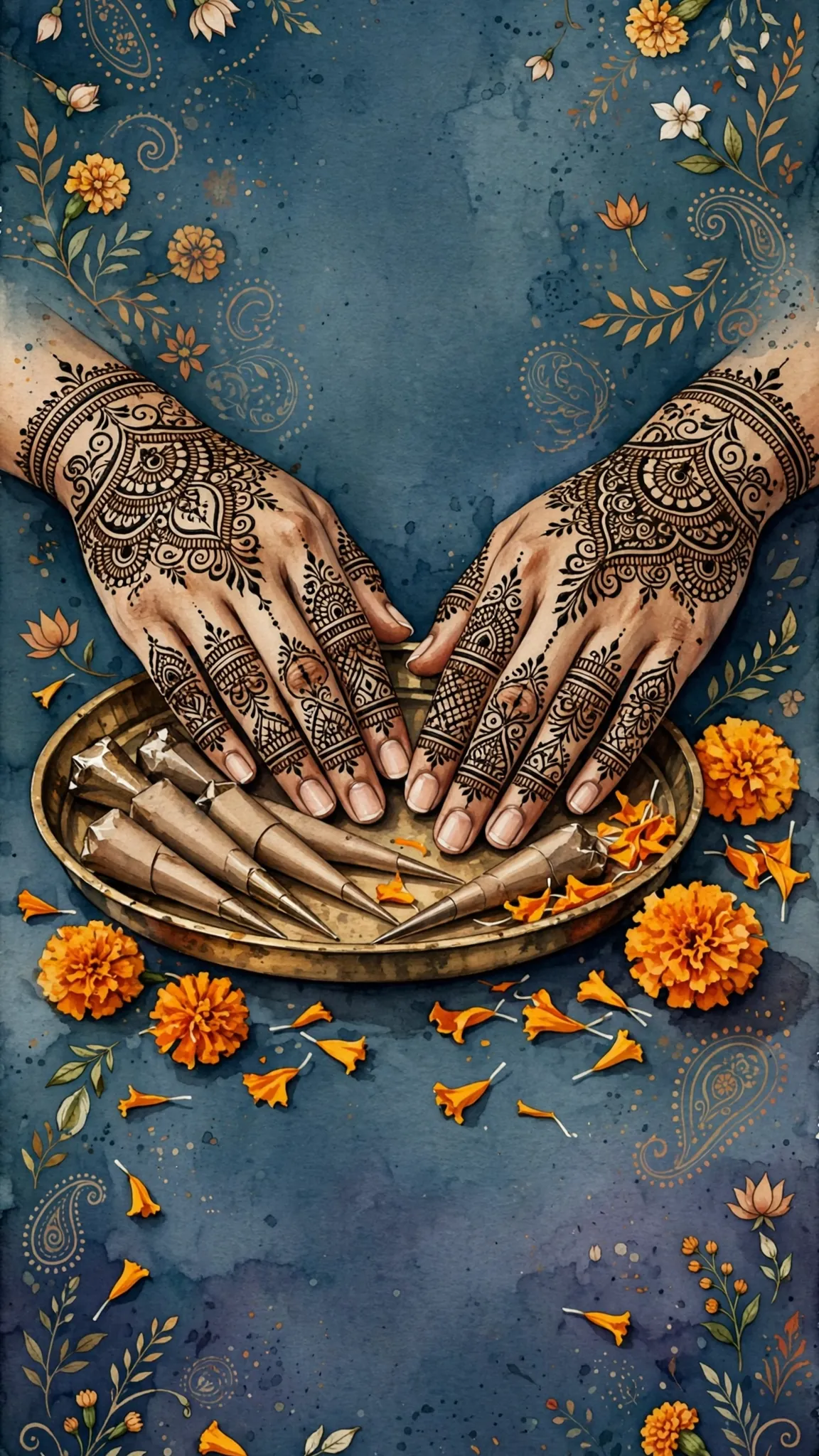
A good backhand design works with the shape of the hand. The hand is wider at the knuckles and narrows at the wrist, so a design that fans out from a central point near the wrist looks natural. A mandala in the centre of the backhand, with vines trailing toward each finger, is the classic shape. A jaal lattice, a fine net of crisscross lines with small flowers at each crossing, is the other favourite. Both read clearly in photographs, even from a distance, which matters because the backhand is photographed more than the palm.
The designs brides ask for most
The mandala backhand is the most requested design. A round mandala sits in the centre, ringed with petals, dots and fine lines, and thin vines run up each finger. It suits almost every hand and photographs beautifully. The jaal backhand is the second favourite, a full lattice from wrist to knuckles with a flower at each joint. It looks intricate without being heavy, and it suits brides who want coverage without a solid dark block.
Floral trails are the choice for brides who want something light. A single vine of leaves and small flowers runs from the wrist across the hand to the middle finger, with the rest of the skin left bare. It looks modern and clean, and it pairs well with a ring. Arabic style backhands use bold sweeping vines with open spaces, and they suit brides who like a lot of skin showing. Portrait work on the backhand is rare, since the space is small, but a tiny motif, a peacock feather or the groom's initial, can sit in the centre of a mandala.
Finger bands are the finishing touch. A thin band around each finger, or a small motif on each fingertip, ties the backhand to the palm design. Keep the bands light, since heavy finger work can look cramped and takes a long time to dry.
Choosing a design for your hands
Look at your own hands before you choose. Long fingers suit trailing vines that run the full length of the finger. Shorter fingers suit a central mandala with short bands, which makes the hand look longer. Wide hands suit an open design with breathing space. Narrow hands suit a denser pattern that fills the width. Your artist should look at your hands and suggest the shape, not just show you a book of photos.
Think about your jewellery too. A backhand design has to sit beside bangles, a bracelet, and the engagement ring. A design that climbs high up the wrist can clash with a stack of bangles, so many brides stop the design at the wrist bone and let the bangles take over. If you wear a chunky bracelet, keep the wrist area light. And if your ring is the star, leave the ring finger mostly bare so the stone shows.
Timing, colour and care
The backhand is usually done after the palm, since the palm takes longer and needs the bride to sit still. For a full bridal set, the artist will do the palms first, then the backhands, then the arms. The whole set takes three to five hours. If you are only getting backhands done, plan for one to two hours.
The colour on the backhand develops the same way as the palm, darkest about a day after application. Keep the paste on for at least six hours. Do not wash the hands, and keep them warm. A lemon and sugar dab helps the stain set. Avoid creams and lotions on the backhand for the first day, since they can lift the paste early.
One practical tip: the backhand is the first part to smudge, because the bride uses her hands to eat, greet people, and adjust her outfit. Ask the artist to seal the design with a light spray of lemon and sugar once it starts to dry, and try to keep the hands still for the first hour. If a line does smudge, do not try to fix it yourself. A good artist carries a spare cone and will touch it up.
Matching the palm and the backhand
The two sides of the hand should feel like one design, not two separate ones. The simplest way to match them is to repeat one element. If the palm has a mandala, put a smaller mandala on the backhand. If the palm is a dense jaali, use a lighter jaali on the backhand. If the palm carries the groom's name, hide a small initial on the backhand too, so guests have two places to look.
The arms matter as well. A backhand design that stops dead at the wrist can look unfinished when the arms carry a full design. Ask the artist to run a thin vine or a few dots from the wrist up the forearm, so the hand and the arm connect. It does not need to be heavy, just enough to join the two parts.
For sisters and friends, a simple backhand motif is often enough. A small mandala or a floral trail takes twenty minutes and looks lovely in group photographs. Many artists offer a quick backhand design for guests while the bride's full set is drying, which keeps everyone happy without slowing the day down.
What it costs
On MyIndiAura, a Cinematic Invite is ₹499, an Invite App is ₹399, and an Invitation Suite is ₹99. Choose by what your invitation needs to do, not by price alone. A cinematic invite suits a wedding with a film led opening, while an invite app suits a full week of functions with RSVP and maps.
How to create your mehndi invitation
- Pick a design from the designs page at myindiaura.com/designs.
- Add the mehndi date and time, the venue, and the dress code for guests.
- Add photos of the couple, the venue map, and the RSVP button.
- Preview the invitation on your own phone, then share the link on WhatsApp. See myindiaura.com/create to start, and myindiaura.com/pricing for the full price list.
Details to check before you send
- The names of the bride and groom, spelt exactly as the families use them
- The mehndi date and time, checked with the artist
- The full venue address, with the area and a map link
- The dress code, if you want guests in green or yellow
- An RSVP contact for guests who need directions
- The order of events, if the sangeet follows the same evening
Frequently asked questions
Does backhand mehndi stain as dark as the palm?
It can be a little lighter, since the skin on the back of the hand is thinner. A good artist uses a slightly thicker paste there, and keeping it on for six hours or more balances the colour well.
How long does a backhand design take?
A simple backhand motif takes about twenty minutes. A full detailed backhand with finger work takes forty-five minutes to an hour, as part of a full bridal set of three to five hours.
Should the backhand match the palm design?
It should feel like the same design, not a copy. Repeat one element, a mandala or a vine, in a lighter form, so the two sides connect without competing.
Will bangles spoil the backhand design?
They can smudge a fresh design, so put bangles on only after the paste has dried and flaked off. Tell your artist about your bangles, and they will keep the wrist area light.
MyIndiAura theme showcase
These Cinematic Invites from MyIndiAura fit this wedding. Each one is ₹499.
- Gulab Dil: a rose filled invitation, made for a bride's mehndi.
- Charbagh Dastaan: a garden of four quarters, made for a mehndi afternoon.
- Gulaabi Aangan: a courtyard garden in bloom, made for a mehndi at home.
Related reading
- Mehndi Ceremony Invitation Card Designs
- Mehendi Night Ideas: Themes, Decor and Timelines That Actually Work
- Mehndi Invitation Messages for WhatsApp
Create your mehndi invitation on MyIndiAura, and let the back of the hand get the attention it deserves.
Explore invitation designs
Choose a design and preview it free with your own names.
Found this useful? Share it with someone planning a celebration.
Share