Arabic vs Indian Mehndi Designs
Arabic mehndi is bold and open, Indian mehndi is dense and detailed. Here is how the two styles differ in time, colour, cost, and feel, and how to choose between them.
Arabic mehndi, and what it looks like
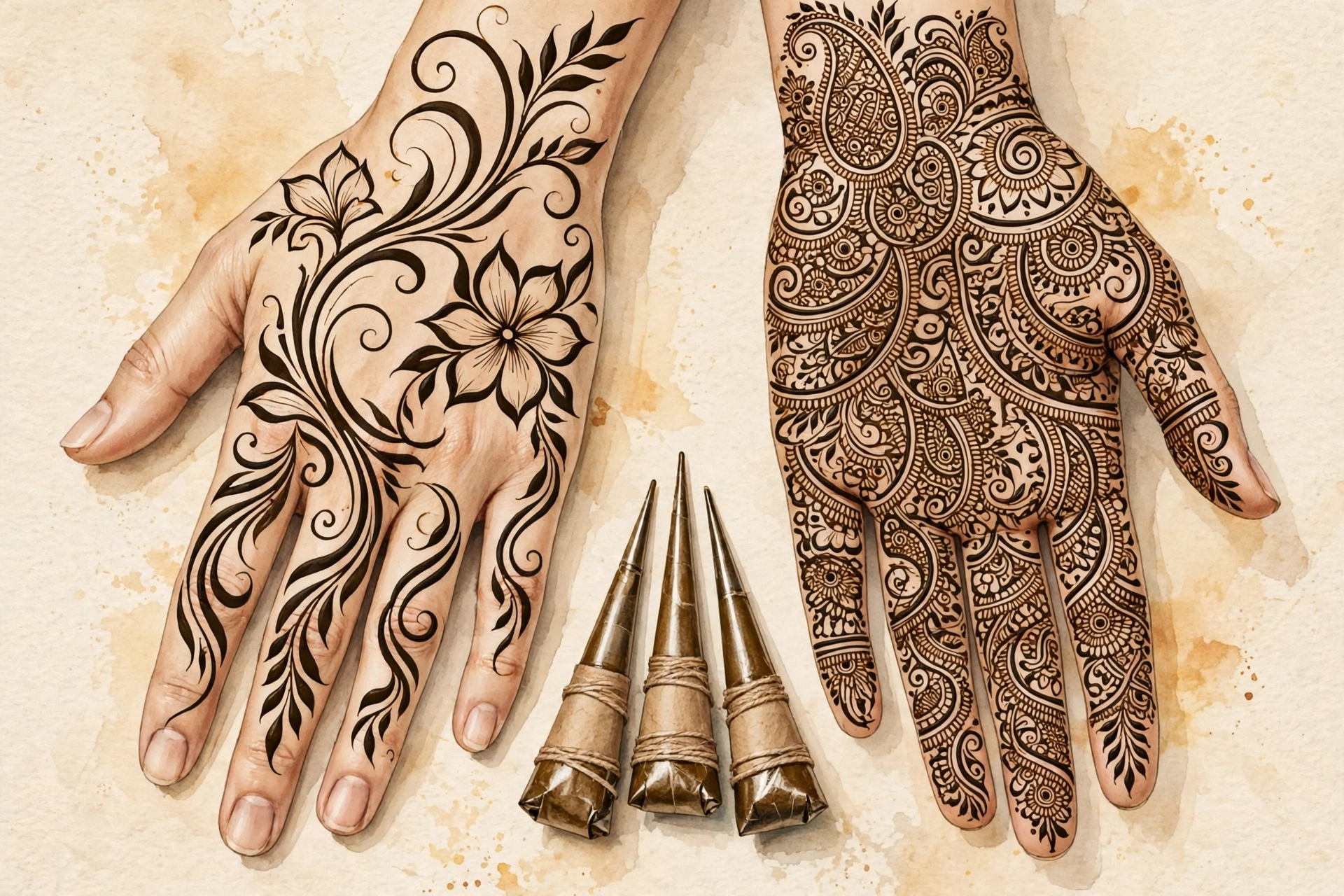
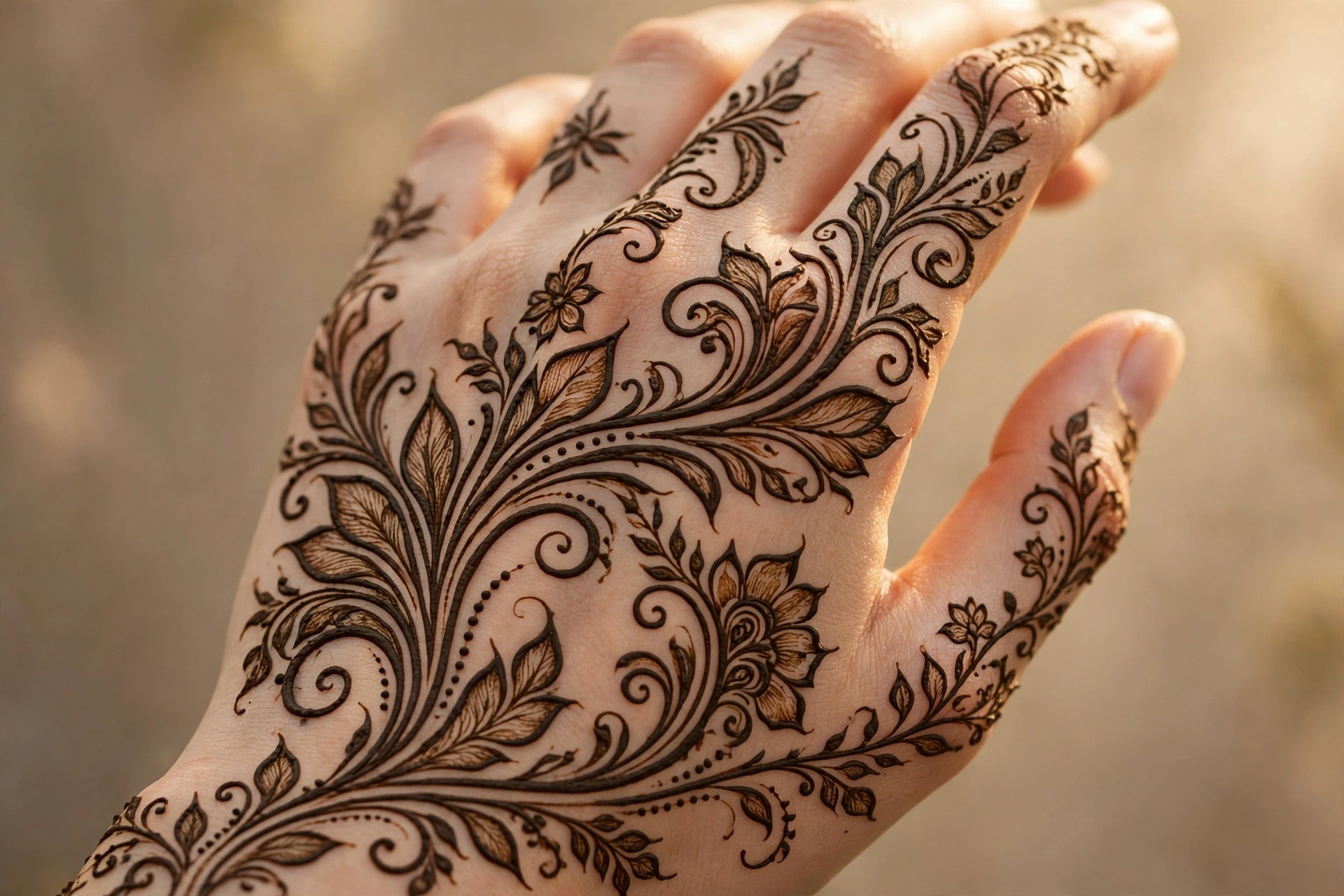
Arabic mehndi is easy to recognise. The lines are bold, the flowers are large, and a lot of skin shows through. A typical Arabic design has a big floral vine that sweeps across the palm, leaves that curl outward, and open spaces between the elements. The fingers carry bands and a trailing vine, and the wrist often has a single bold motif. The whole look feels airy and modern, and it takes less time to apply than a dense Indian design.
The style comes from the Gulf, where henna has long been worn for celebrations, and it suits brides who like a clean look. Because so much skin shows, the contrast between the dark stain and the bare skin is part of the beauty. The design also dries faster, since there is less paste on the hand, and it is easier to fix if a line smudges. For a bride who has a busy day, or who wants to eat and greet guests soon after, Arabic is the practical choice.
Arabic work suits long hands and long fingers, where the sweeping vines have room to move. It also suits a heavy outfit, since the open design does not compete with embroidery. Many brides choose Arabic for the sangeet or the reception, and keep the denser Indian style for the wedding day itself.
Indian mehndi, and what it looks like
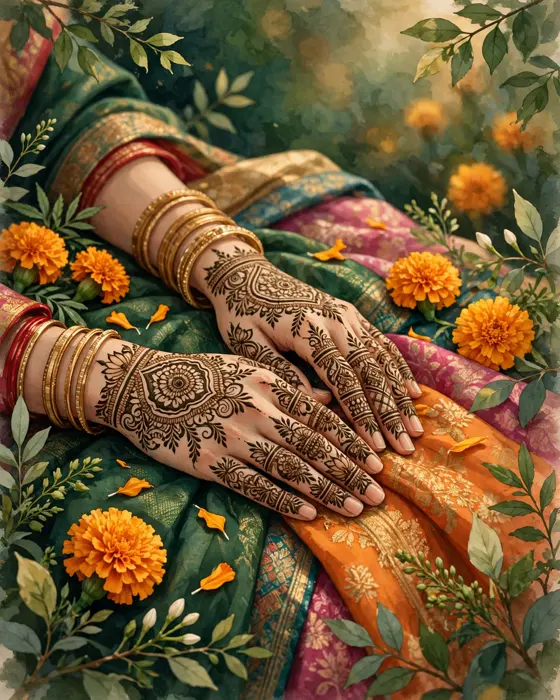
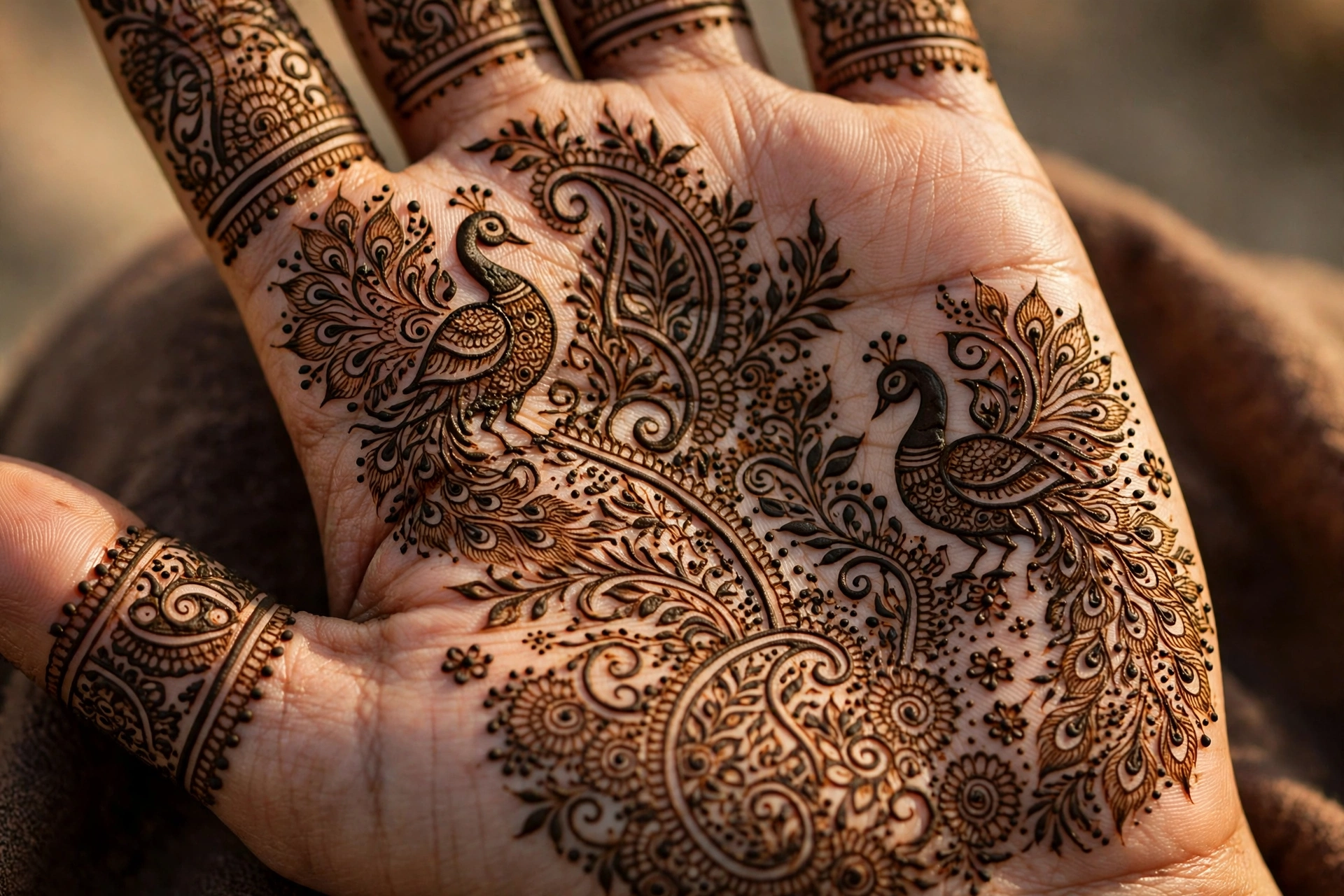
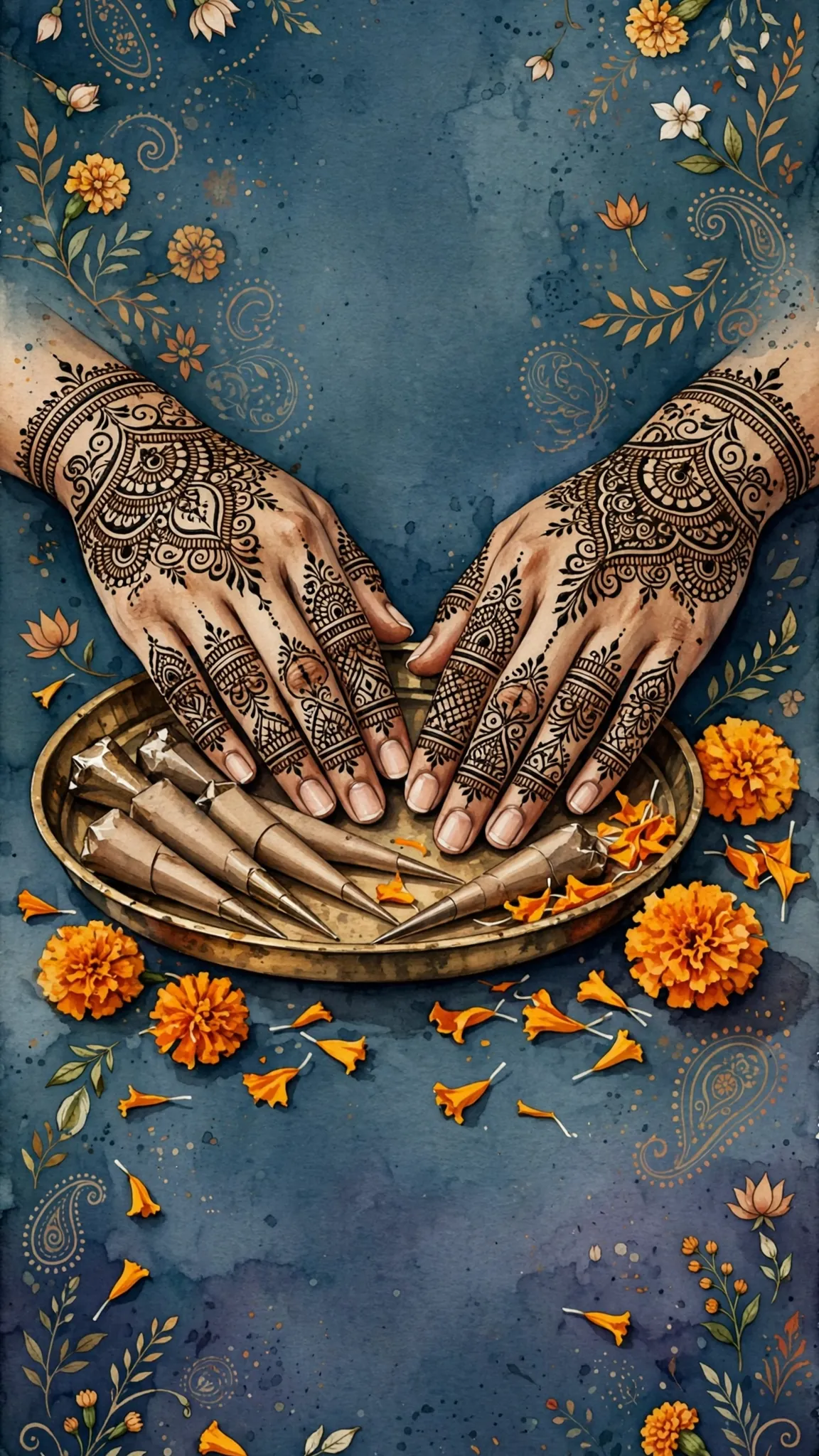
Indian mehndi is the opposite idea. The hand is covered, often from fingertip to elbow, in fine dense pattern. Paisleys, peacocks, jaali lattices, tiny flowers, dots, and the groom's name hidden in the design. The lines are fine, the filling is detailed, and very little skin shows through. When the paste comes off, the stain is deep and dark, and the whole hand reads as one rich surface.
The style is built around the bridal ceremony. The application is slow, three to five hours for a full set, and that time is part of the function. Family gathers, songs play, and the bride sits while the artist works. The hidden name is a game for the guests, and the dark stain is a point of pride. Indian mehndi suits a bride who wants the henna to be a centrepiece, not an accessory.
The density is also the risk. A design with no breathing space can blur into a dark block once the paste comes off. A good artist varies the density, mixing bold outlines with fine filling, and leaving small open spaces so the pattern stays readable. Always ask to see a healed photo, not just the fresh paste.
The real differences, side by side
The clearest difference is coverage. Arabic leaves open skin, Indian covers it. That single choice drives everything else: time, colour, drying, and how the design photographs. Arabic takes one to two hours for both hands. Indian takes three to five. Arabic dries faster and smudges less. Indian needs the bride to sit still longer, and needs more care in the first hours.
The motifs differ too. Arabic uses large flowers, bold vines, leaves, and geometric shapes. Indian uses paisleys, peacocks, fine lattices, and tiny detailed filling. Arabic rarely hides a name in the design, while Indian almost always does. And the feeling differs: Arabic feels light and modern, Indian feels rich and traditional.
Cost follows time. An Arabic bridal set usually costs less than a full Indian bridal set, because the artist finishes faster and uses less paste. But a very detailed Arabic design with fine work can cost just as much, so ask for a quote for your exact design rather than going by the style name alone.
Which one suits you
Start with your day. If the mehndi and the sangeet are on the same day, Arabic keeps things moving. If the mehndi has its own day, Indian has room to breathe. Then look at your outfit. A heavily embroidered lehenga pairs well with open Arabic work, while a plain silk outfit leaves room for dense Indian work to carry the look.
Look at your hands as well. Long fingers suit the sweeping vines of Arabic. Shorter fingers suit the central mandala of Indian work, which makes the hand look longer. And think about how you feel about waiting. Some brides love the slow hours of a full Indian application. Others would rather be done in an hour and free to enjoy the function. Neither choice is better, and many brides now mix the two: Indian density on the palms, Arabic openness on the backhands, or Arabic for the sangeet and Indian for the wedding.
Ask your artist what they do best. Most artists have a stronger side, and a design in their best style will always look better than a design they rarely do. Bring photos of both styles, point at what you like in each, and let the artist build a design that fits your hands.
Mixing the two styles
A mixed design is now one of the most requested options. The usual mix is an Indian palm with dense paisleys and a hidden name, and an Arabic backhand with bold vines and open spaces. The two sides contrast nicely, and the bride gets the best of both. Another popular mix is Arabic on one hand and Indian on the other, though that suits a bold bride, since the two hands look quite different in photographs.
If you mix, keep one element common so the hands still feel like a pair. A repeated flower, a matching finger band, or the same border at the wrist will tie the two styles together. And tell your photographer, so they plan shots of both sides of the hands.
What it costs
On MyIndiAura, a Cinematic Invite is ₹499, an Invite App is ₹399, and an Invitation Suite is ₹99. Choose by what your invitation needs to do, not by price alone. A cinematic invite suits a wedding with a film led opening, while an invite app suits a full week of functions with RSVP and maps.
How to create your mehndi invitation
- Pick a design from the designs page at myindiaura.com/designs.
- Add the mehndi date and time, the venue, and the dress code for guests.
- Add photos of the couple, the venue map, and the RSVP button.
- Preview the invitation on your own phone, then share the link on WhatsApp. See myindiaura.com/create to start, and myindiaura.com/pricing for the full price list.
Details to check before you send
- The names of the bride and groom, spelt exactly as the families use them
- The mehndi date and time, checked with the artist
- The full venue address, with the area and a map link
- The dress code, if you want guests in green or yellow
- An RSVP contact for guests who need directions
- The order of events, if the sangeet follows the same evening
Frequently asked questions
Which style takes longer to apply?
Indian mehndi takes longer, usually three to five hours for a full bridal set. Arabic takes one to two hours, since the design is more open and uses less paste.
Which style gives a darker stain?
Indian usually stains darker, because more paste sits on the skin for longer. Arabic can still stain well, especially if the paste stays on for six hours, but the open spaces mean less colour overall.
Can I mix Arabic and Indian styles?
Yes, and it is very popular now. The common mix is an Indian palm with an Arabic backhand, tied together with one repeated motif so the hands still feel like a pair.
Which style is better for a small mehndi?
Arabic, in most cases. It is faster, dries sooner, and looks complete even when the function is small and the bride needs to move around.
Does one style cost more than the other?
Usually the Indian bridal set costs more, because it takes more of the artist's time. But a very fine Arabic design can cost just as much, so always get a quote for your exact design.
MyIndiAura theme showcase
These Cinematic Invites from MyIndiAura fit this wedding. Each one is ₹499.
- Noor Bagh: a garden at dusk with lamps, made for an evening mehndi.
- Arched Doors: carved arches and warm light, made for a traditional ceremony.
- Jharokha Ki Shaam: a window to the evening, made for a mehndi at dusk.
Related reading
- Mehndi Ceremony Invitation Card Designs
- Mehendi Night Ideas: Themes, Decor and Timelines That Actually Work
- Mehndi Invitation Messages for WhatsApp
Create your mehndi invitation on MyIndiAura, and pick the style that fits your hands and your day.
Explore invitation designs
Choose a design and preview it free with your own names.
Found this useful? Share it with someone planning a celebration.
Share